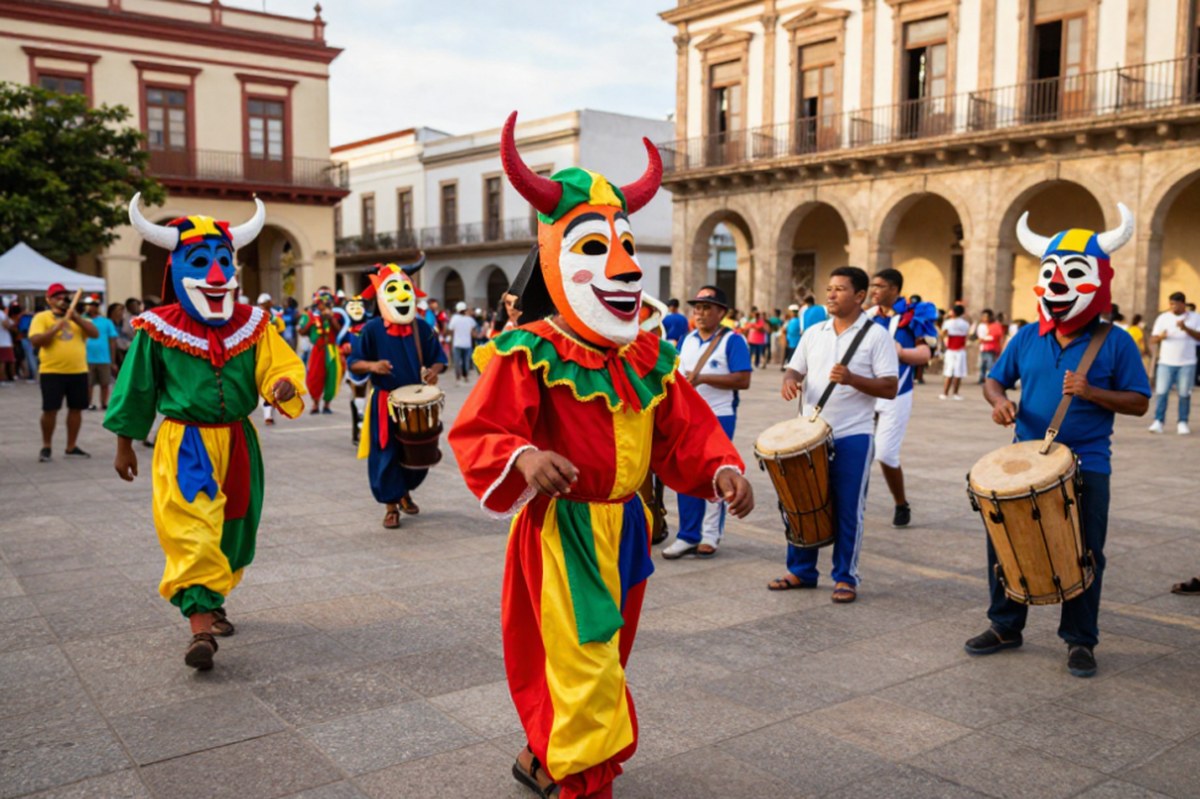
Carnaval Ponceño is a weeklong pre-Lenten celebration that turns central Ponce into a procession of vejigantes, comparsas, music, masks, and public ritual. Its roots are commonly traced to 1858, making it Puerto Rico’s oldest continuously celebrated carnival tradition. The festival is the focus here; only after exploring its history and character will we consider how Ponce’s cultural setting contributes to the appeal of living on Puerto Rico’s southern coast.
Key takeaways
- Carnaval Ponceño dates to 1858 and culminates immediately before Ash Wednesday.
- Vejigantes, cabezudos, comparsas, music, and handcrafted masks define its visual and performing traditions.
- The 2026 carnival ran February 12–17 as the festival’s 168th edition.
- Plaza Las Delicias and the historic center shape both the celebration and everyday life in Ponce.
- For property buyers, Ponce’s cultural appeal should be weighed alongside condition, insurance, utilities, and location-specific risks.
What Carnaval Ponceño Celebrates
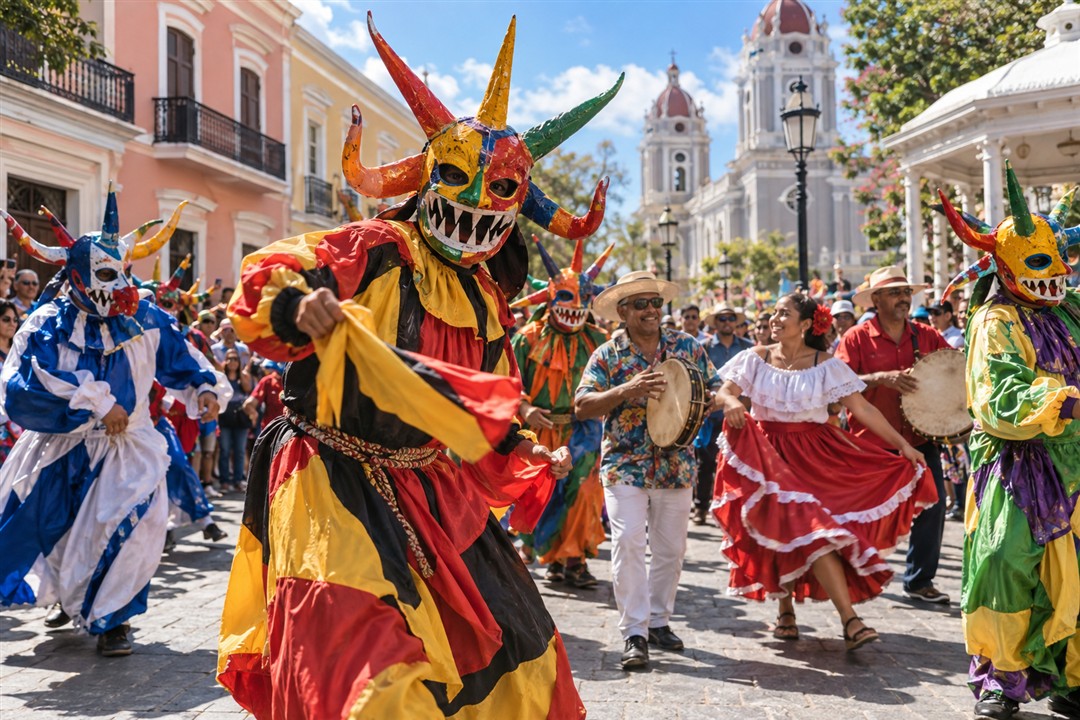
Carnaval Ponceño is both a public festival and a living expression of Ponce identity. Discover Puerto Rico’s festival guide describes a celebration built around parades, music, traditional food, costumed characters, the appearance of King Momo, the crowning of the Carnival Queen, a masquerade ball, and the Burial of the Sardine. The calendar leads into Lent, giving its final rituals a clear place in the religious and cultural year.
The celebration also shows how tradition changes without losing its recognizable structure. Contemporary performers, orchestras, and family activities join figures and ceremonies that generations of residents already know. That combination—continuity rather than a frozen reenactment—is one reason Carnaval Ponceño remains more than a tourist spectacle.
From an 1858 Tradition to the 168th Edition
The festival’s modern history is generally traced to 1858. For 2026, Puerto Rico’s legislative record formally established the 168th edition for February 12–17 and defined the areas and activities involved. That official record is a stronger basis for the dates than informal calendars or social-media posts.
The 2026 program opened with a masquerade ball and continued with the entrance of King Momo, coronation events, the main parade, a salsa program, and the closing Burial of the Sardine. The edition also highlighted the centennial of Puerto Rican composer Catalino “Tite” Curet Alonso; the Tite Curet Alonso Foundation’s program listed carnival events connected to that commemoration.
Why Vejigantes Are the Carnival’s Most Recognizable Figures
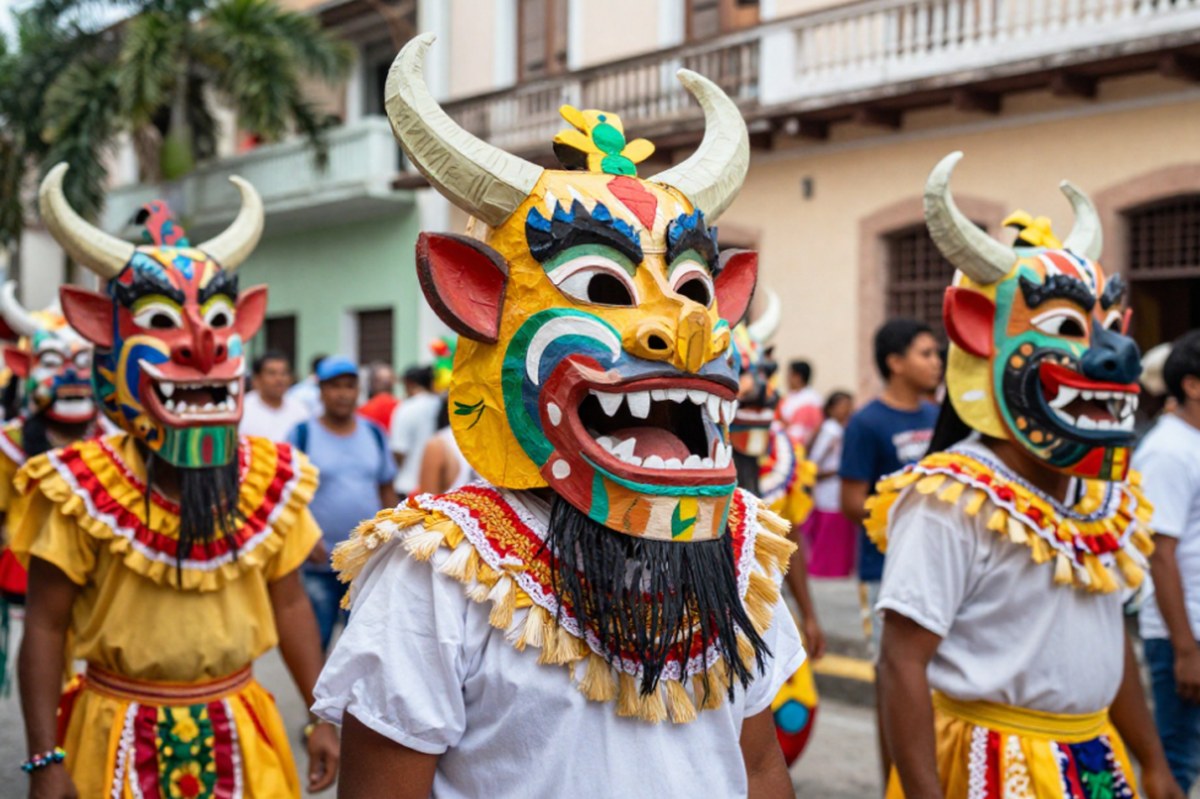
A vejigante is instantly recognizable by a vivid costume and a horned mask with exaggerated eyes, teeth, and expressions. Discover Puerto Rico’s vejigante guide explains that the figure developed from European carnival traditions and evolved in Puerto Rico through African and Taíno influences. In Ponce, the signature masks are made from papier-mâché and are especially associated with the Playa de Ponce tradition.
The mask is not simply decoration. It is wearable folk art, the product of specialized craftsmanship, and a symbol that connects individual makers with a broader cultural memory. The playful movement of vejigantes through the crowd gives the carnival an element of theater in which spectators and performers briefly share the same stage.
Masks, Cabezudos, and the Work of Local Artisans
Ponce’s carnival vocabulary extends beyond vejigantes. Cabezudos—large papier-mâché heads depicting traditional, notable, or satirical figures—move through the streets alongside dancers and musicians. Their scale and caricature make them visible across a crowded parade route, while their subjects allow each edition to comment on local history and public life.
Artisans sustain these forms through patient, hands-on work. Papier-mâché must be shaped, dried, painted, and reinforced before a mask or cabezudo can withstand hours of movement outdoors. Buying directly from makers, attending demonstrations, and treating masks as cultural works rather than disposable souvenirs are practical ways visitors can respect that labor.
Comparsas Bring Bomba and Plena Into the Streets
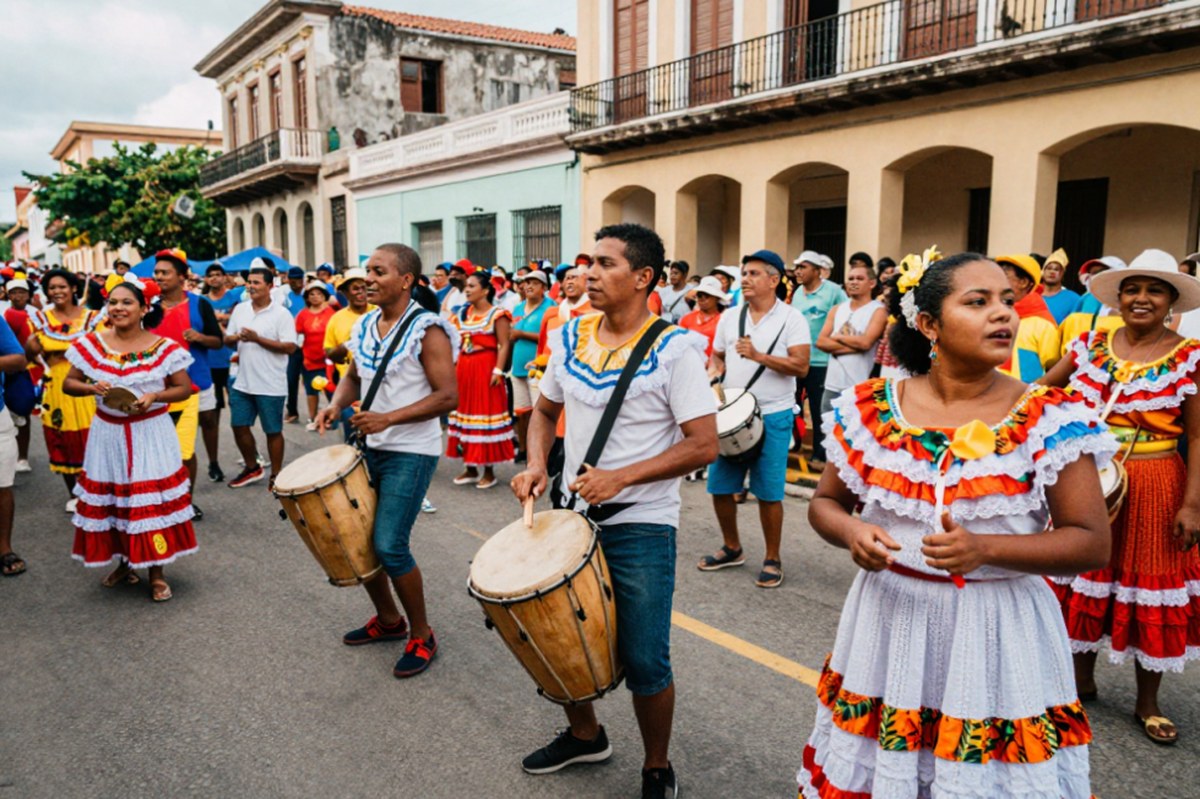
Comparsas are coordinated groups of dancers and musicians whose costumes and routines give the parade much of its momentum. Discover Puerto Rico describes the Carnaval Ponceño comparsas as moving through the historic center to the rhythms of bomba and plena. These ensembles create a shared experience: choreography organizes the procession, but percussion and call-and-response keep it open to the energy of the street.
Music changes across the festival schedule. Traditional rhythms appear beside salsa and contemporary programming, particularly in evening events. The 2026 dedication to Tite Curet Alonso added another layer, connecting the carnival with a songwriter whose work is central to the history of salsa.
The Festival Calendar: From King Momo to the Burial of the Sardine
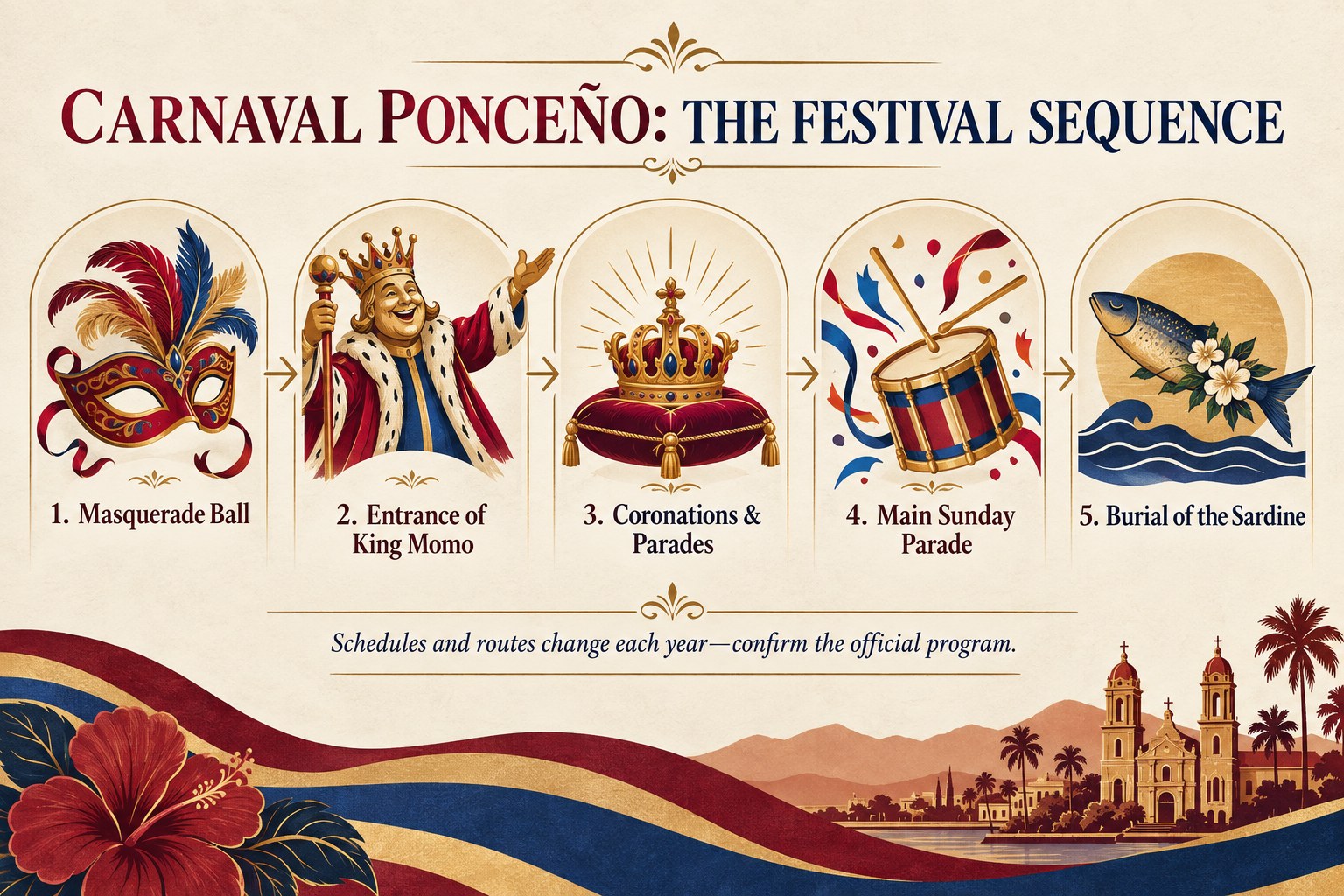
Carnaval Ponceño follows a recognizable sequence even when individual performers and times change from year to year.
- The masquerade ball introduces the week through costume and music.
- The entrance of King Momo marks the ceremonial beginning of carnival rule.
- Coronations and parades bring queens, comparsas, vejigantes, musicians, and community groups into the center.
- The principal Sunday parade concentrates the largest procession along the published route.
- The Burial of the Sardine closes the celebration with a mock funeral as the calendar turns toward Lent.
Travelers should always confirm the current program rather than assuming that a previous year’s route or timetable will repeat. Street closures, performance locations, and starting times are operational details that may change even when the larger ritual sequence remains familiar.
Food, Music, and the Experience Around Plaza Las Delicias
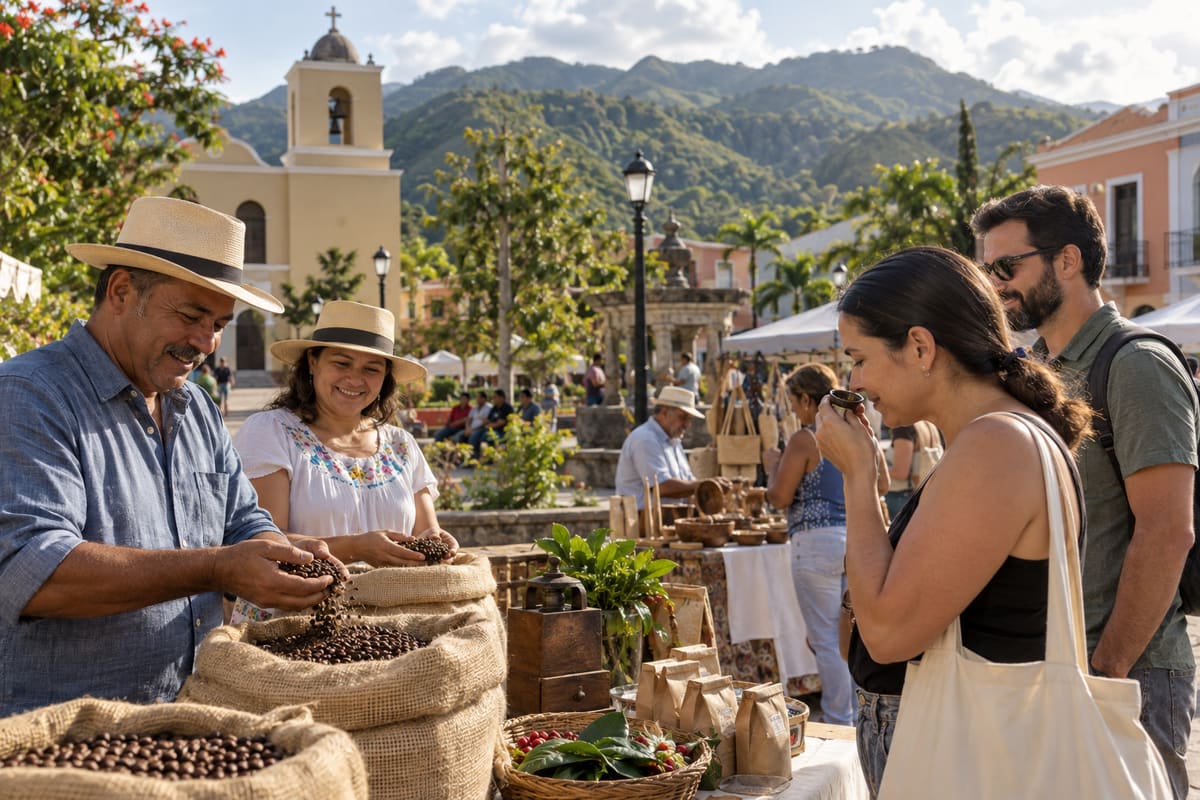
Carnival food is part of the street experience rather than a separate attraction. Vendors serve portable Puerto Rican favorites and refreshments around the event zone, allowing visitors to move between performances without leaving the historic center. The mix varies, so the most accurate approach is to treat any annual vendor list as temporary rather than promise a particular dish or stall.
Plaza Las Delicias gives the celebration an architectural stage. The plaza, cathedral, municipal buildings, and nearby streets allow processions to pass through spaces that are already important to civic life. For more ideas beyond carnival week, the Puerto Rico+ guide to free things on the south side highlights the plaza, museums, and historic downtown as starting points for exploring Ponce.
Planning a Respectful Carnival Visit
Arrive early, use the municipality’s published route and transportation guidance, and expect limited vehicle access near central events. Comfortable walking shoes, sun protection, water, and light clothing are useful for daytime activities; families may prefer earlier programming before evening crowds grow.
Ask before photographing an artisan at work or taking a close portrait of a performer. Keep parade paths clear, follow crowd-control instructions, and avoid treating sacred or commemorative elements as costumes without context. Most importantly, check the official program close to the visit, because dates are tied to the pre-Lenten calendar and logistics can change.
How Festival Culture Transitions Into Southern Coast Living
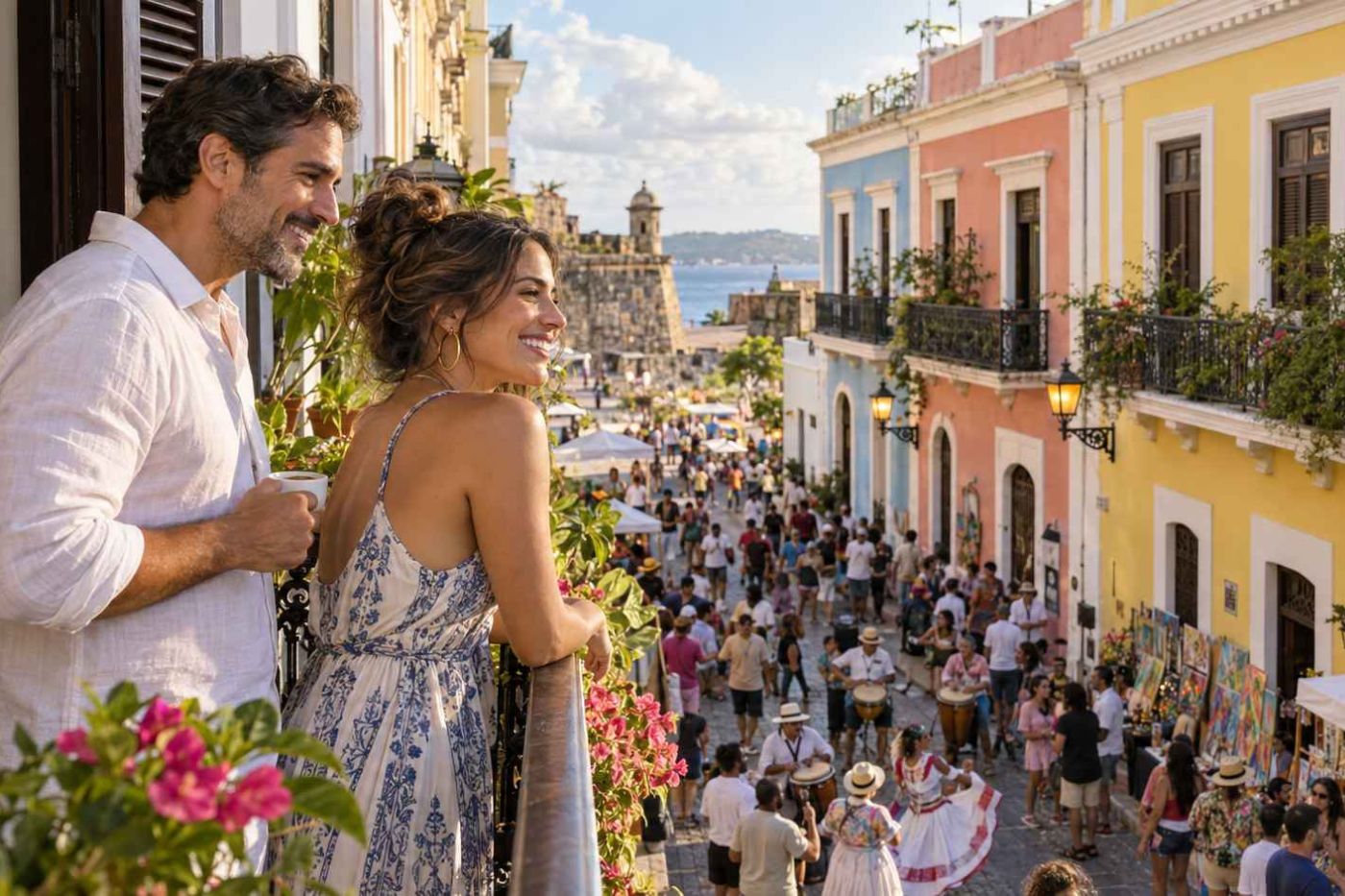
The value of Carnaval Ponceño to a prospective resident is not that every week feels like carnival. It is that the festival reveals durable features of Ponce: a strong historic center, a habit of gathering in public space, local craftsmanship, music traditions, and neighborhood identity. Those qualities can matter to buyers who prefer a culturally rooted city over a resort enclave or a newer metropolitan development.
Architecture is part of that appeal. Christie’s International Real Estate Puerto Rico’s guide to Puerto Rico’s architectural styles discusses the Ponce Creole tradition and its mix of colorful façades, ironwork, wood details, and climate-responsive design. The Ponce Intercontinental redevelopment overview offers a different example of how the city’s architectural heritage can be adapted for contemporary use.
What Buyers Should Verify in Ponce
Historic character does not replace due diligence. A buyer should commission appropriate inspections, confirm permitted alterations, review title and zoning information, and evaluate electrical, plumbing, roof, drainage, and structural conditions. Insurance availability and cost should be investigated early, with property-specific wind and flood exposure checked through current official maps and qualified professionals.
Maintenance demands can also differ from those of a newly built condominium. Christie’s Puerto Rico property-maintenance guide explains why tropical weather, storm preparation, moisture, and insurance planning require ongoing attention. Buyers should rely on licensed inspectors, legal counsel, insurance professionals, and local contractors rather than assume that a visually restored façade proves the condition of the entire property.
Puerto Rico Luxury Properties for Sale
These luxury properties for sale extend beyond Ponce and illustrate four distinct ways to live in Puerto Rico: historic urban scale, an Old San Juan residence, direct island beachfront, and a custom-home opportunity in Dorado. They are included as current examples of the wider market, not as substitutes for Ponce-specific research. Availability, specifications, and pricing should be reconfirmed before making decisions.
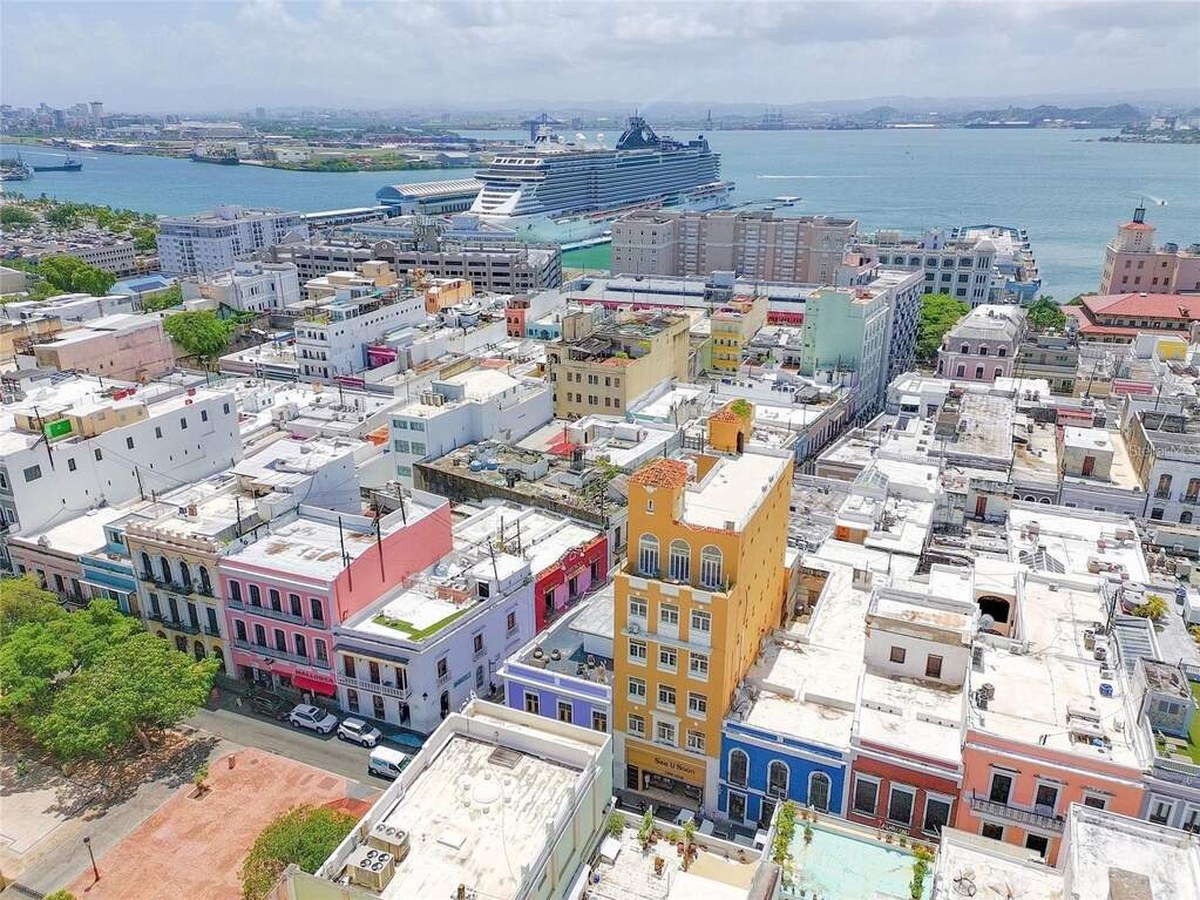
266 San Francisco Unit: 266, San Juan, PR 00901, Puerto Rico
For Sale
This five-bedroom, five-bath Old San Juan property offers approximately 12,350 square feet of interior space. Its scale and historic-city setting suit buyers seeking an urban residence with substantial room.
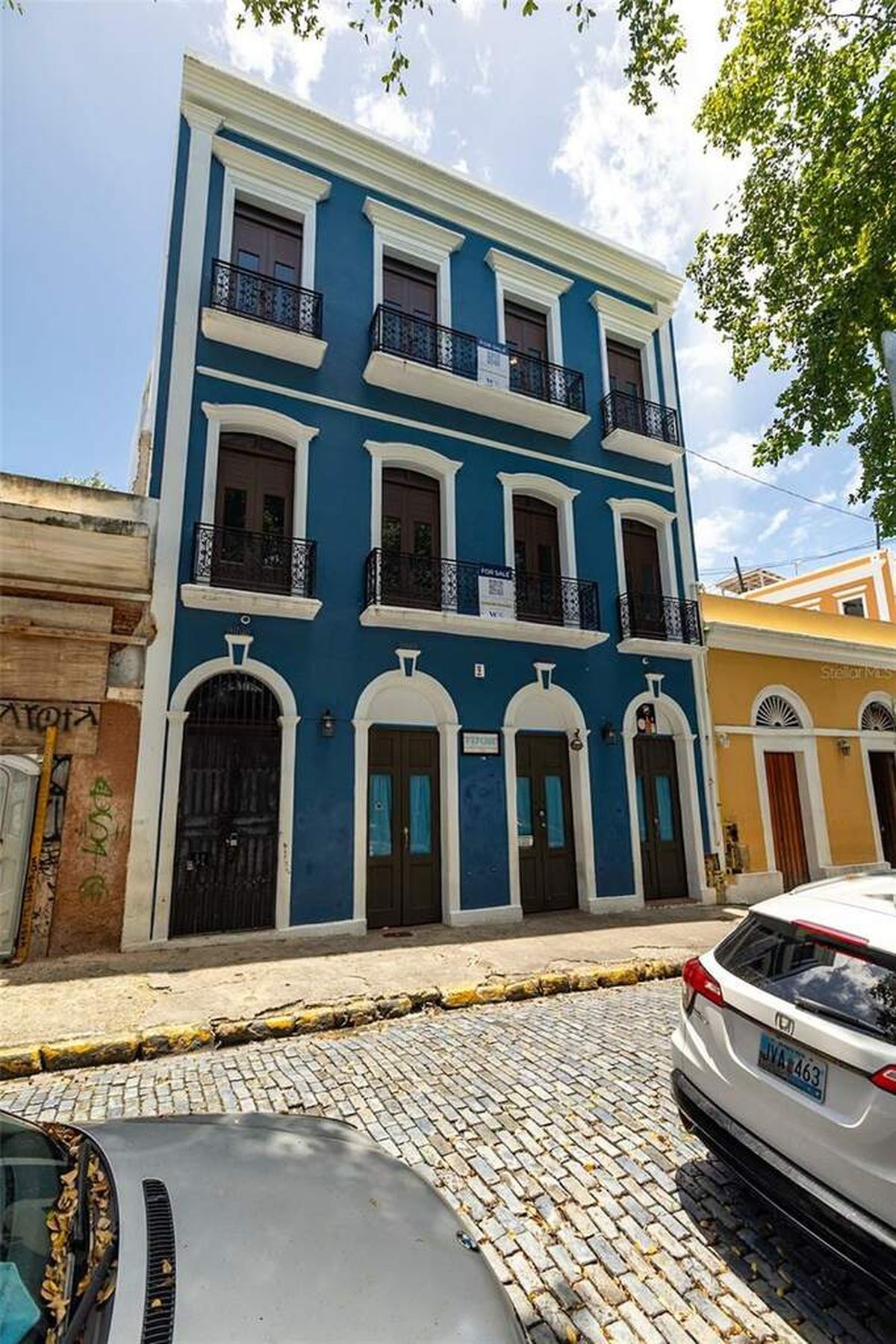
9 Calle Del Mercado, San Juan, PR 00901, Puerto Rico
For Sale
This six-bedroom, five-bath Old San Juan residence offers approximately 3,420 square feet. Its location places the home within the compact street pattern and architectural setting of the historic district.
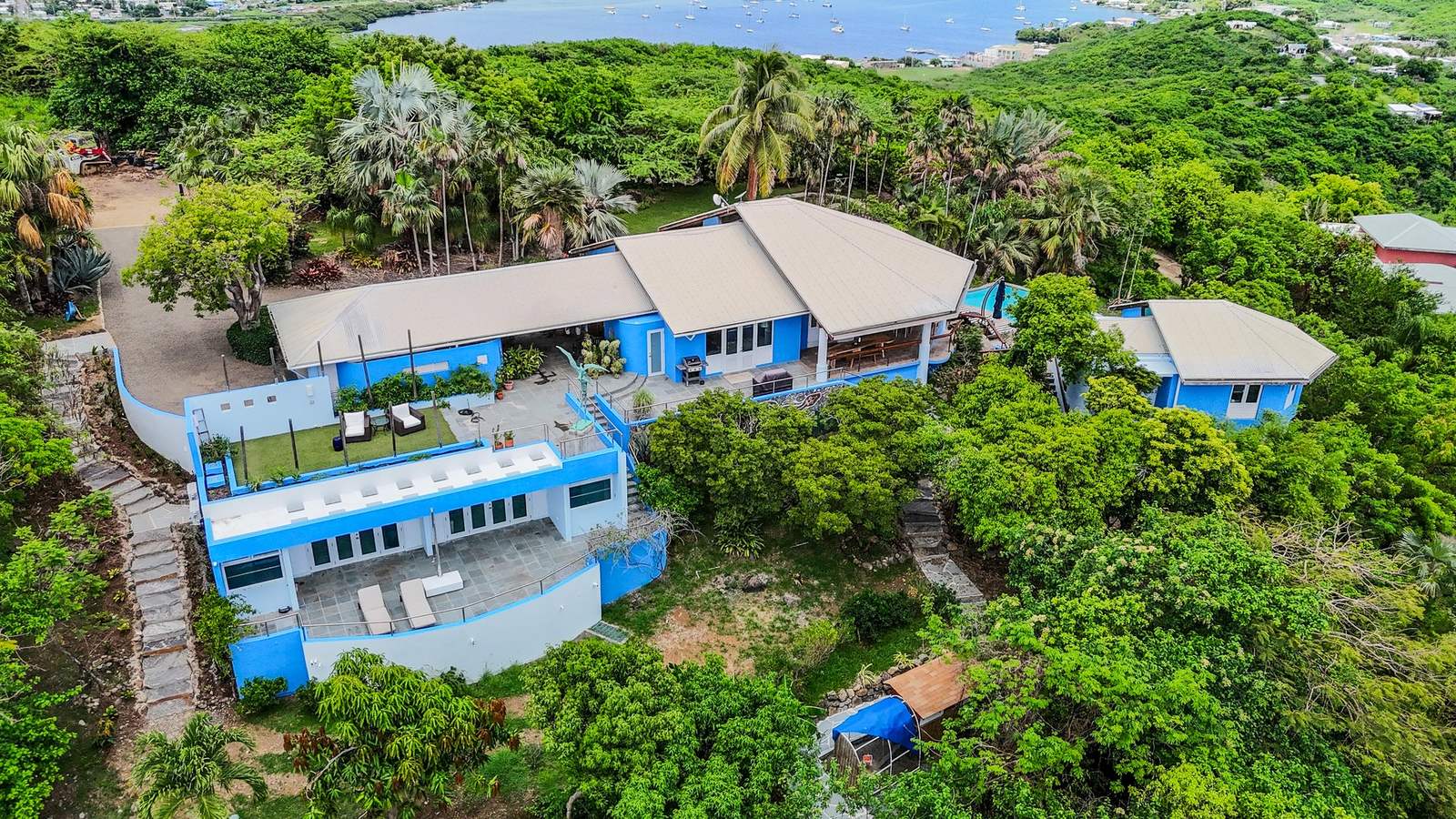
3 LA QUINTA MELONES BEACH BARRIO FLAMENCO, CULEBRA, PR 00775
For Sale
This four-bedroom, five-bath Culebra property offers approximately 3,000 square feet. Its Melones Beach setting emphasizes privacy and direct connection to the coast.
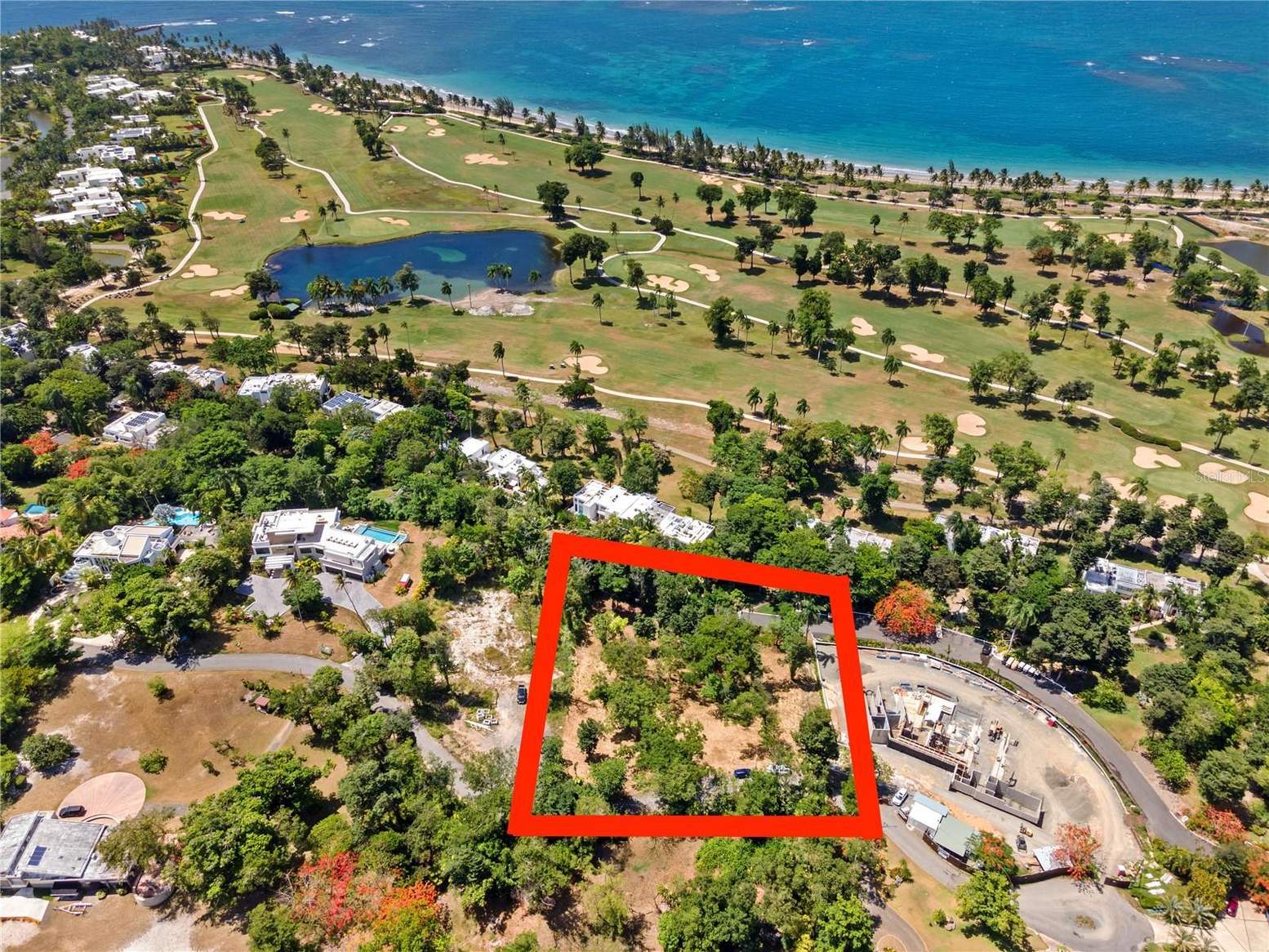
LOT 8 VILLA DORADO ESTATES, DORADO, PR 00646
For Sale
This approximately 0.99-acre homesite is located in Villa Dorado Estates. It offers buyers an opportunity to plan a custom residence within an established Dorado community.
Conclusion
Carnaval Ponceño endures because Ponce continues to carry its history into public life. Its masks, music, artisans, and rituals give the southern city a cultural character that cannot be reduced to a real estate selling point. For prospective residents, that character is meaningful when considered alongside careful property-level due diligence.
Explore luxury properties in Puerto Rico to compare historic, coastal, and private-community lifestyles across the island. Review each listing’s current details and consult qualified local professionals before making a purchase decision. Contact Christie’s International Real Estate Puerto Rico when you are ready to discuss luxury real estate that fits your priorities.
FAQs
When is Carnaval Ponceño held?
It is held during the days leading up to Ash Wednesday, usually in February or March. Confirm the municipality’s current program because exact dates, routes, and times change annually.
Is Carnaval Ponceño family-friendly?
Many daytime parades, workshops, and plaza activities are suitable for families. Parents should review the day’s schedule, plan for crowds and heat, and choose an arrival time that suits their children.
What is the difference between a Ponce vejigante mask and a Loíza mask?
Ponce masks are traditionally made from papier-mâché and feature multiple horns. Loíza masks are typically carved from coconut husks, reflecting a distinct regional tradition.
What should property buyers verify in Ponce’s historic areas?
Buyers should investigate structural condition, roof and moisture issues, utilities, permitted alterations, title and zoning, insurance, and property-specific flood or wind exposure. Licensed local professionals should assess each property rather than relying on neighborhood-level generalizations.