How Title, Escrow, and Property Registration Work for Luxury Homes in Puerto Rico
Discover how title, escrow, and property registration ensure secure transactions for luxury homes in Puerto Rico’s real estate market.

The US mainland uses title companies for closings. In contrast, Puerto Rico mandates a specialized attorney-notary to validate deeds and record them in the Registro de la Propiedad. This fundamental difference creates a unique legal framework that governs all luxury property transactions across the island.
Understanding this system proves essential for high-net-worth buyers navigating Puerto Rico's exclusive real estate market.
Key Takeaways
- Puerto Rico luxury home closings require an attorney-notary to complete the title study, draft the Escritura, and record the deed in the Registro de la Propiedad.
- A thorough title study must confirm ownership history, liens, permits, boundaries, and municipal compliance before any transfer can proceed safely.
- Escrow uses independent agents or attorney trust accounts, while CRIM clearances and municipal certifications are mandatory before closing.
- Closing costs and timelines vary due to registry processing, transfer taxes, and civil-law rules such as forced heirship, which affect estate planning and ownership structures.
The complexity of Puerto Rico's property registration system requires specialized knowledge that goes beyond traditional mainland real estate practices.
Attorney‑Notary and Title Study

In Puerto Rico, only an attorney who is also a notary can authorize the Escritura and complete a luxury property transfer. This professional conducts due diligence on the property’s legal status before executing transfer documents. They are responsible for confirming a clear title and ensuring compliance with all statutory requirements.
What the Title Study Covers
A comprehensive title study for a luxury home typically includes:
- Review of the current deed (Escritura) and all prior transfers.
- Verification of property boundaries through surveyor reports.
- Analysis of municipal permits and zoning compliance.
- Examination of federal and local tax obligations.
- Investigation of any pending litigation involving the property.
- Confirmation of homeowners’ association dues and assessments.
Notary Qualifications and Safeguards
To perform these functions, the attorney‑notary must meet strict professional standards, which usually include:
- Being a licensed attorney admitted to practice in Puerto Rico.
- Holding specialized notary certification from the Puerto Rico Department of State.
- Fulfilling continuing education requirements in property law.
- Maintaining professional liability insurance covering notarial acts.
- Meeting bonding requirements for handling client funds.
Escritura and Property Registry Process
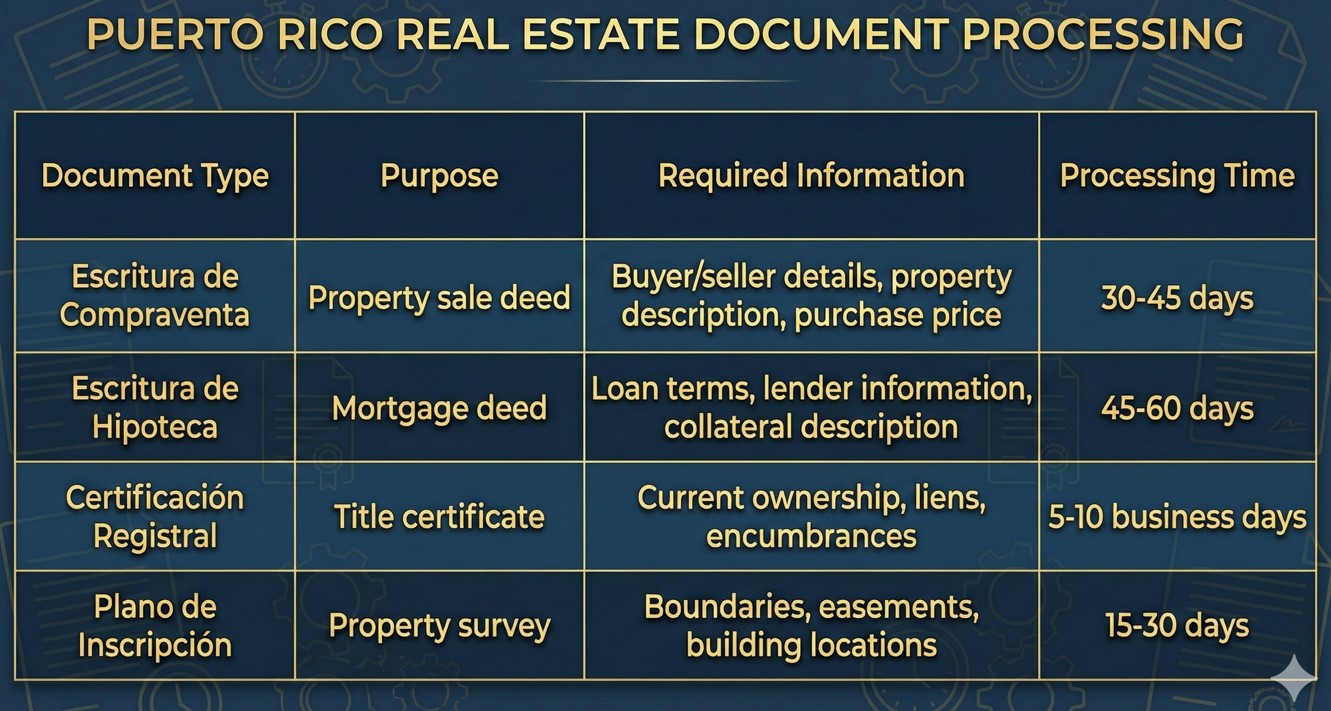
The Escritura is the formal deed that transfers property ownership under Puerto Rico law, and it must comply with specific civil‑law drafting requirements that differ from those of typical mainland US deeds. After completing the title study and confirming that all legal and financial conditions are met, the attorney‑notary drafts and executes the Escritura with the parties.
Once signed, the deed must be presented and recorded in the Registro de la Propiedad to perfect ownership rights and establish priority against later claims or liens. Timely presentation is critical because the registry uses the presentation date to determine the priority order of recorded interests.
Registry Presentation and Inscription Steps
The property registry follows structured procedures that affect the validity and priority of the transfer. Key steps usually include:
- Prompt presentation of the Escritura at the registry office after execution.
- Payment of registration fees is calculated using the property’s value.
- Correction of any deficiencies identified by registry staff within the allowed time.
- Final inscription and issuance of a registered copy of the deed.
CRIM Taxes and Municipal Compliance

Before a luxury property can be transferred, municipal property taxes administered by CRIM (Centro de Recaudación de Ingresos Municipales) must be confirmed as current. Buyers and sellers typically obtain tax certifications showing there are no outstanding municipal obligations, and high‑value homes often receive closer scrutiny during assessment.
Municipal compliance also extends beyond taxes, and luxury buyers should verify that all improvements and uses are properly permitted. This helps avoid fines, corrective work, or delays at closing.
Required CRIM and Municipal Documentation
Key items usually reviewed as part of the closing file include:
- CRIM debt or clearance certifications confirming current property tax status.
- Tasación or assessment records reflecting the property’s taxable valuation.
- Payment receipts for recent tax periods.
- Documentation resolving any disputed assessments or appeals.
- Building permits for structures and major improvements.
- Occupancy permits for residential use.
- Environmental compliance certificates, where applicable.
- Zoning verification letters and utility connection authorizations.
Escrow and Fund Security Mechanisms

Escrow agents Puerto Rico real estate transactions provide fund security through specialized trust accounts managed by licensed professionals. Unlike mainland title companies, Puerto Rico primarily relies on the notary's specialized trust account to handle escrow functions. While independent escrow agents exist, they are rare; the attorney-notary almost always acts as the neutral custodian of funds.
- These professionals must maintain separate client fund accounts and provide detailed accounting of all transaction proceeds.
- The escrow process begins when the purchase agreement establishes terms for the deposit and fund release.
- All parties must agree to escrow instructions that govern how funds are held and distributed.
Escrow Account Requirements
- FDIC-insured bank accounts are separate from operating funds.
- Detailed record-keeping of all deposits and withdrawals.
- Written authorization is required for any fund releases.
- Monthly reconciliation statements are provided to all parties.
- Professional liability insurance covering escrow activities.
Fund Release Conditions
- Execution of all transfer documents by authorized parties.
- Completion of the title study and clearance of any defects.
- Payment of all closing costs and transfer taxes.
- Recording of deed at the Registro de la Propiedad.
- Satisfaction of any loan conditions or requirements.
Closing Costs and Transfer Tax Structure
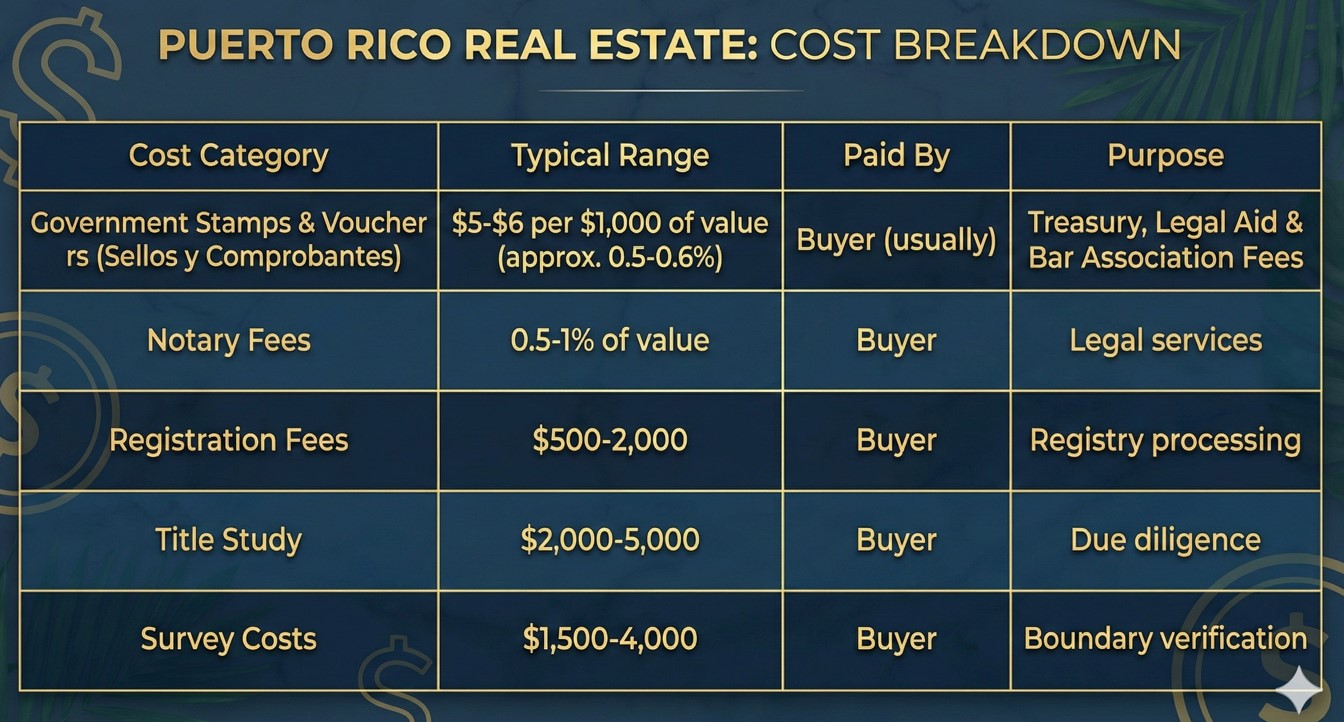
For buyers, closing costs in Puerto Rico typically range from 2% to 5% of the purchase price. (The higher 8-12% figure often cited usually includes the 6% real estate commission, which is traditionally paid by the seller). This percentage includes various taxes, fees, and professional services required for legal transfer.
The cost structure differs from mainland transactions due to Puerto Rico's unique tax system and professional requirements. Transfer taxes in Puerto Rico apply at both municipal and commonwealth levels. These taxes are calculated based on the property's assessed value or sale price, whichever is higher.
Additional Professional Fees
- Real estate commission (typically 6% split between agents).
- Appraisal fees for financing ($1,000-3,000).
- Environmental assessments for waterfront properties.
- Translation services for international buyers.
- Escrow agent fees (0.5-1% of transaction value).
Inheritance Laws and Estate Planning Considerations

Inheritance laws Puerto Rico real estate follow civil law principles that establish forced heirship rules for property transfers. These laws significantly impact estate planning strategies for luxury property owners. Under Puerto Rico law, certain family members have guaranteed inheritance rights that cannot be eliminated through will provisions.
Under the 2020 Civil Code, the forced heirship system reserves one-half (50%) of an estate for legitimate heirs. Property owners can now freely dispose of the remaining half of their assets through testamentary provisions.
Forced Heirship Implications
- Children receive mandatory inheritance shares regardless of will provisions.
- Surviving spouses maintain usufruct rights in community property.
- Property transfers during a lifetime may be subject to challenge.
- Trust structures must comply with Puerto Rico succession laws.
Estate Planning Strategies
- Lifetime gifts to reduce estate value.
- Corporate ownership structures for property holding.
- Usufruct arrangements for surviving spouses.
- International trust planning for non-residents.
Common Title and Compliance Challenges
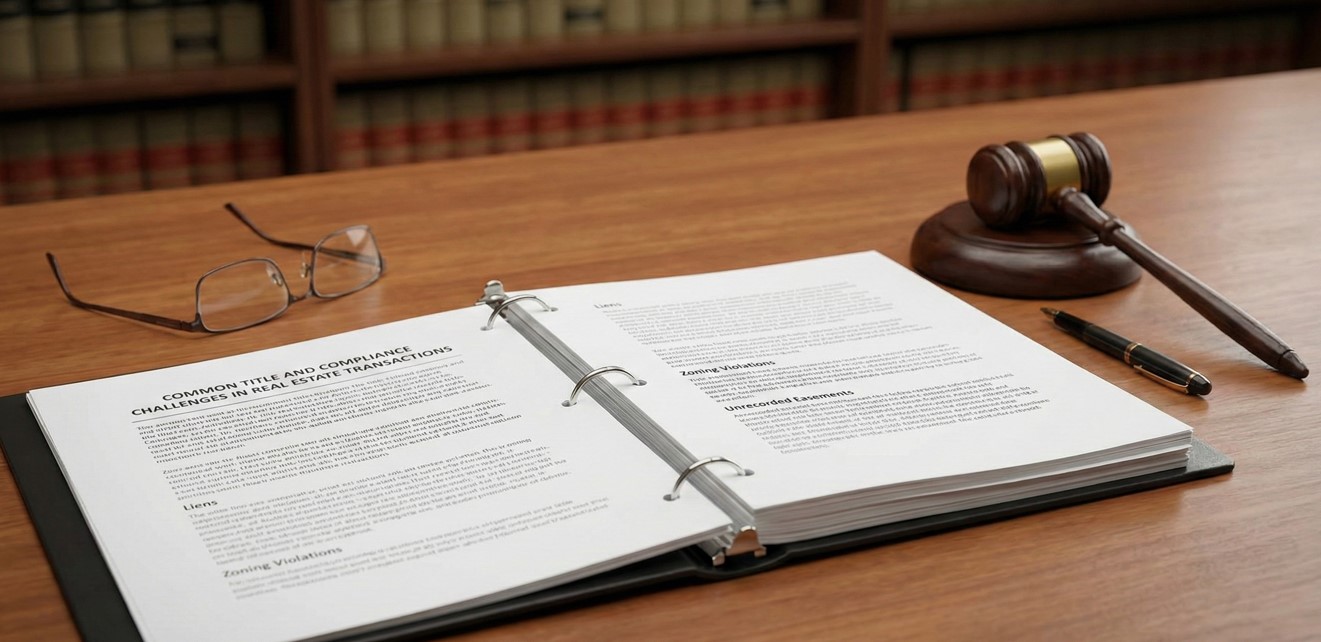
Luxury transactions often uncover issues that go beyond standard residential deals, particularly when properties have long ownership histories or complex structures. Title defects, boundary disputes, missing heirs, and waterfront environmental constraints are all common sources of delay and added cost.
Environmental and coastal regulations add another layer of complexity for beachfront or ocean‑view properties, making thorough permit and land‑use review essential before closing.
Typical Issues
- Incomplete or inconsistent property descriptions in historical deeds.
- Unresolved boundary disputes with neighboring owners.
- Missing or unlocated heirs in inherited property chains.
- Unpaid liens from prior construction, services, or taxes.
- Zoning or permit violations that require municipal resolution.
How Professionals Resolve Them
- Obtaining robust title insurance coverage when available.
- Negotiating and recording boundary or servitude agreements with neighbors.
- Filing quiet title actions to resolve competing ownership claims.
- Negotiating and satisfying outstanding liens before closing.
- Working through municipal processes to correct permit or zoning issues.
San Juan, Puerto Rico Luxury Properties for Sale
Christie's International Real Estate Puerto Rico specializes in navigating these complex legal requirements for luxury properties for sale across the island. Our team coordinates with experienced attorney-notaries and escrow professionals to ensure smooth transactions for high-net-worth clients. We provide comprehensive support throughout the title, escrow, and registration process for exclusive properties in Condado, Dorado, Old San Juan, and other premium markets.
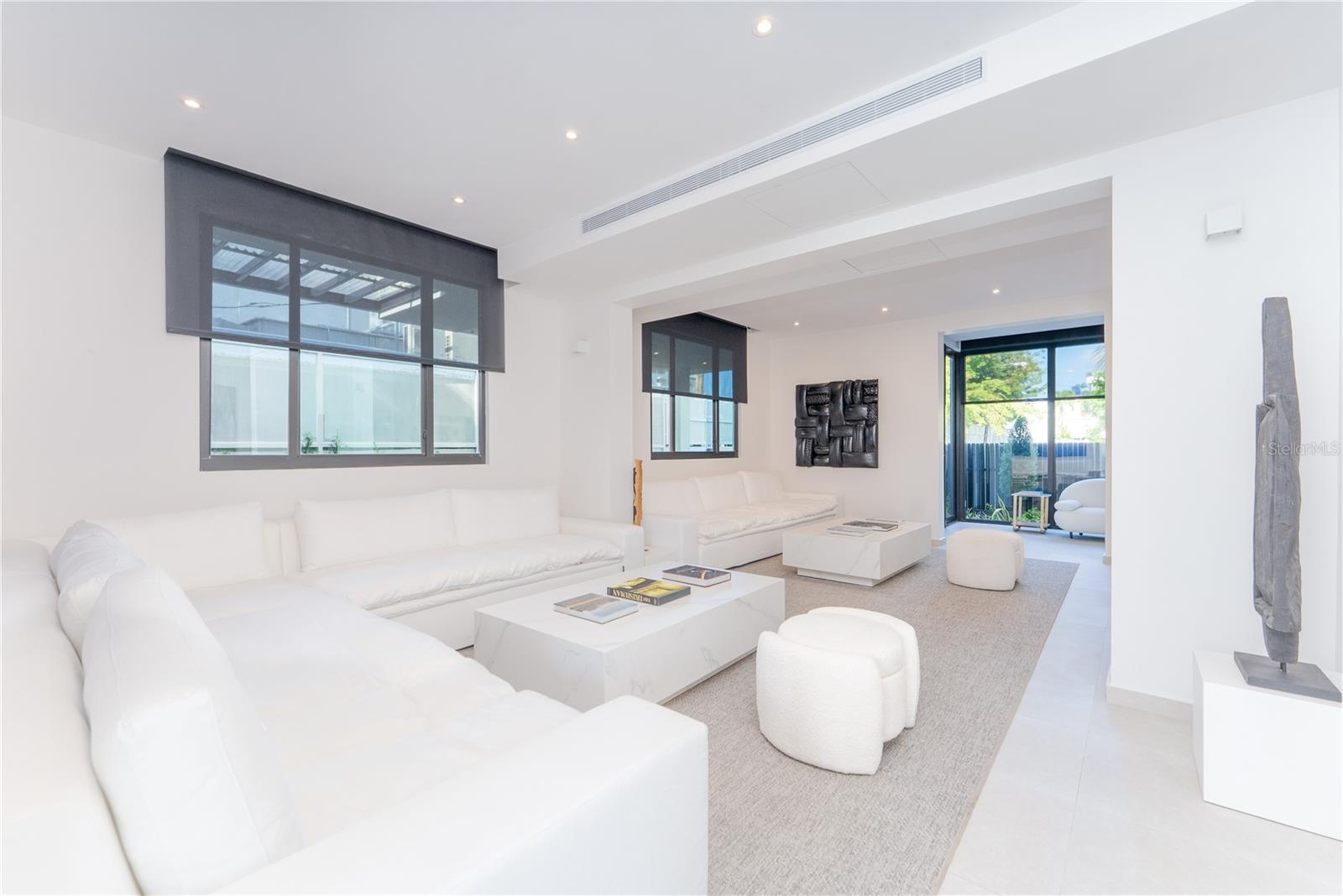
66 PLACID COURT SAN JUAN PR, 00907
This exceptional luxury residence exemplifies the sophisticated properties we represent, requiring expert navigation of Puerto Rico's unique property transfer system.

Carr. 693 Km.10 HM 7 PLANTATION VILLAGE DRIVE #1202 DORADO PR, 00646
Located in prestigious Dorado, this property showcases the premium amenities and locations that define our luxury portfolio.

11 THE MEADOWS ESTATES GUAYNABO PR, 00971
This exclusive Guaynabo estate represents the caliber of properties that benefit from our specialized legal and transaction expertise.
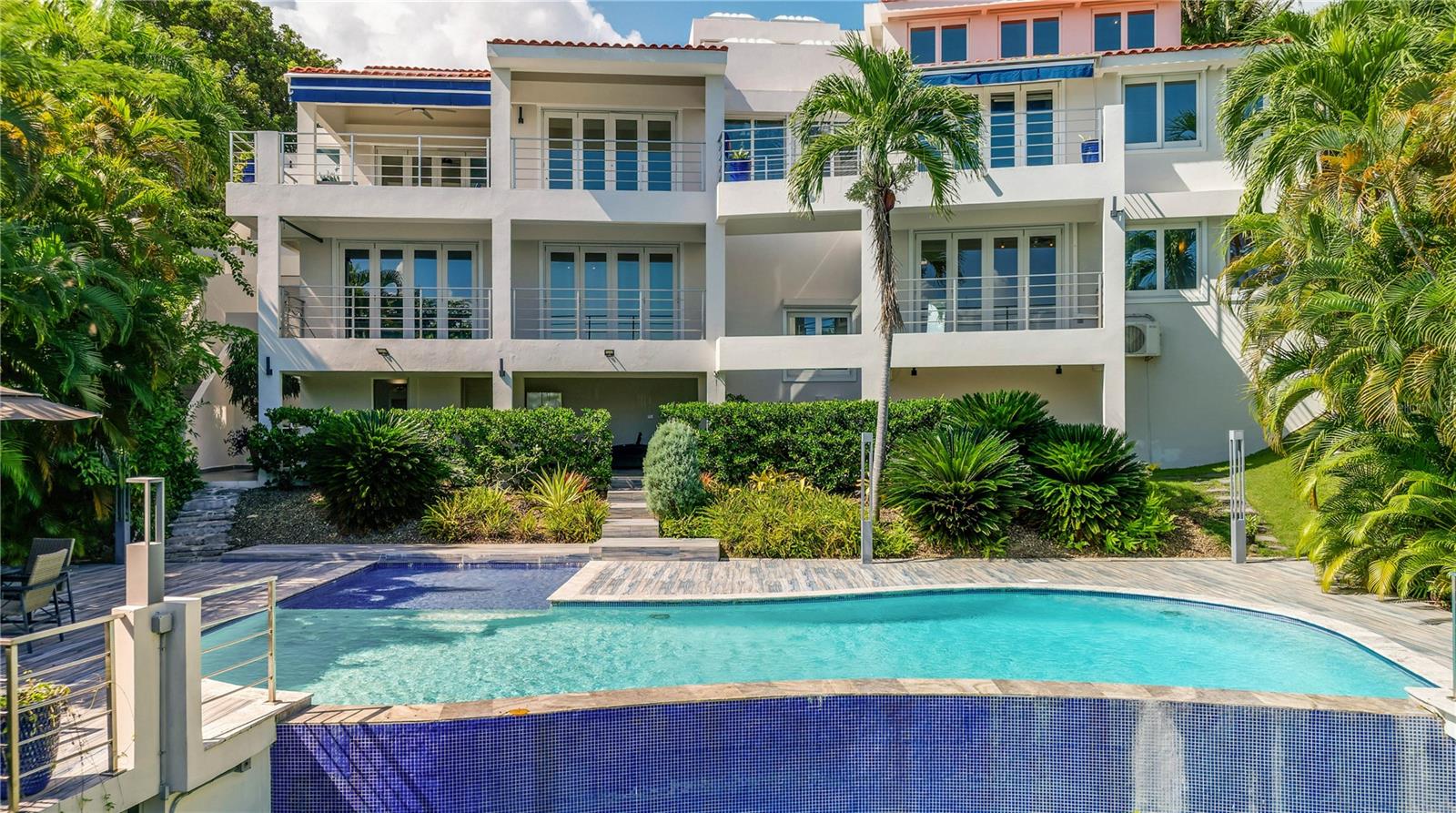
12 RIDGE TOP HUMACAO PR, 00791
Situated in the desirable Humacao area, this property demonstrates our island-wide reach and comprehensive market knowledge.
Final Considerations
The property registration system in Puerto Rico requires specialized knowledge and experienced professionals to navigate successfully. Working with qualified attorney-notaries, escrow agents, and real estate professionals ensures compliance with all legal requirements and protects your investment interests. Understanding these processes before beginning your property search will help you make informed decisions and avoid common pitfalls in luxury real estate transactions.
At Christie’s International Real Estate Puerto Rico, we guide clients through Puerto Rico’s notary-driven title, escrow, and registry process with the discretion and precision luxury transactions demand. Whether you’re looking to buy an exclusive home, sell a premium property, or rent out your residence for income, our team coordinates the right experts to protect your interests from contract to inscription. Connect with us today to get started.
FAQs
Do I need a separate home inspection even if the notary reviews the property records?
Yes. The notary’s due diligence focuses on legal title and registry status, not physical condition. A licensed inspector (and specialists for roof, electrical, septic, pool, etc.) helps uncover defects that can affect value, insurance, and repair budgets.
What should international or mainland buyers plan for regarding documents and signing?
Expect identity, marital-status, and entity documents to be required, often with certified copies and, in some cases, apostilles and sworn translations. If you can’t attend in person, ask early about a Puerto Rico-compliant power of attorney and signing logistics.
How do lenders affect timing and paperwork in Puerto Rico closings?
Financing typically adds lender-specific conditions such as appraisal standards, insurance requirements (including wind/flood where applicable), and a separate mortgage deed that must also be executed and recorded. Build extra lead time for underwriting and registry-related steps.