


The Investor's Guide to Maximizing ROI on High-End Vacation Rentals in Puerto Rico
Expert strategies for maximizing ROI on luxury vacation rentals in Puerto Rico. Location compliance, premium amenities, and elite management insights.
Maximizing ROI on high-end vacation rentals in Puerto Rico comes down to three levers: strict compliance with short-term rental regulations, premium infrastructure like generators and cisterns that support higher nightly rates, and elite property management that sustains occupancy above 65%. Puerto Rico’s lodging sector generated roughly $819 million in revenue in the early part of 2025, with short-term rentals driving year-over-year growth of around 20–25% and peak occupancies in top coastal markets approaching 70% during high season.
In this environment, the best-positioned luxury properties in prime Puerto Rico locations consistently achieve cash-on-cash returns above 8% when investors execute a disciplined, operations-first strategy, as outlined in this Puerto Rico real estate ROI guide.
Key Takeaways
- Short-term rental regulations Puerto Rico require proper licensing and tax compliance before operations begin
- San Juan and Condado luxury properties can achieve $340+ ADRs when supported by resilient infrastructure and premium guest-facing amenities.
- Hurricane insurance for rental properties adds 2-3% to operating costs but protects investment value
- Vacation rental property management fees in the luxury segment typically range from 25–35% of gross revenue but directly influence occupancy and guest satisfaction.
- Turnkey investment properties in Dorado and Condado show strongest RevPAR growth potential
Successful Puerto Rico vacation rental investing starts with understanding short-term rental rules and lodging categories that define how properties are classified, taxed, monitored, and reported.
Short-Term Rental Rules in Puerto Rico’s Luxury Markets

Puerto Rico Room Tax ID registration forms the cornerstone of legal compliance for all vacation rental operations. You must obtain this identification before accepting your first booking, as the Department of Treasury requires monthly tax filings on all short-term rental income. The process takes 30-45 days and requires proof of property ownership, municipal permits, and liability insurance coverage.
Luxury zones like Condado and Dorado enforce additional restrictions on short-term rentals Puerto Rico that directly impact your investment strategy, and recent oversight report highlight how enforcement and community concerns are shaping new rules in these market.
Municipal Permit Requirements by Zone
Each municipality maintains distinct regulations for vacation rental licensing and operational standards. San Juan requires annual permit renewals and limits occupancy to two guests per bedroom plus two additional guests. Dorado enforces noise ordinances with fines for violations after 10 PM.
Tax Obligations and Incentive Programs
ROI modeling must include Puerto Rico’s 7% Room Occupancy Tax on short-term stays of less than 90 days, plus any municipal business license costs or surcharges specific to the property’s location. Certain Act 60 decree holders may reduce their overall Puerto Rico tax exposure through entity-level structuring, but the rules are highly specific to each decree type and require bespoke tax advice.
- Monthly room tax filings due by the 10th of each month
- Municipal business license renewal annually
- Fire department safety inspection every two years
- Health department permits for properties with pools or hot tubs
Clear financial performance metrics help investors identify properties with the strongest ROI potential in Puerto Rico's competitive luxury market.
Financial Performance Metrics for Luxury Properties

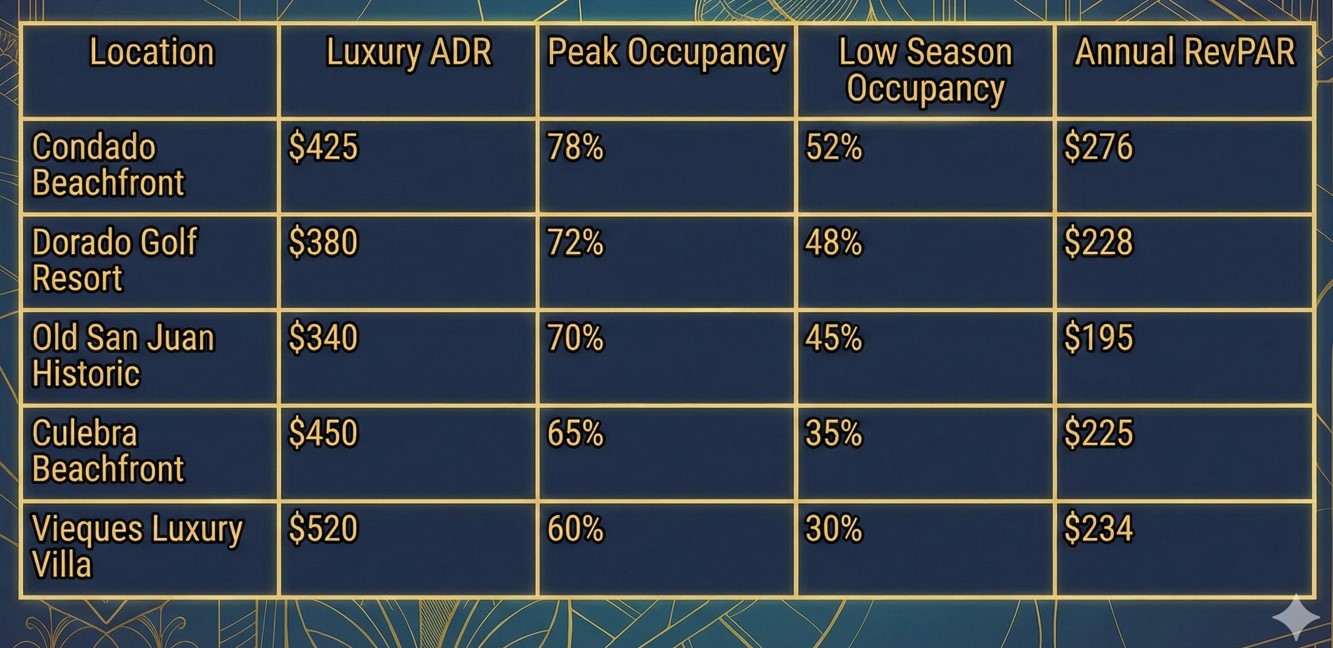
Average Daily Rate (ADR) trends in luxury markets like San Juan and Dorado consistently outperform island averages by 40-60%. Properties positioned in the $300-500 nightly rate range achieve occupancy rates high season vs low season of 75% and 45% respectively. Your capitalization rate (Cap Rate) analysis should target properties delivering 6-8% cap rates before financing.
RevPAR (Revenue Per Available Room) calculations provide the clearest picture of property performance across seasonal fluctuations and competitive positioning.
Cash on Cash Return Calculation Framework
Your cash-on-cash return calculation must account for Puerto Rico's unique operating costs including hurricane insurance, backup power systems, and water storage infrastructure. Properties requiring significant infrastructure upgrades typically see 18-24 month payback periods on these investments.
- Hurricane insurance adds $8,000-15,000 annually for luxury properties
- Generator installation and maintenance costs $12,000-25,000 initially
- Cistern systems for water backup range $5,000-12,000 depending on capacity
- Property management fees consume 25-35% of gross rental income
Prime Investment Zones for Maximum Returns
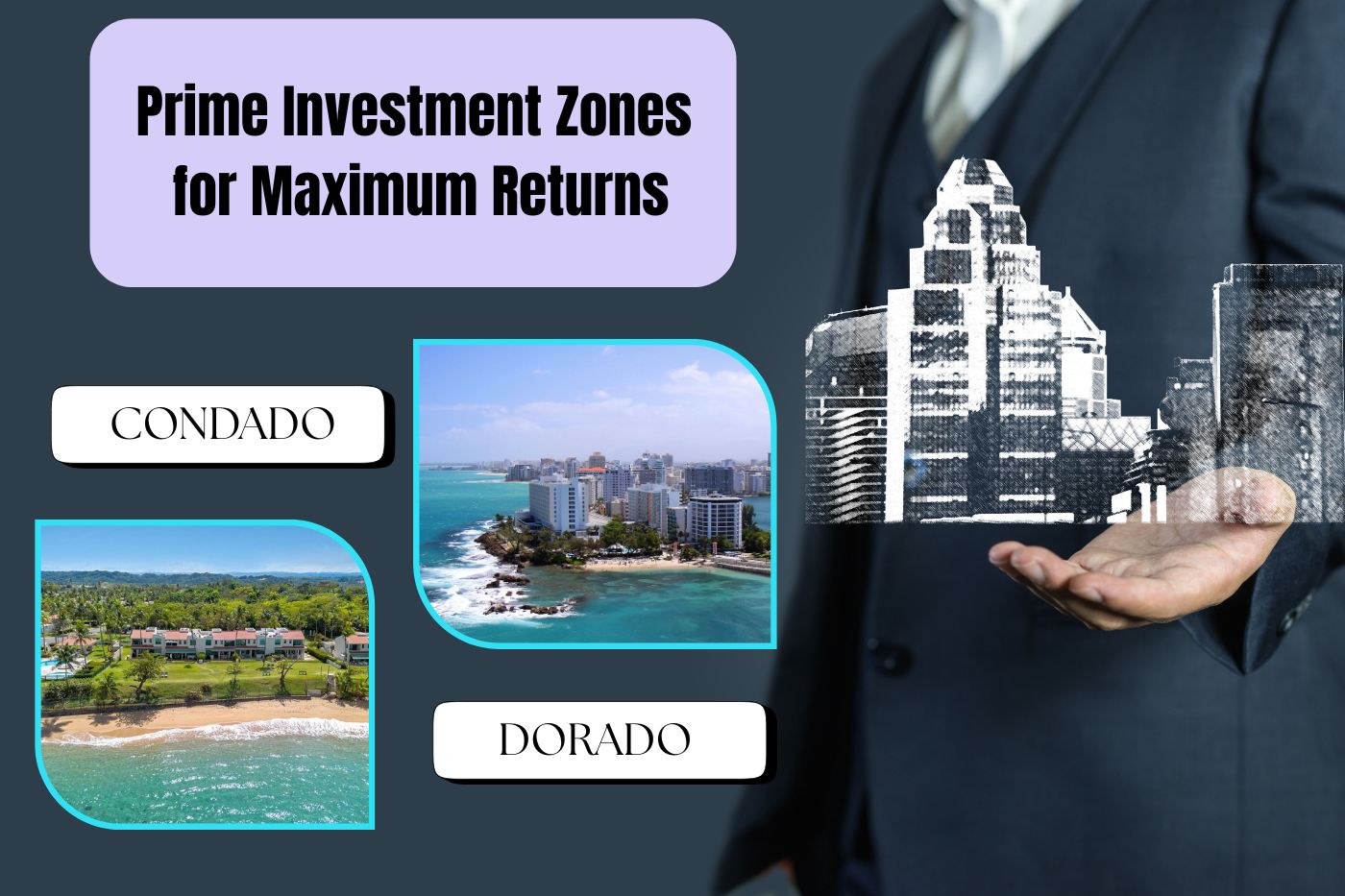
Investment property for sale San Juan commands premium pricing but delivers consistent occupancy through business travel and cruise ship tourism. Condado properties achieve the highest ADRs due to beach access, dining proximity, and infrastructure reliability. Dorado appeals to golf-focused travelers willing to pay premium rates for resort-style amenities and security.
Luxury villas for rent Puerto Rico perform best in locations offering unique experiences that justify higher nightly rates and longer average stays.
Condado: The Consistent Performer
Buying a condo in Puerto Rico's Condado district provides the most predictable returns due to established tourism infrastructure and year-round demand. Properties within two blocks of Ashford Avenue achieve 15-20% higher ADRs than comparable units further inland. Oceanfront condominiums command $400-600 nightly rates during peak season.
Dorado: Golf and Resort Luxury
Dorado properties benefit from proximity to championship golf courses and the Dorado Beach Resort, creating built-in demand from affluent travelers. Vacation rental investments here typically require higher initial capital but achieve superior cash flows through longer average stays and premium pricing.
- Average stay length: 5.2 nights vs 3.1 island average
- Guest spending: 40% higher than other Puerto Rico destinations
- Repeat booking rate: 35% vs 18% island average
- Premium over base ADR: 25-35% consistently
Emerging Markets: Vieques and Culebra
These islands offer the highest ADR potential but require careful consideration of accessibility challenges and infrastructure limitations. Properties here work best for investors targeting ultra-luxury positioning with rates above $500 nightly.
Successful luxury vacation rental operations depend heavily on professional management that maintains property standards and maximizes booking optimization.
Property Management, Amenities, and Revenue

Vacation rental property management fees in Puerto Rico's luxury segment typically range from 25–35% of gross revenue, but top-tier operators can lift occupancy by 15–20 percentage points versus self-managed properties. Professional management becomes critical once nightly rates exceed $300, because guest expectations for service, responsiveness, and reliability rise sharply at this price point. The best partners provide 24/7 concierge support, maintain vetted vendor networks, and actively manage distribution and pricing across multiple booking platforms to protect both revenue and reviews.
Puerto Rico tourism real estate requires specialized operational knowledge due to infrastructure challenges and seasonal demand fluctuations that affect guest satisfaction.
Essential Amenities for Premium Positioning and Revenue
- Backup generator with automatic transfer switch
- Water cistern system with pressure pumps
- High-speed internet with redundant connections
- Central air conditioning with individual zone controls
- Pool and outdoor entertainment areas with professional lighting
- Security systems with remote monitoring capabilities
Dynamic pricing tools and professional revenue management help these well-amenitized properties capture peak demand while staying competitive in softer periods, often driving 12–18% higher annual revenue compared to static pricing models. Elite management teams also handle guest screening, ensuring the property attracts responsible renters who protect both the asset and neighborhood standards.
Risk Management and Insurance Considerations

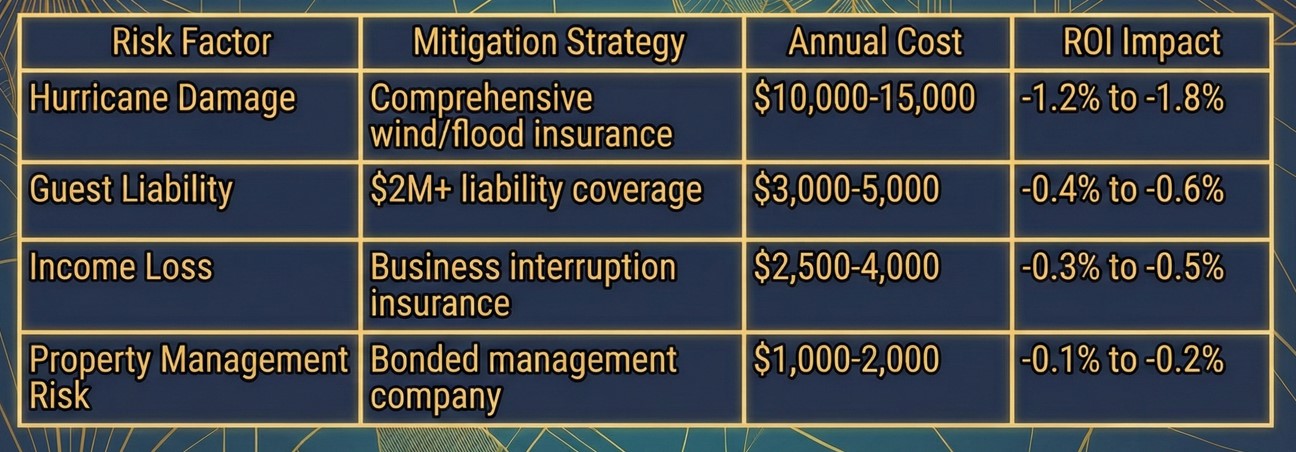
Hurricane insurance for rental properties requires specialized coverage beyond standard homeowner policies, with annual premiums ranging from $8,000-15,000 for luxury properties. Your insurance strategy must include business interruption coverage, as hurricane seasons can impact bookings for 2-3 months annually. Liability coverage should exceed $2 million for properties hosting guests, with umbrella policies providing additional protection against guest injuries or property damage claims.
Turnkey investment properties often include pre-negotiated insurance packages, but investors should verify coverage limits meet luxury market standards.
Puerto Rico Luxury Properties for Sale
Once you understand the ROI levers—legal compliance, resilient infrastructure, and elite management—the next step is choosing luxury properties for sale that already fit the high-performance vacation rental model, or can be upgraded into it without overcapitalizing. Christie’s International Real Estate Puerto Rico helps investors identify the right micro-locations, verify STR feasibility (HOA rules, permitting, licensing, insurance), and underwrite realistic ADR/occupancy scenarios before making an offer. Below, we’ve included sample listings that align with the “operations-first” approach in this guide, so you can compare real opportunities and move from strategy to acquisition with clarity.
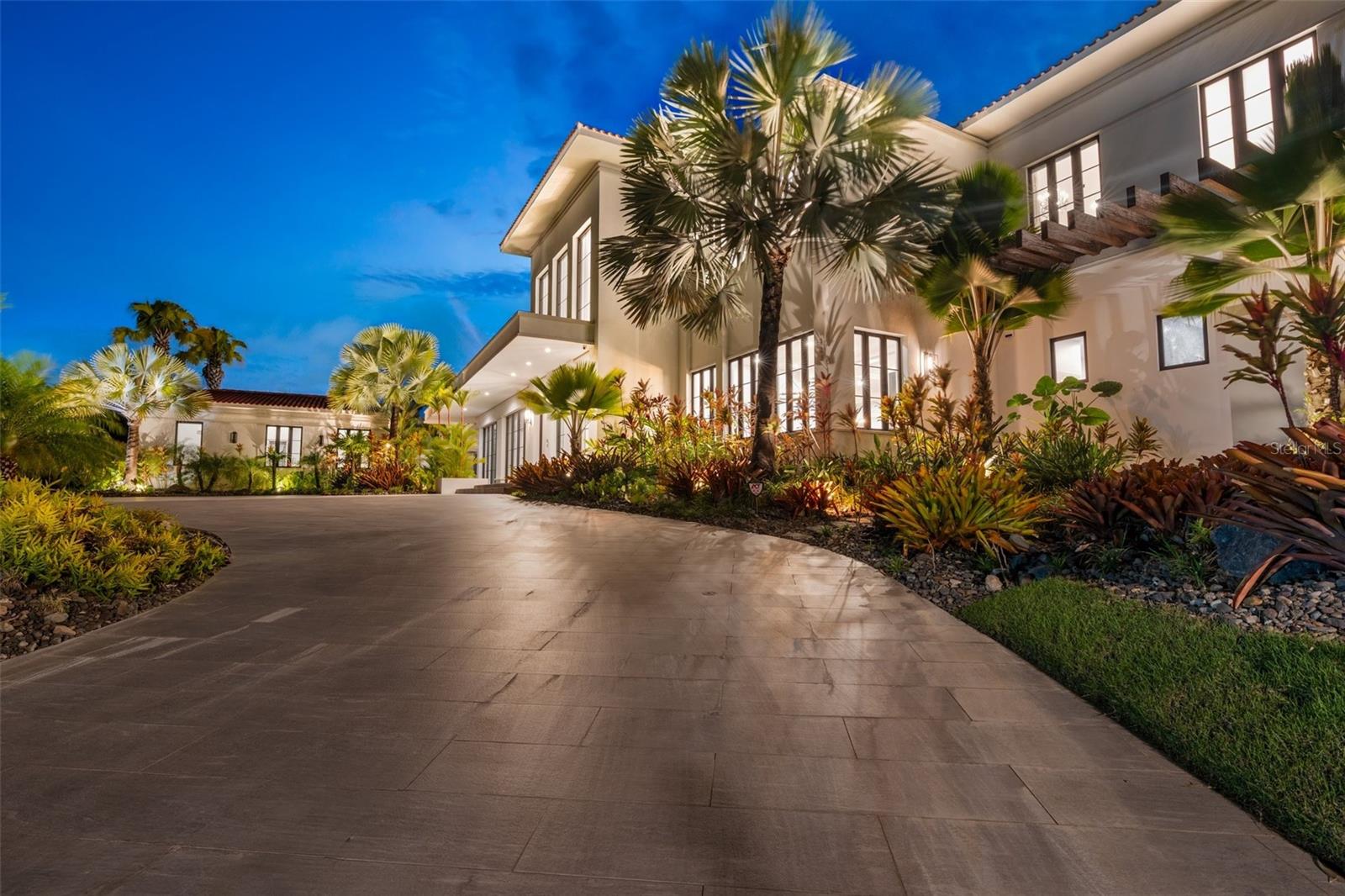
323 Dorado Beach East, Dorado (Dorado Beach East)
A contemporary 2021 two-story residence with 8 bedrooms, 12 bathrooms, and 8,137 sq ft, set on approximately 0.93 acres inside a gated Dorado Beach community. Designed for resort-style living, it includes a wet bar, in-ground pool, and multiple outdoor features like an outdoor kitchen/grill and outdoor shower, plus golf-cart-friendly parking.
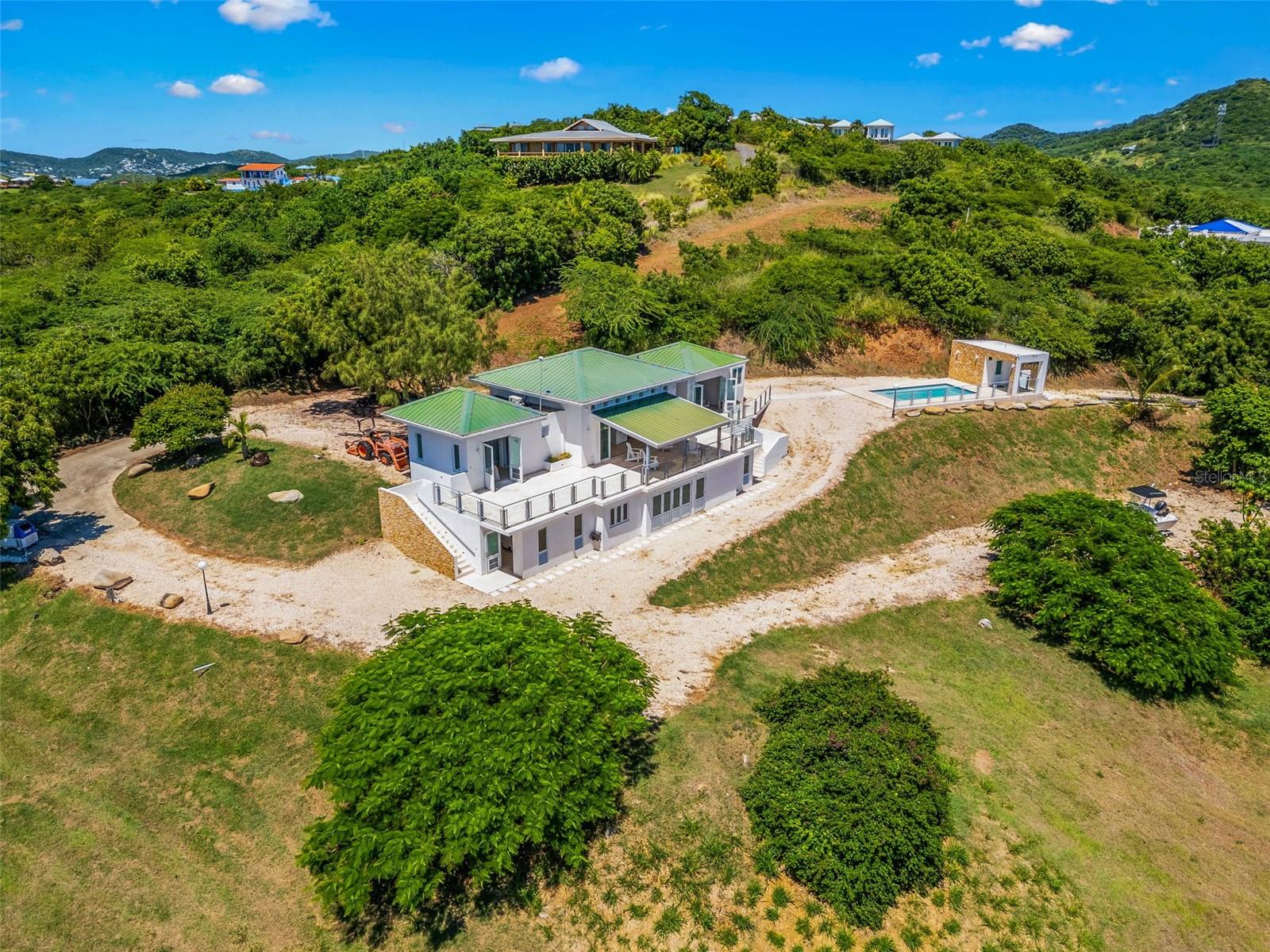
Lot 21, Frailes Ward, Las Pelas, Culebra
A rare beachfront, waterfront homesite with a 4-bedroom, 4-bath residence totaling 2,606 sq ft on approximately 4.96 acres, offering scale and privacy that’s difficult to replicate on Culebra. The property includes a pool with deck and balcony, plus practical utility features like solar hot water and 4 garage spaces.
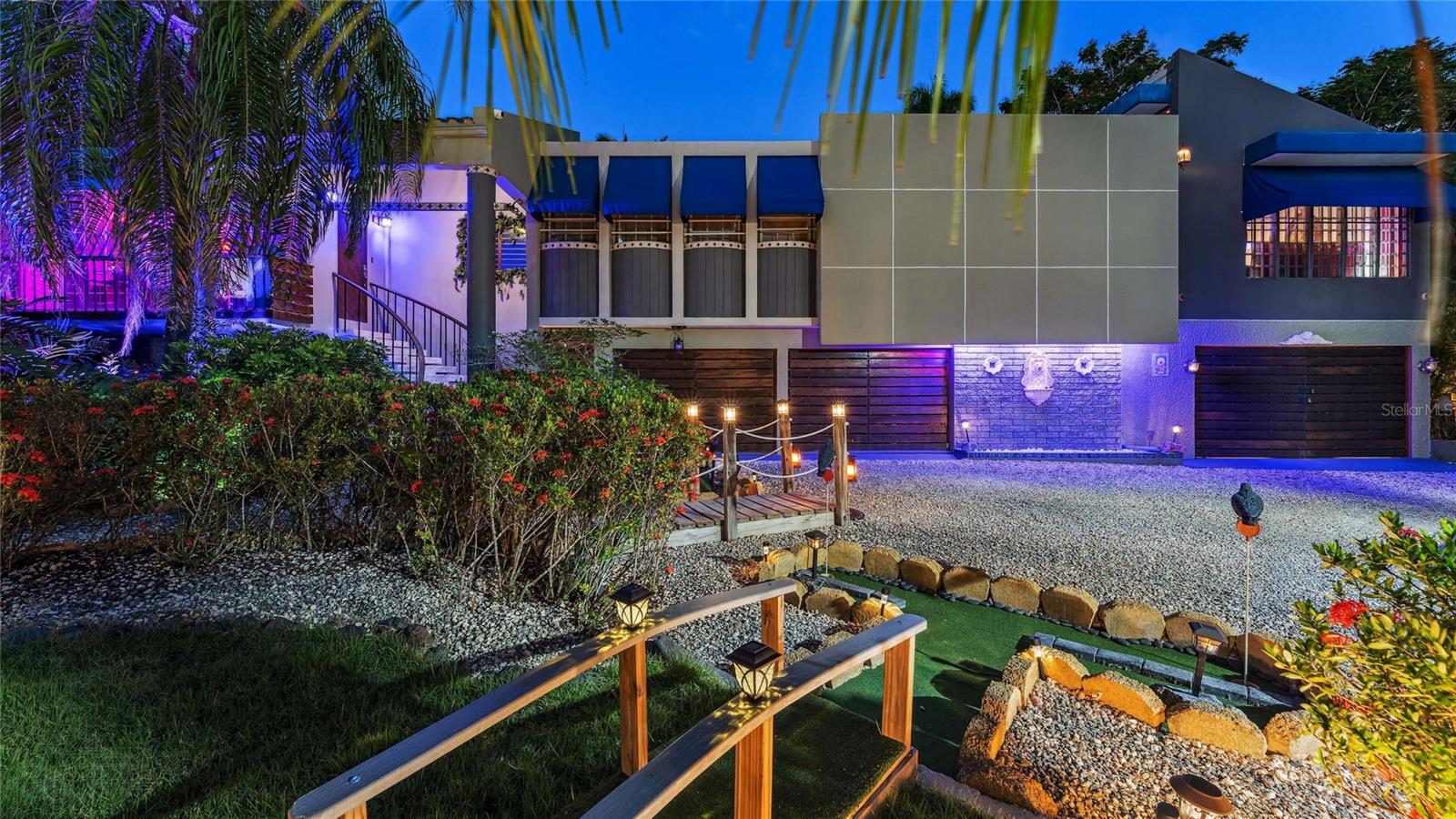
413 Km 0.7 Ensenada Ward, Rincón
A two-story residence with 7 bedrooms, 7 bathrooms, and 5,000 sq ft on about 0.69 acres, with a layout built to host groups while keeping indoor and outdoor living connected. The home features a private pool, balcony/courtyard/garden spaces, and views described as garden, pool, and trees/woods, supported by mini-split cooling.

Calle 1, Punta Santiago, Humacao
A 2023 coastal-style, two-story home with 4 bedrooms, 4 bathrooms, and 3,000 sq ft, positioned waterfront in Punta Santiago with water views. It emphasizes storm-ready comfort with hurricane shutters, mini-split cooling, and clean finishes like stone counters, making it well-suited for beach-forward living.
Final Assessment
Luxury vacation rental investments in Puerto Rico can deliver compelling 8–12% cash-on-cash returns when investors align regulatory compliance, resilient amenities, and professional management in a single, coherent operating plan. Treating these homes as active hospitality businesses rather than passive holdings keeps guest experience, reviews, and long-term asset value moving in the same direction.
Christie’s International Real Estate Puerto Rico specializes in helping investors acquire, position, and exit high-end vacation rentals that serve both lifestyle and long-term performance goals. The team combines deep local market intelligence with global luxury standards to guide acquisitions, sales, and rental strategies that match each client’s risk profile and ROI targets.
FAQs
How much cash should I reserve for working capital after closing?
Plan for 3–6 months of fixed operating costs (insurance, utilities, HOA, management retainers) plus an extra buffer for emergency repairs and replacement of high-wear items like HVAC components, appliances, and pool equipment.
What upgrades most reliably increase luxury ADR without over-improving?
Focus on guest-visible, photo-forward improvements—designer outdoor living (shade, seating, lighting), upgraded bedding and soundproofing, spa-style bathrooms, and a cohesive interior design package—then validate ROI by comparing comps in the same micro-location and bedroom count.
What should I verify in an HOA/condo regime before buying for short-term rentals?
Confirm STRs are explicitly permitted in the governing documents, review fines/enforcement history, check guest registration and parking rules, understand quiet hours and amenity access restrictions, and ensure the association’s insurance and reserve funding won’t trigger special assessments.


