Puerto Rico presents a complex cost equation compared to the US mainland. While housing and taxes offer significant savings, imported goods and utilities create higher expenses that require careful financial planning.
In this article, we break down the real cost of living in Puerto Rico compared with the mainland United States. We examine housing, groceries, utilities, taxes, healthcare, and other everyday expenses to give you a clearer picture of what to expect.
Key Takeaways
- Puerto Rico can be cheaper than the US for housing and property taxes.
- Groceries and utilities often cost more because many goods are imported.
- Act 60 can create major tax savings for qualified residents.
- Owning a car is necessary in most parts of Puerto Rico.
- Living costs depend a lot on the area, lifestyle, and property type.
Housing Costs: Where Puerto Rico Delivers Real Savings

Average rent in San Juan varies dramatically based on location and property quality. Studio apartments in expensive areas like Condado command around $1,265 monthly, while similar spaces in standard neighborhoods cost approximately $787. Larger 900-square-foot accommodations range from $1,098 in regular areas to $2,558 in premium locations.
The Puerto Rico vs US mainland cost comparison shows substantial housing advantages. Reports state that the average Puerto Rico rent at $2,250, creating opportunities from budget-friendly $550 apartments in smaller cities to ultra-luxury $50,000 monthly properties in Dorado.
Rental Market Breakdown by Area
- Condado & Miramar: $950-1,400 for one-bedroom units with ocean proximity.
- Isla Verde: Premium beachfront locations with resort-style amenities.
- Old San Juan: Historic charm with modern conveniences at competitive rates.
- Dorado: Exclusive communities with luxury properties commanding top-tier pricing.
- Secondary markets: Mountain and rural areas offering significant cost reductions.
Food and Grocery Expenses: The Import Reality
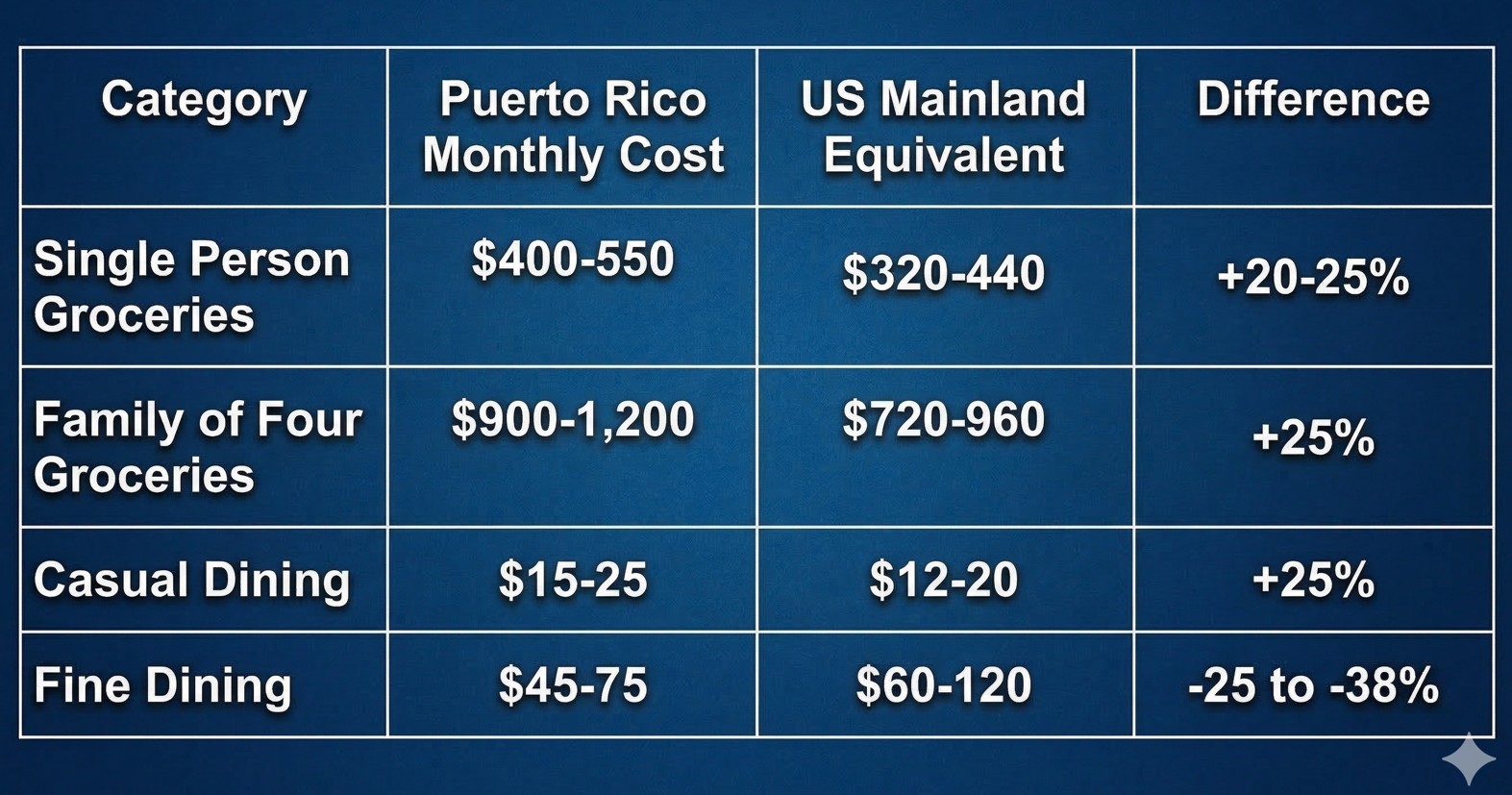
Grocery prices in PR reflect the island's import dependency, creating a 10-25% premium over mainland US costs. Single individuals typically spend $400-550 monthly on groceries, while families of four budget $900-1,200 for household food expenses. This translates to roughly $100-300 additional monthly costs compared to similar US metropolitan areas.
Restaurant dining follows similar patterns, with casual meals slightly elevated but fine dining offering exceptional value compared to major US cities.
Utility Costs Puerto Rico: Energy and Infrastructure

Utility costs Puerto Rico present mixed scenarios depending on property size and location. Studio apartments typically see monthly utility bills around $289 for electricity, water, and gas services. Larger 900-square-foot accommodations generally cost $177 monthly, reflecting economies of scale in utility distribution.
Air conditioning drives the majority of electrical expenses, particularly during summer months when temperatures consistently reach the mid-80s to low-90s Fahrenheit.
Utility Cost Factors
- Electricity rates: Higher than US mainland average due to oil dependency.
- Water services: Generally reliable with moderate pricing.
- Internet/Cable: Competitive rates with multiple provider options.
- Propane gas: Common for cooking with reasonable costs.
- Solar options: Growing adoption reducing long-term electricity expenses.
Tax Advantages: Act 60 Cost Savings Transform Financial Pictures

Act 60 cost savings represent Puerto Rico's most compelling financial advantage for qualifying individuals and businesses. The program offers 4% corporate tax rates, 0% capital gains taxes, and 0% dividend taxes for approved residents. These incentives can reduce overall tax burdens by up to 96% compared to mainland US obligations.
Moving to Puerto Rico expenses must factor these substantial tax benefits when calculating long-term financial impact.
Act 60 Qualification Requirements
- Spend at least 183 days annually in Puerto Rico.
- Maintain primary residence on the island.
- Make annual charitable contributions of $10,000 minimum, ensuring at least $5,000 of that total goes to government-approved, children-focused organizations.
- Purchase Puerto Rico-sourced goods and services when possible.
- Avoid conflicts of interest with prior business relationships.
Tax Comparison Analysis
- Federal income tax: Still applies to Puerto Rico residents.
- Local income tax: Ranges from 0-33% based on income levels.
- Property taxes: Significantly lower than most US states.
- Sales tax: 11.5% standard rate, which combines a 10.5% state rate and a mandatory 1% municipal rate.
- Capital gains: 0% for Act 60 participants vs up to 20% mainland.
Transportation and Vehicle Costs

Vehicle expenses in Puerto Rico exceed mainland costs due to import duties and limited local automotive markets. New car prices typically run 15-20% higher than US dealership pricing, while used vehicles maintain strong resale values. Gasoline costs align closely with mainland averages, though insurance rates vary significantly based on coverage levels and driving history.
Public transportation options remain limited outside San Juan, making vehicle ownership essential for most residents.
Transportation Budget Considerations
- Vehicle purchase: Higher upfront costs with limited financing options.
- Auto insurance: Required with rates varying by provider and coverage.
- Maintenance: Parts and service costs elevated due to import requirements.
- Registration fees: Annual requirements with moderate costs.
- Parking: Free in most areas, paid in San Juan business districts.
Healthcare and Insurance Expenses
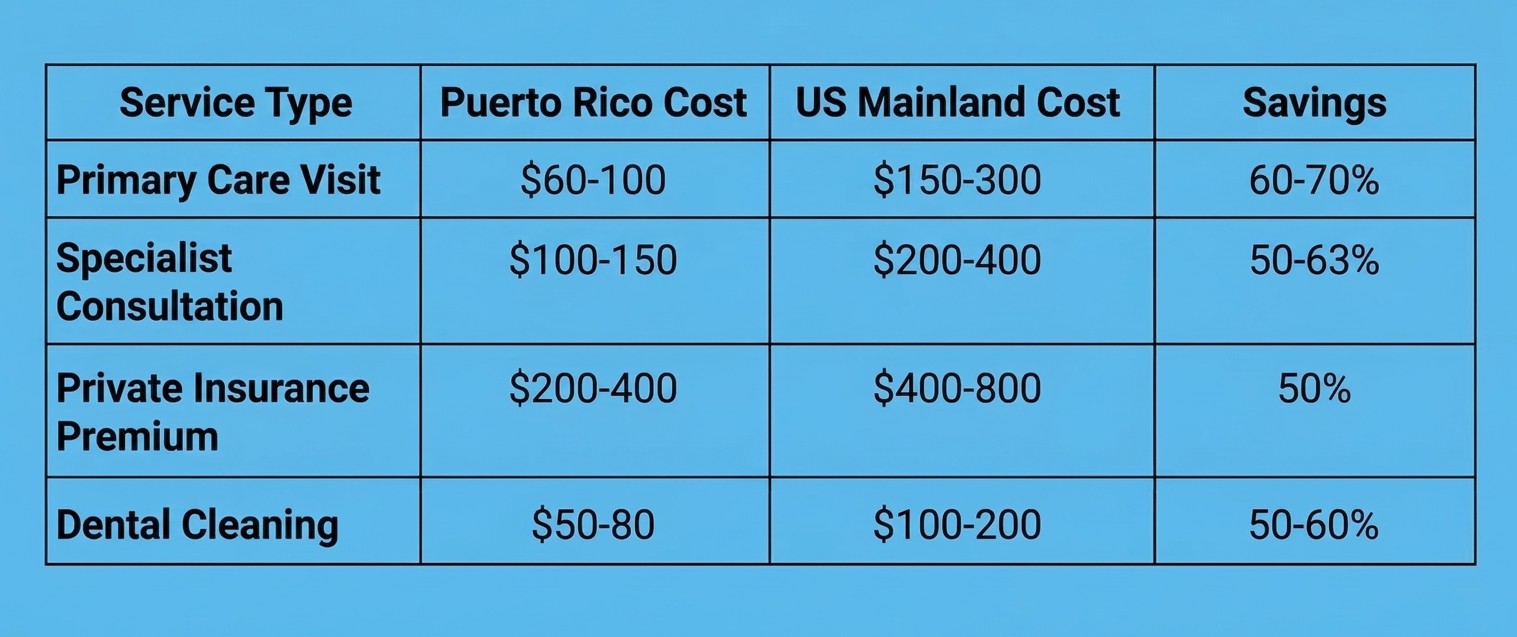
Healthcare costs in Puerto Rico generally fall below mainland US levels while maintaining quality standards. Private insurance plans offer comprehensive coverage at reduced premiums compared to similar US policies. Medicare coverage applies to Puerto Rico residents, though some supplemental options may have limited availability.
Prescription medications cost less than US mainland prices, particularly for generic alternatives.
Puerto Rico Luxury Properties for Sale
Puerto Rico offers an exceptional lifestyle for high-net-worth individuals seeking luxury properties for sale in a tax-advantaged environment. The combination of Act 60 benefits, world-class amenities, and Caribbean living creates compelling value propositions for discerning buyers. Christie's International Real Estate Puerto Rico specializes in connecting sophisticated clients with premium properties across the island's most exclusive markets.

9 CASTAÑA ST GUAYNABO PR, 00968
Rare multigenerational estate in San Patricio offering 10,000+ sq. ft. of refined living, 7 bedrooms, resort-style outdoor amenities, backup systems, and a prime San Juan location.

205 Tetuan St San Juan PR, 00901
Located in the heart of Old San Juan, this historic property combines colonial charm with modern conveniences. The residence provides authentic Puerto Rican architecture while offering proximity to cultural attractions and waterfront dining.

2200 Cacique St San Juan PR, 00913
This elegant property showcases refined living in one of San Juan's most desirable neighborhoods. The home features spacious layouts and sophisticated design elements that reflect the island's luxury real estate standards.

4327 Isla Verde Ave #PH 1506 Carolina PR, 00979
This penthouse residence delivers beachfront luxury with expansive terraces and resort-style amenities. The property offers direct beach access and stunning views of the Atlantic Ocean from every room.
Final Assessment
Puerto Rico can be more affordable than the US mainland in key areas such as housing, healthcare, and tax planning, but higher costs for imported goods, utilities, and transportation can change the overall picture. For buyers, investors, and future residents alike, the smartest decision comes from weighing both the savings and the added expenses against your lifestyle and long-term goals.
At Christie’s International Real Estate Puerto Rico, we help clients navigate the island’s market with trusted local insight and personalized service. Whether you want to buy a luxury home, sell a distinctive property, or rent out your residence, we work closely with you to position every opportunity for success. Explore our listings and connect with us to take the next step with our team.
FAQs
What upfront “moving costs” should I budget for beyond rent?
Plan for:
- Deposits (often first month + security)
- Application/background fees
- Furnishing/household setup (many rentals are partially furnished), and
- One-time costs like shipping personal items
- Setting up internet, and
- Buying backup essentials (fans, surge protectors, water storage) depending on the property
How can I reduce grocery costs without sacrificing quality?
- Prioritize locally produced items (seasonal produce, seafood, coffee)
- Shop multiple stores (big-box for staples, local markets for fresh goods), and
- Adjust meal planning around weekly specials (imported brands and specialty items are usually the biggest budget drivers)
What should I verify before choosing a neighborhood or building?
Ask about power/water reliability, whether the building has a generator/cistern, included utilities, internet provider options and speeds, parking/security, noise levels, and flood/hurricane exposure (including insurance requirements for the specific address).






.png)