Act 60 can dramatically reduce capital gains tax for qualifying crypto investors who become bona fide Puerto Rico residents. Many post‑relocation gains on eligible investments can be taxed at 0% in Puerto Rico under the current Individual Resident Investor rules, while certain export‑service business income may qualify for a 4% rate under separate Act 60 provisions.
This tax advantage translates directly into increased buying power for luxury real estate, allowing digital asset holders to preserve more wealth when converting crypto gains into premium Puerto Rico luxury properties. This article explains how Act 60 interacts with luxury home purchases and the specific steps crypto investors take to maximize both tax benefits and real estate outcomes.
Key Takeaways
- Act 60 can increase buying power for qualifying crypto investors who establish bona fide Puerto Rico residency.
- Crypto investors must carefully time asset sales around residency and decree requirements.
- Documentation, travel logs, source-of-funds records, and tax compliance are essential.
- Dorado Beach, Condado, Old San Juan, Palmas del Mar, and Culebra are prime markets for Act 60 buyers.
- Luxury real estate in Puerto Rico can support both residency goals and long-term wealth preservation.
How Act 60 Changes the Math for Crypto-Funded Luxury Home Purchases

The financial impact of Act 60 on crypto wealth preservation becomes clear when you examine the tax differential on substantial digital asset gains. A crypto investor with $10 million in capital gains faces federal tax rates up to 37% plus potential state taxes, resulting in $3.7 million or more in tax liability.
Under a preferential Puerto Rico regime, if qualifying crypto gains were taxed at 4% instead of 37%, the same investor would face only $400,000 of tax and preserve an additional $3.3 million for luxury real estate investments. This illustration highlights how Act 60‑style incentives dramatically increase purchasing power, though actual rates depend on decree terms and application timing.
The examples below show how different tax rates (such as 37% versus 4%) change buying power; in practice, current Act 60 resident investors may achieve 0% on many post‑relocation gains, while future applicants could face higher preferential rates.
Capital Gains Tax Comparison: Mainland vs Puerto Rico

Timing Considerations for Maximum Benefit
Crypto investors must carefully sequence their asset sales and Puerto Rico relocation to capture maximum Act 60 benefits. Digital assets acquired before establishing Puerto Rico residency remain subject to mainland tax rates, while assets acquired after becoming a bona fide resident qualify for the 4% rate. This timing requirement often influences both the real estate purchase timeline and the strategic liquidation of crypto portfolios.
Smart investors often relocate first, establish residency, then gradually liquidate crypto positions to fund luxury property acquisitions over multiple tax years.
Essential Act 60 Requirements and Residency Rules for Crypto Investors
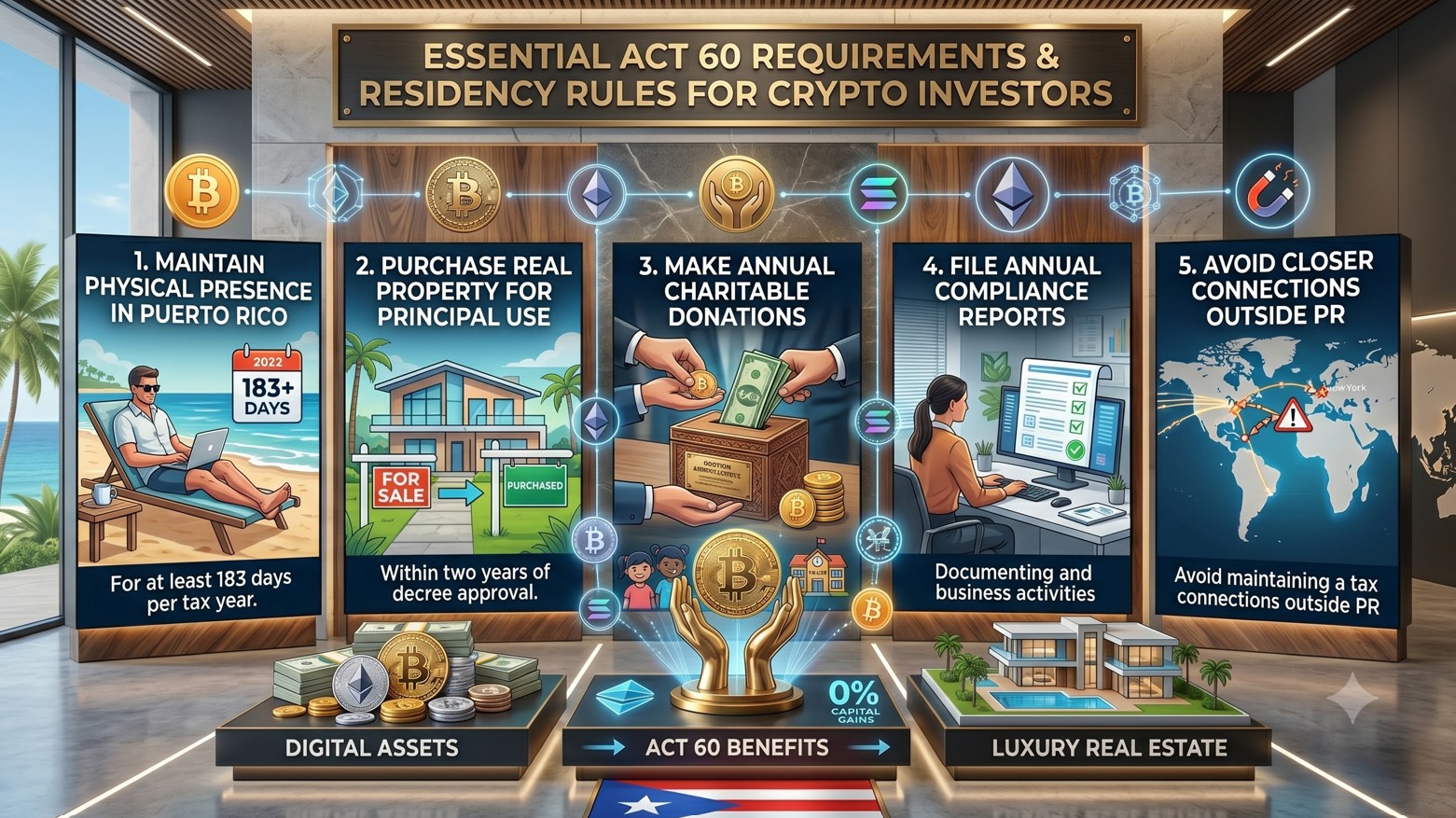
Qualifying for Act 60 benefits requires meeting specific residency and compliance requirements that crypto investors must understand before making luxury real estate commitments. The bona fide residency test includes spending at least 183 days in Puerto Rico annually, maintaining your tax home on the island, and demonstrating closer connections to Puerto Rico than any other jurisdiction. These requirements directly impact both your crypto tax strategy and your luxury lifestyle choices.
The decree application process typically takes 3-6 months and requires demonstrating legitimate business purpose beyond tax avoidance. Crypto investors often establish blockchain consulting firms, digital asset management companies, or technology ventures to satisfy this requirement while maintaining their investment focus.
Critical Compliance Requirements
- Maintain physical presence in Puerto Rico for at least 183 days per tax year.
- Purchase real property for use as principal residence within two years of decree approval.
- Make annual charitable donations of at least $10,000 to qualifying Puerto Rico nonprofits, with at least half of that amount directed to organizations focused on child poverty or other priority social causes designated under current Act 60 rules.
- File annual compliance reports documenting residency and business activities.
- Avoid maintaining a tax home or closer connections outside Puerto Rico.
Documentation and Record Keeping
IRS scrutiny of Act 60 participants requires meticulous documentation of Puerto Rico presence and activities. Successful crypto investors maintain detailed travel logs, utility bills, medical records, and social connections that demonstrate genuine Puerto Rico residency beyond tax benefits. This documentation becomes particularly important during luxury real estate transactions where large crypto gains fund property purchases.
The market for luxury properties in Puerto Rico attracts Act 60 crypto investors because it supports residency planning while offering privacy, premium amenities, and long-term lifestyle value.
Prime Puerto Rico Luxury Markets for Act 60 Crypto Buyers

Dorado Beach attracts the highest concentration of Act 60 crypto investors seeking luxury real estate, with oceanfront estates and golf course properties ranging from $3 million to over $20 million. The community offers established infrastructure for high-net-worth residents, including private beach clubs, championship golf courses, and proximity to San Juan's business district. Crypto investors appreciate the discrete, security-conscious environment that accommodates their wealth preservation strategies.
Condado provides urban luxury with high-rise oceanfront condos and historic properties that appeal to crypto investors seeking walkable amenities and cultural attractions. San Juan luxury condos in premium Condado buildings typically range from $1.5 million to $8 million, offering turnkey residences that satisfy Act 60's principal residence requirement while providing resort-style amenities.
Top Luxury Neighborhoods for Crypto Wealth
- Dorado Beach: Oceanfront estates, golf course homes, private beach access, $3M-$20M+ range.
- Condado: High-rise oceanfront condos, historic properties, urban amenities, $1.5M-$8M range.
- Old San Juan: Historic colonial mansions, cultural attractions, walkable lifestyle, $2M-$12M range.
- Palmas del Mar: Golf resort community, marina access, family-friendly, $800K-$5M range.
- Culebra: Private island estates, ultimate privacy, eco-luxury, $1M-$6M range.
Infrastructure and Amenities for Crypto Investors
Puerto Rico's luxury markets provide essential infrastructure that crypto investors require for both lifestyle and business operations. High-speed internet connectivity supports digital asset trading and blockchain operations, while private banking relationships facilitate large transactions and wealth management. Premium properties often include home offices, security systems, and backup power generation that accommodate crypto investors' operational needs.
The growing Act 60 community creates networking opportunities among crypto investors, blockchain entrepreneurs, and digital asset professionals who share similar tax strategies and investment philosophies. Converting crypto gains into luxury real estate requires navigating specific financial and legal processes that differ from traditional property transactions.
Converting Crypto Gains to Luxury Real Estate: Process and Considerations

Lenders and title companies in Puerto Rico luxury markets have developed specialized processes for handling crypto-derived funds, recognizing the growing volume of digital asset wealth flowing into premium real estate. Major transactions typically require converting cryptocurrency to USD through established exchanges, maintaining detailed transaction records, and working with financial institutions experienced in large digital asset liquidations. The process usually takes 2-4 weeks from crypto sale to wire transfer, depending on the exchange and banking relationships involved.
Luxury real estate transactions funded by crypto gains often exceed $5 million, triggering additional compliance requirements under federal anti-money laundering regulations. Buyers must provide comprehensive documentation of crypto acquisition, holding periods, and tax compliance to satisfy both lender requirements and title company due diligence standards.
Transaction Process Steps
- Liquidate crypto holdings through established exchanges with strong compliance records.
- Transfer proceeds to US bank accounts with documented source of funds.
- Obtain pre-approval letters from lenders familiar with crypto-derived wealth.
- Work with experienced real estate attorneys who understand digital asset transactions.
- Prepare comprehensive documentation for title insurance and closing requirements.
- Coordinate timing with Act 60 residency establishment and tax planning.
Due Diligence and Compliance
Title companies require extensive documentation when crypto gains fund luxury purchases, including exchange records, tax filings, and compliance with federal reporting requirements for large transactions. Professional guidance becomes essential for navigating these requirements while maintaining transaction confidentiality and meeting closing deadlines. Experienced real estate teams understand both the technical aspects of crypto wealth and the luxury market dynamics that influence pricing and negotiation strategies.
The regulatory environment continues evolving, requiring ongoing attention to compliance requirements and potential changes in cryptocurrency taxation or reporting obligations.
Regulatory Environment and Risk Factors

IRS scrutiny of Act 60 participants has increased in recent years, with a particular focus on crypto investors whose relocation appears driven primarily by tax avoidance rather than substantive business or personal ties to Puerto Rico.
- Recent audits examine the substance of Puerto Rico presence, the timing of crypto asset acquisitions relative to residency establishment, and the genuine business purpose behind relocation beyond tax benefits.
- Crypto investors must demonstrate authentic integration into Puerto Rico's economy and community to withstand potential challenges.
The regulatory landscape for cryptocurrency taxation continues evolving at both federal and territorial levels, creating potential risks for long-term tax planning strategies. Changes in federal crypto regulations, modifications to Act 60 terms, or shifts in IRS enforcement priorities could impact the effectiveness of current tax optimization strategies.
Note:
Recent legislative proposals and enacted changes indicate that new Act 60 Individual Resident Investor applicants after specific cutoff dates may face a 4% Puerto Rico tax rate on dividends, interest, and capital gains, while earlier applicants can retain a 0% regime, and the overall program has been extended toward 2055 in several proposals and enacted measures.
Key Risk Factors to Monitor
- Increased IRS audit rates for high-value Act 60 participants with crypto wealth.
- Potential federal legislation affecting cryptocurrency taxation or territorial tax benefits.
- Changes to Act 60 terms for new applicants or decree renewals.
- Enhanced reporting requirements for large crypto transactions and real estate purchases.
- Banking compliance challenges for maintaining crypto-related business operations.
Risk Mitigation Strategies
Successful crypto investors implementing Act 60 strategies focus on building genuine Puerto Rico business operations, community connections, and lifestyle integration that extend beyond tax optimization. This includes establishing legitimate blockchain or technology companies, participating in local business organizations, and maintaining comprehensive documentation of Puerto Rico presence and activities. Professional advisors with experience in both cryptocurrency compliance and Puerto Rico tax law provide essential guidance for navigating these complex requirements.
Regular compliance reviews and proactive communication with tax authorities help identify and address potential issues before they become audit triggers or compliance violations.
Puerto Rico Luxury Properties for Sale
Christie's International Real Estate Puerto Rico specializes in serving Act 60 crypto investors seeking luxury properties for sale that satisfy residency requirements while providing exceptional lifestyle amenities. Our team understands both the technical requirements of Act 60 compliance and the luxury market dynamics that influence pricing and availability across Puerto Rico's premium neighborhoods.
We provide discrete, professional service that accommodates the unique needs of crypto investors while ensuring smooth transactions and ongoing compliance support.
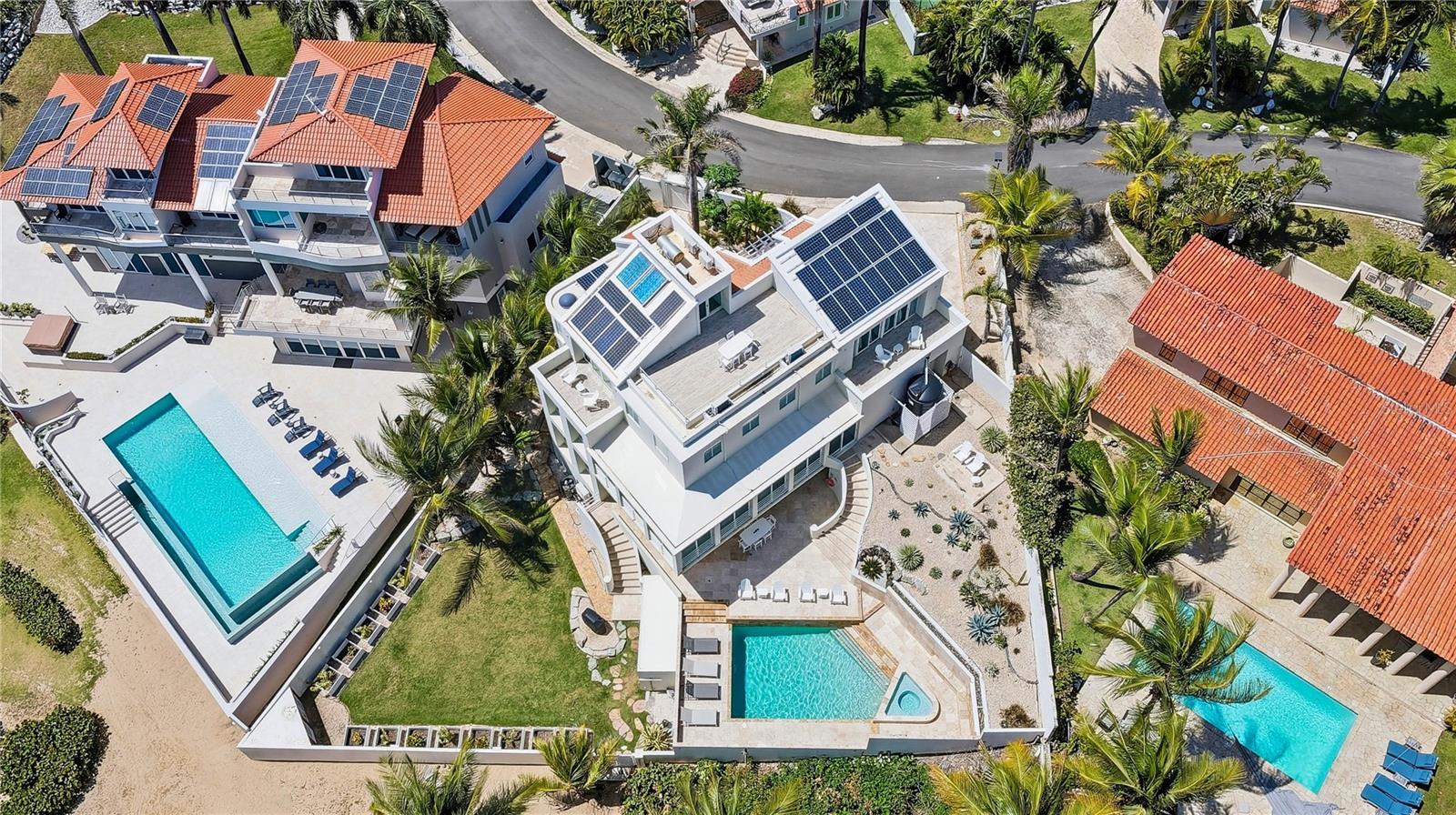
32 SHELL CASTLE HUMACAO PR, 00791
32 Shell Castle is a refined oceanfront retreat in Palmas del Mar, offering five ocean-view bedrooms, expansive terraces, a resort-style pool, solar with Tesla Powerwall backup, and seamless indoor-outdoor living within one of Puerto Rico’s premier coastal communities.

205 LUNA OLD SAN JUAN PR, 00901
A meticulously restored colonial mansion in the heart of Old San Juan, this 5-bedroom historic property combines authentic 16th-century architecture with modern luxury amenities. The prime location offers walking access to cultural attractions, fine dining, and business districts while providing a prestigious address for Act 60 participants.
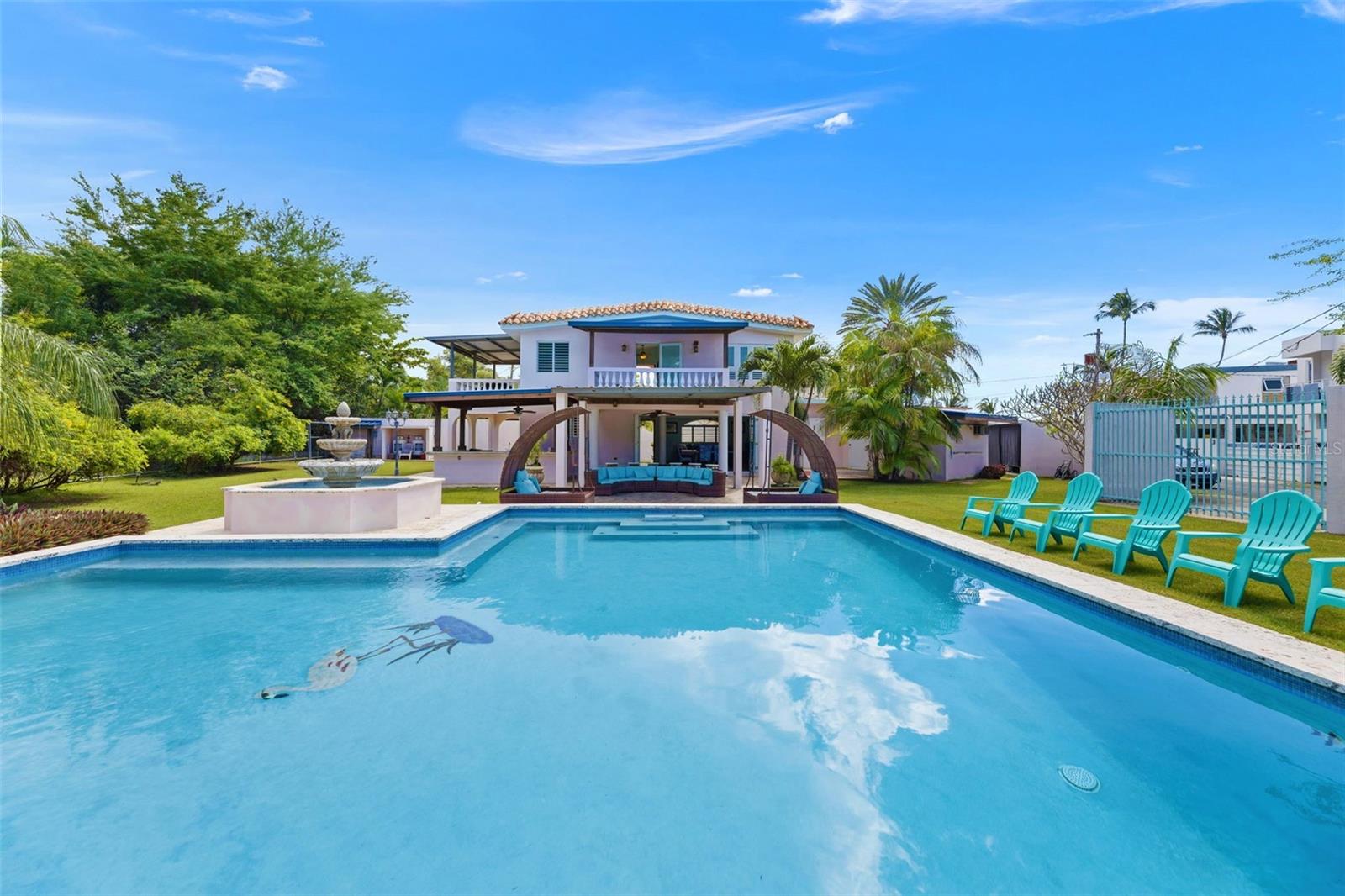
23 CASA CANAL RINCON PR, 00677
This contemporary beachfront villa features 4 bedrooms, infinity pool, and direct access to world-class surfing beaches in Rincon's exclusive residential area. The property offers privacy and luxury amenities ideal for crypto investors seeking a relaxed coastal lifestyle while maintaining Act 60 compliance.

11 BARRIO FRAILES CULEBRA PR, 00775
An exclusive private island estate offering ultimate privacy with 3 bedrooms, panoramic ocean views, and pristine natural surroundings on Culebra. This unique property provides a rare opportunity for crypto investors seeking maximum discretion and luxury in one of Puerto Rico's most exclusive locations.
Conclusion
Act 60 has made Puerto Rico one of the most compelling destinations for crypto investors who want to convert digital asset gains into long-term lifestyle, residency, and real estate value. For qualified investors, the right timing, documentation, and professional guidance can turn tax efficiency into stronger purchasing power across Dorado Beach, Condado, Old San Juan, Palmas del Mar, Culebra, and other premium markets.
Crypto-funded luxury home purchases require more than capital—they require compliance discipline, strategic planning, and the right real estate team to match wealth preservation goals with the right property. At Christie's International Real Estate Puerto Rico, we help clients buy, sell, and rent luxury properties with discretion, market expertise, and personalized guidance.
Contact us to find, list, or rent out your Puerto Rico luxury property with confidence.
FAQs
Does Act 60 apply to gains from staking, mining, airdrops, or DeFi yield?
Often not in the same way as capital gains. Many of these receipts are treated as ordinary income (timing and sourcing matter), so investors typically need a separate analysis to determine what’s eligible for Act 60’s preferential rates and what may be taxed differently. See tax credits and incentives.
How do property taxes, HOA fees, and insurance affect the true cost of a Puerto Rico luxury home?
Beyond the purchase price, buyers should underwrite recurring costs such as municipal property tax (CRIM), hazard/windstorm and flood insurance, generator/maintenance expenses, and any condominium or resort association dues—items that can materially change annual carrying costs in luxury communities.
What happens if I stop meeting bona fide residency requirements after buying a home?
Falling out of compliance can jeopardize ongoing tax benefits and may trigger higher tax exposure going forward. Investors should plan for travel, family ties, and business operations to remain consistent with residency rules and review compliance annually with qualified advisors.




.png)