


No single market wins every category when it comes to luxury real estate investment. The best choice depends on your tax residency, intended property use, holding period, financing structure, rental strategy, and lifestyle priorities. Each of these four markets — Puerto Rico, Miami, Dubai, and Singapore — offers a distinct combination of returns, costs, and quality of life.
In this article, we compare all four under the same financial assumptions so you can make a clear, informed decision.
Key Takeaways
- Puerto Rico can be the most tax-efficient option for qualifying U.S.
- Dubai is strongest for gross yield and tax efficiency.
- Miami offers liquidity and market depth.
- Singapore favors capital preservation over income.
- Residency status changes the after-tax result more than appreciation alone.
The Best After-Tax Market Depends on the Buyer's Residency and Exit Strategy
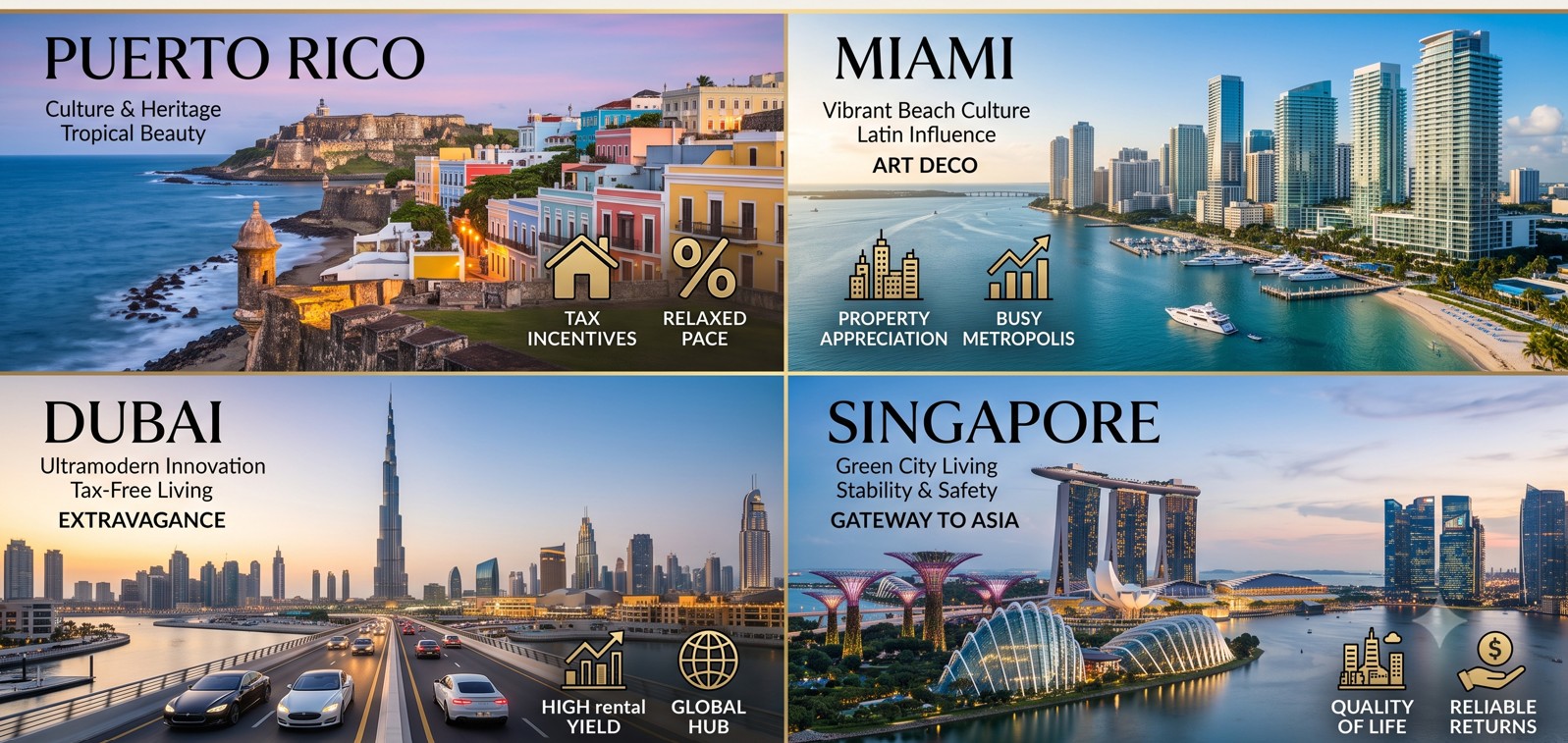
Each market delivers a very different outcome depending on whether you are a resident investor, a non-resident buyer, or a short-term speculator.
- Puerto Rico stands out for U.S. citizens who establish bona fide residency under Act 60, offering a 0% capital gains tax on appreciation after residency and a 4% flat income tax on certain business income.
- Miami benefits buyers who want deep liquidity and a mature rental market, but federal and state tax exposure erodes net returns for high earners.
- Dubai appeals to cash buyers seeking zero property tax and strong short-term rental yields, particularly in freehold zones such as Dubai Marina and Palm Jumeirah.
- Singapore suits long-term capital preservation investors, but the 60% Additional Buyer's Stamp Duty for foreign nationals makes entry extremely costly unless you hold permanent residency.
The after-tax result depends on the buyer's residency, but Puerto Rico can be the strongest option for qualifying U.S. citizens who establish bona fide residency. Dubai wins on gross yield for cash buyers. Singapore wins on capital stability. Miami wins on liquidity and exit speed.
The Financial Model: Assumptions Applied Across All Four Markets

To make this comparison useful, the same financial model applies to all four markets. Varying assumptions would make the numbers meaningless. The model below reflects a realistic high-net-worth buyer scenario that you can adjust based on your own situation.
Base Assumptions
- Purchase price: USD $3,000,000
- Holding period: 7 years
- Financing: 30% down, 70% financed at prevailing local rates (or cash where financing is restricted)
- Rental use: 60% occupancy, short-term rental strategy
- Annual appreciation assumption: 5% per year (applied uniformly for comparison purposes)
- Resale assumption: Full market sale at end of year 7
- Buyer profile: U.S. citizen with flexibility to establish residency
Acquisition Costs by Market
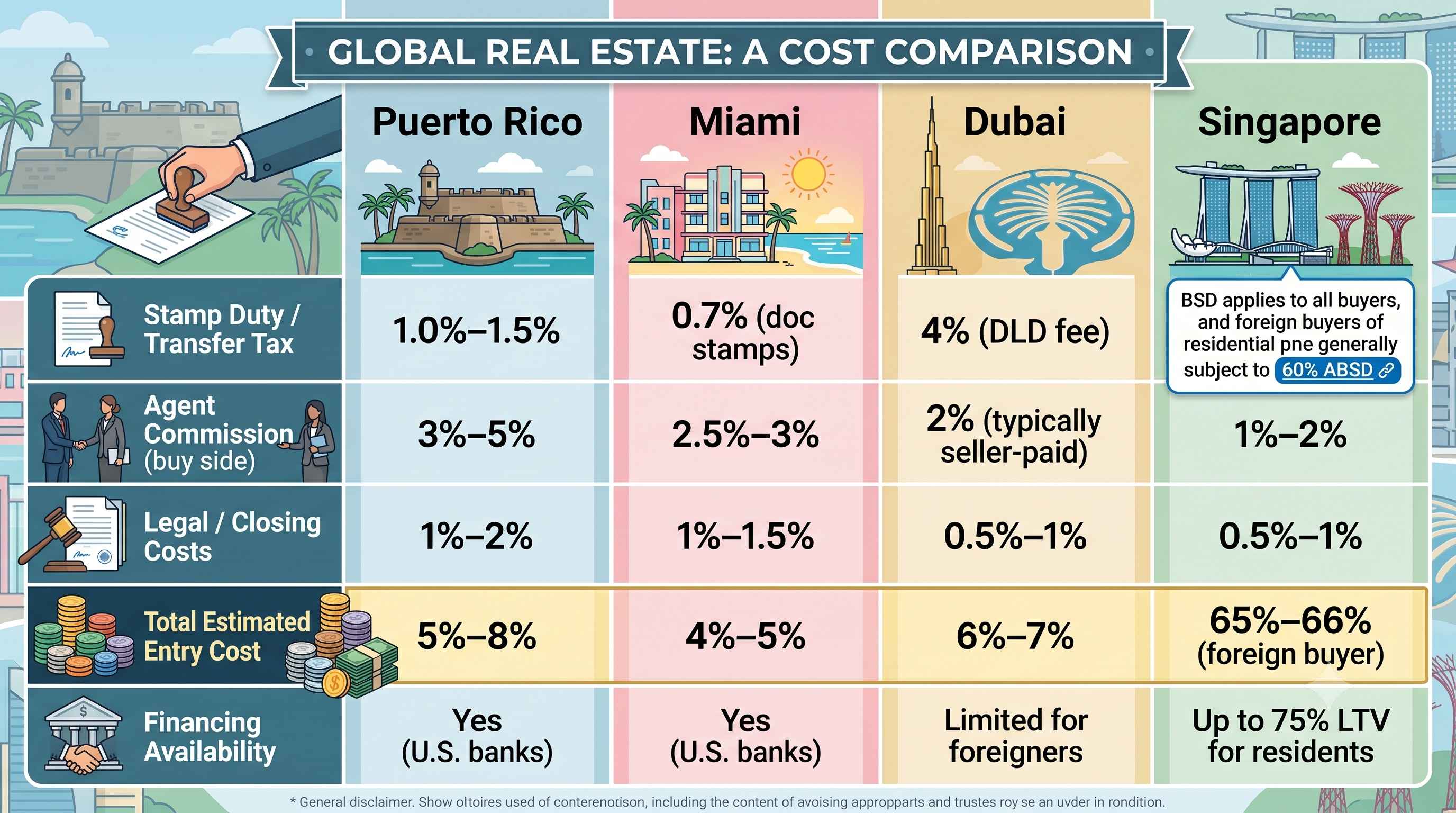
Singapore's ABSD alone adds $1.8M in acquisition costs on a $3M purchase for a foreign buyer — before any other fees. That single figure reshapes the entire ROI calculation from day one.
Annual Property Costs, Taxes, and Rental Income Compared

Acquisition costs tell only part of the story. Annual holding costs, property taxes, and rental income tax treatment determine what you actually keep each year. These vary significantly across the four markets and directly affect your real estate ROI over a 7-year hold.
Annual Property Costs
- Puerto Rico: Property taxes run roughly 1.03% of assessed value, which is often well below market value. HOA fees in Dorado or Condado range from $500–$2,500/month. Insurance is higher due to hurricane exposure, typically $15,000–$30,000/year on a $3M property.
- Miami: Miami property taxes are based on millage rates and assessed value, and recent guidance shows a rate around 20 mills (millage), which is roughly 2% before exemptions and local adjustments. Florida has no state income tax, but federal tax still applies to rental income based on the investor’s U.S. tax profile.
- Dubai: Dubai generally has no annual property tax, but premium buildings typically charge service fees or maintenance costs that should be treated as operating expenses, not taxes. On a 3,000 sq ft unit, expect AED 45,000–90,000 (USD $12,000–$24,000) per year in service fees.
- Singapore: Singapore property tax is based on the property’s Annual Value, with different rates for owner-occupied and non-owner-occupied homes. On a $3M property with an Annual Value of $72,000, the tax bill could reach $8,640–$25,920/year. Rental income is taxed at a flat 15% for non-residents or progressive rates for residents.
Rental Income Tax Treatment
- Puerto Rico (Act 60 resident): Puerto Rico-sourced income may qualify for Act 60 treatment only if the buyer qualifies under the applicable decree and residency rules; recent reforms also changed the timing and rates for new applications, so the applicable tax treatment depends on when the decree was filed. .
- Miami: Rental income is taxed as ordinary income at federal rates up to 37%. Depreciation deductions help, but net rental income for a high earner faces significant federal exposure.
- Dubai: Zero income tax on rental income. Short-term rental platforms like Airbnb operate legally in designated zones. Gross rental yields in Dubai Marina and Palm Jumeirah range from 5%–8%.
- Singapore: Rental income for non-residents is taxed at 15% flat. Residents pay progressive rates. Gross rental yields in prime districts (9, 10, 11) average 2.5%–3.5%.
7-Year After-Tax Return Comparison
Running the numbers through the model gives a clearer picture of where each market actually lands after all costs. These figures are estimates based on the stated assumptions and do not constitute tax or legal advice — consult a qualified advisor before making any investment decision.
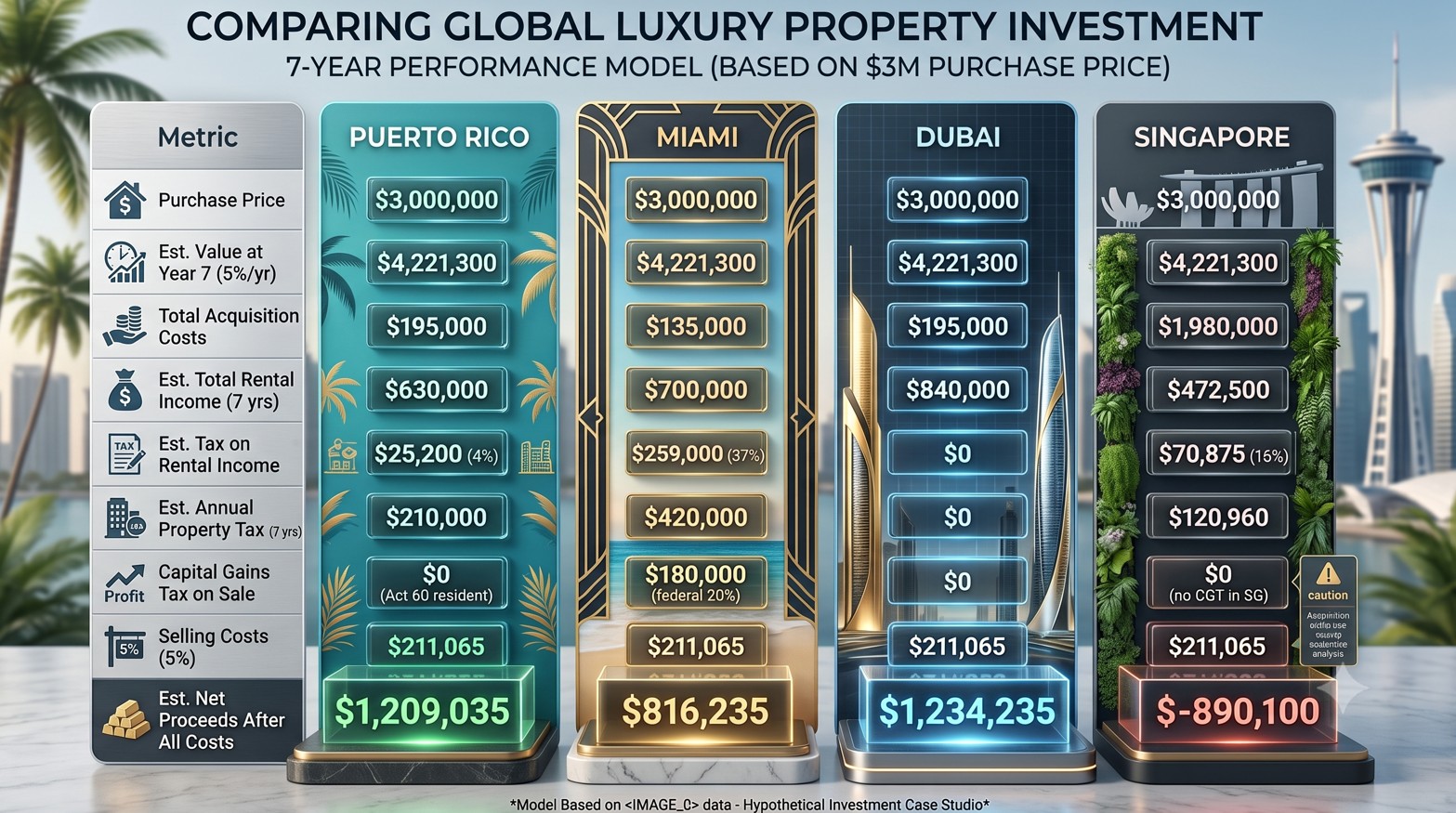
Singapore's ABSD makes the math nearly impossible for a foreign buyer on a 7-year hold at this price point. Dubai edges out Puerto Rico slightly on gross numbers, but Puerto Rico's model assumes Act 60 residency — which is a real and accessible option for U.S. citizens, not a theoretical one.
Lifestyle Trade-Offs: What the Numbers Do Not Capture

Financial returns matter, but lifestyle factors influence how long you actually hold a property and whether you enjoy the experience of ownership. These four markets offer very different day-to-day realities, and those differences affect everything from occupancy rates to resale demand.
Puerto Rico
- U.S. legal system, U.S. dollar, and U.S. banking — no currency risk for American buyers.
- Direct flights from major U.S. cities in 3–4 hours.
- Cost of living is 82.4% lower than Miami across housing, dining, childcare, and transportation.
- Infrastructure has improved post-Maria, but power reliability remains a consideration — many luxury properties now include solar and battery backup systems.
- Dorado Beach and Condado offer a genuine luxury lifestyle with beach access, golf, and world-class dining.
- Puerto Rico luxury real estate continues to attract U.S.-based high-net-worth buyers seeking tax advantages and lifestyle benefits.
Miami
- Deep, liquid market with strong international buyer demand — easier to exit quickly if needed.
- Established cultural scene, healthcare infrastructure, and international schools.
- Miami luxury real estate commands premium prices: waterfront condos in Miami Beach regularly list above $3,000/sq ft.
- Hurricane insurance costs have risen sharply since 2021, adding to annual holding costs.
- Miami real estate investment benefits from consistent population inflows from Latin America and the Northeast.
Dubai
- Zero income and property tax creates strong gross yields, particularly in short-term rental zones.
- Dubai luxury real estate has appreciated significantly since 2020, with prime areas like Palm Jumeirah seeing 15%–20% annual gains in recent years.
- Currency is pegged to the USD, which removes exchange rate risk for American buyers.
- Financing options for non-residents are limited — most foreign buyers purchase in cash, which affects leverage and overall return on equity.
- Dubai real estate investment suits buyers who want high gross yields and no tax drag, but who understand the market's shorter track record relative to Miami or Singapore.
Singapore
- Singapore luxury real estate offers exceptional stability, rule of law, and long-term capital preservation.
- Singapore property investment is more favorable for citizens and permanent residents, while foreign buyers face a high ABSD surcharge on residential property.
- Gross rental yields are low (2.5%–3.5%), and the market moves slowly — this is not a high-yield play.
- Singapore's appeal is wealth preservation and portfolio diversification, not income generation.
- The city-state remains one of the best global luxury real estate markets for ultra-high-net-worth buyers with regional ties to Asia.
Puerto Rico Tax Incentives: What Act 60 Actually Means for Real Estate Buyers
Act 60 is perhaps the most misunderstood tax program in international real estate investment circles. It is not a loophole — it is a deliberate economic development strategy enacted by the Puerto Rico government to attract high-net-worth individuals and businesses to the island. Understanding what it covers, and what it does not, is critical before you make any decisions.
The program requires bona fide residency, including presence and closer-connection tests under IRS rules for U.S. territories.
What Act 60 Covers
- 0% capital gains tax on appreciation that accrues after you establish residency — this applies to Puerto Rico-sourced assets, including real estate.
- 4% flat income tax on qualifying export services income for eligible businesses.
- Significant reductions on dividends and interest income for qualifying residents.
- These benefits apply only to Puerto Rico-sourced income — U.S.-sourced income remains subject to federal taxation.
What Act 60 Does Not Cover
- Pre-residency capital gains — appreciation before you moved to Puerto Rico is still taxable at U.S. federal rates.
- U.S.-based investment income or employment income.
- Automatic exemption without meeting residency requirements — the IRS audits these claims carefully.
For a U.S. buyer, the Act 60 benefit can materially reduce tax on qualifying Puerto Rico-sourced gains, but the exact savings depend on residency status, decree timing, and whether the gain is pre- or post-residency appreciation.
Puerto Rico Luxury Properties for Sale
If the after-tax ROI comparison points you toward Puerto Rico, Christie's International Real Estate Puerto Rico offers direct access to the island's most exclusive listings. As a firm that combines deep local market knowledge with the global Christie's network, we work with high-net-worth buyers who want more than a transaction — they want a strategy. Below are four current luxury properties for sale that represent the range of what Puerto Rico's premier markets have to offer.
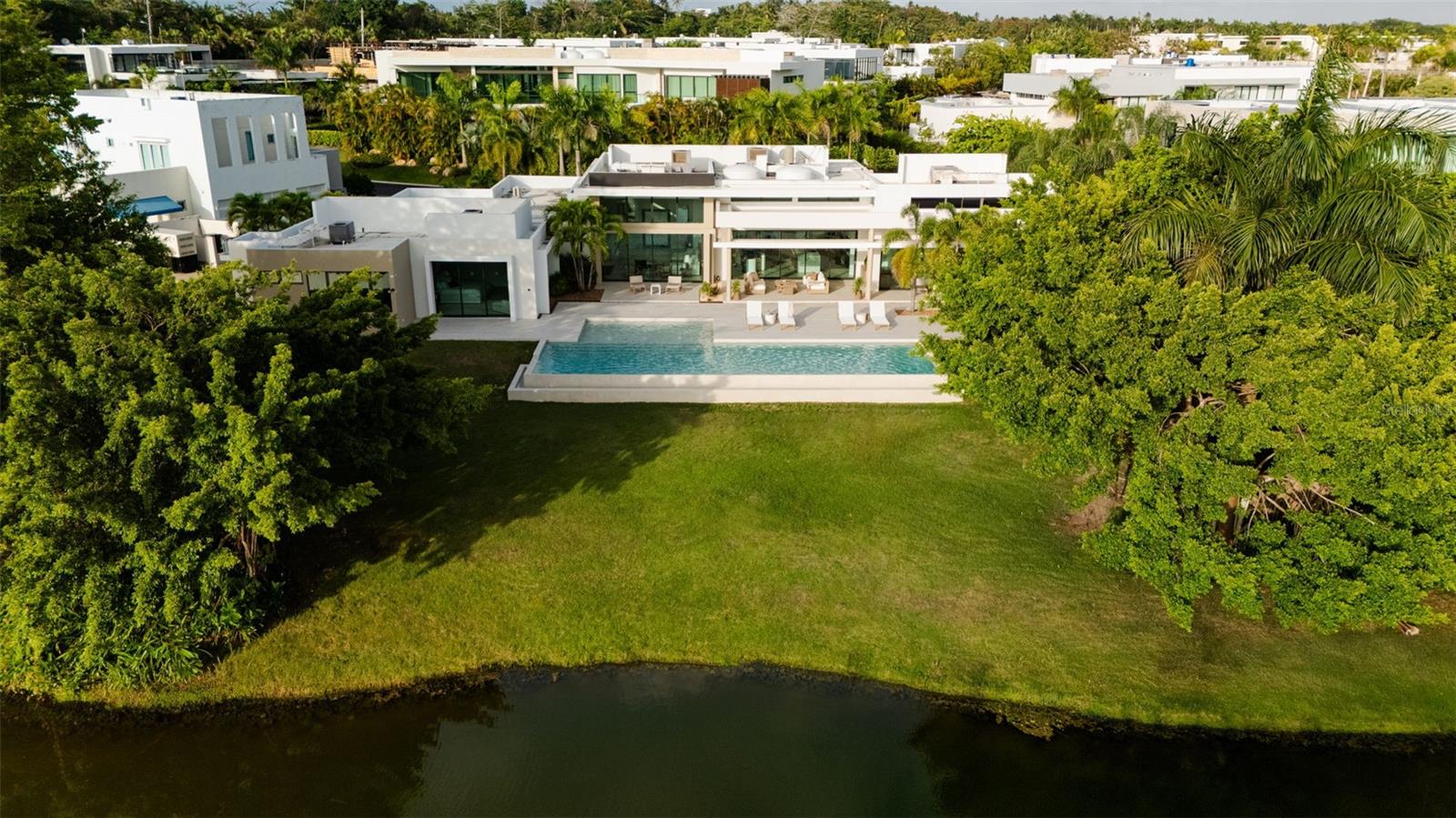
11 Golf View Drive, Dorado, PR 00646
This Dorado property sits within one of Puerto Rico's most sought-after gated communities, offering direct golf course frontage and the privacy that high-net-worth buyers expect. It combines strong rental demand from resort visitors with the long-term appreciation profile that makes Dorado a top Puerto Rico luxury real estate market.
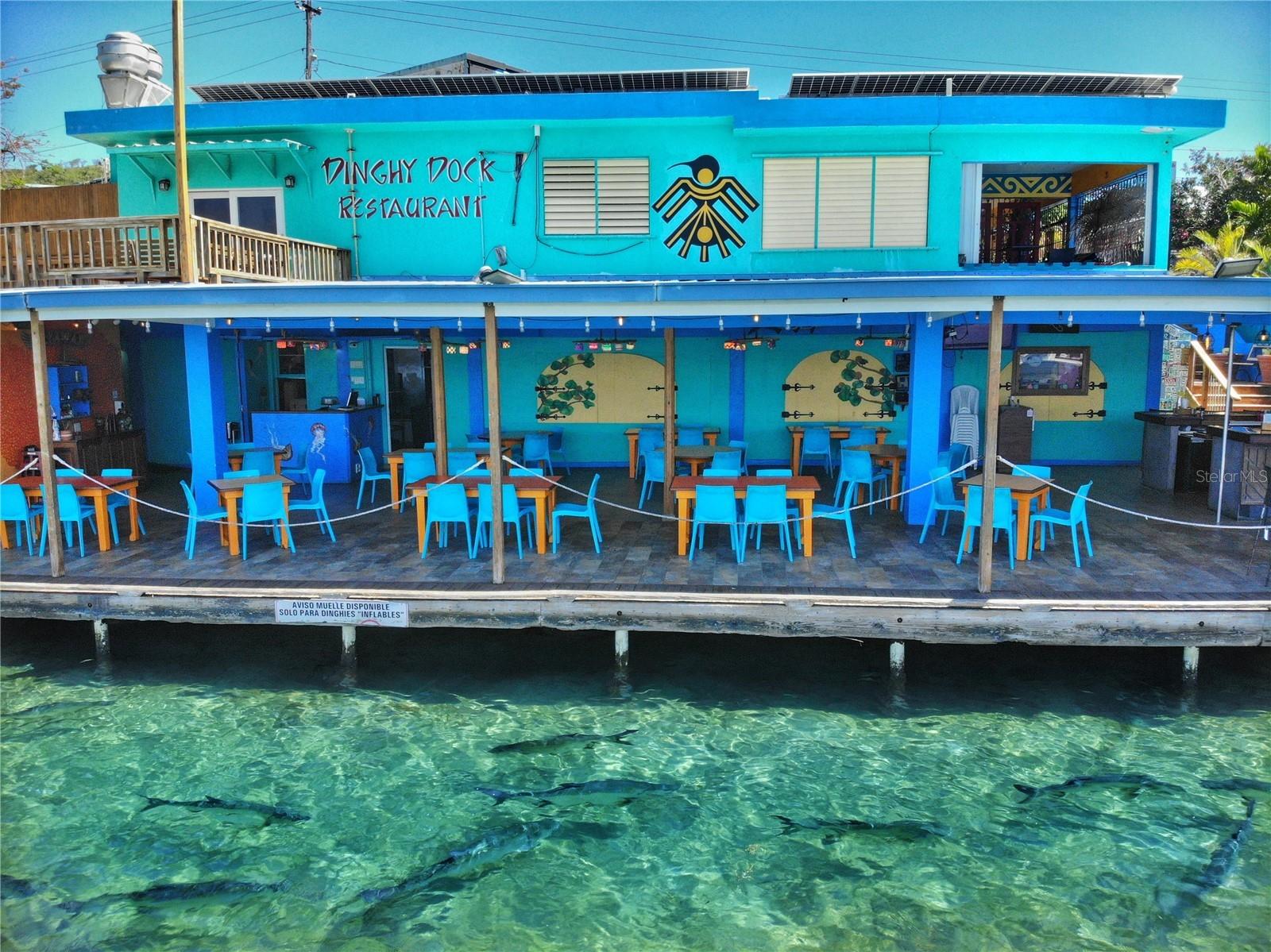
372 Calle Fulladoza, Culebra, PR 00775
Located on the island of Culebra, this property offers rare beachfront access in one of the Caribbean's most pristine natural settings. For buyers seeking a luxury property with both lifestyle value and short-term rental income potential, Culebra remains one of the most undervalued markets in Puerto Rico real estate.
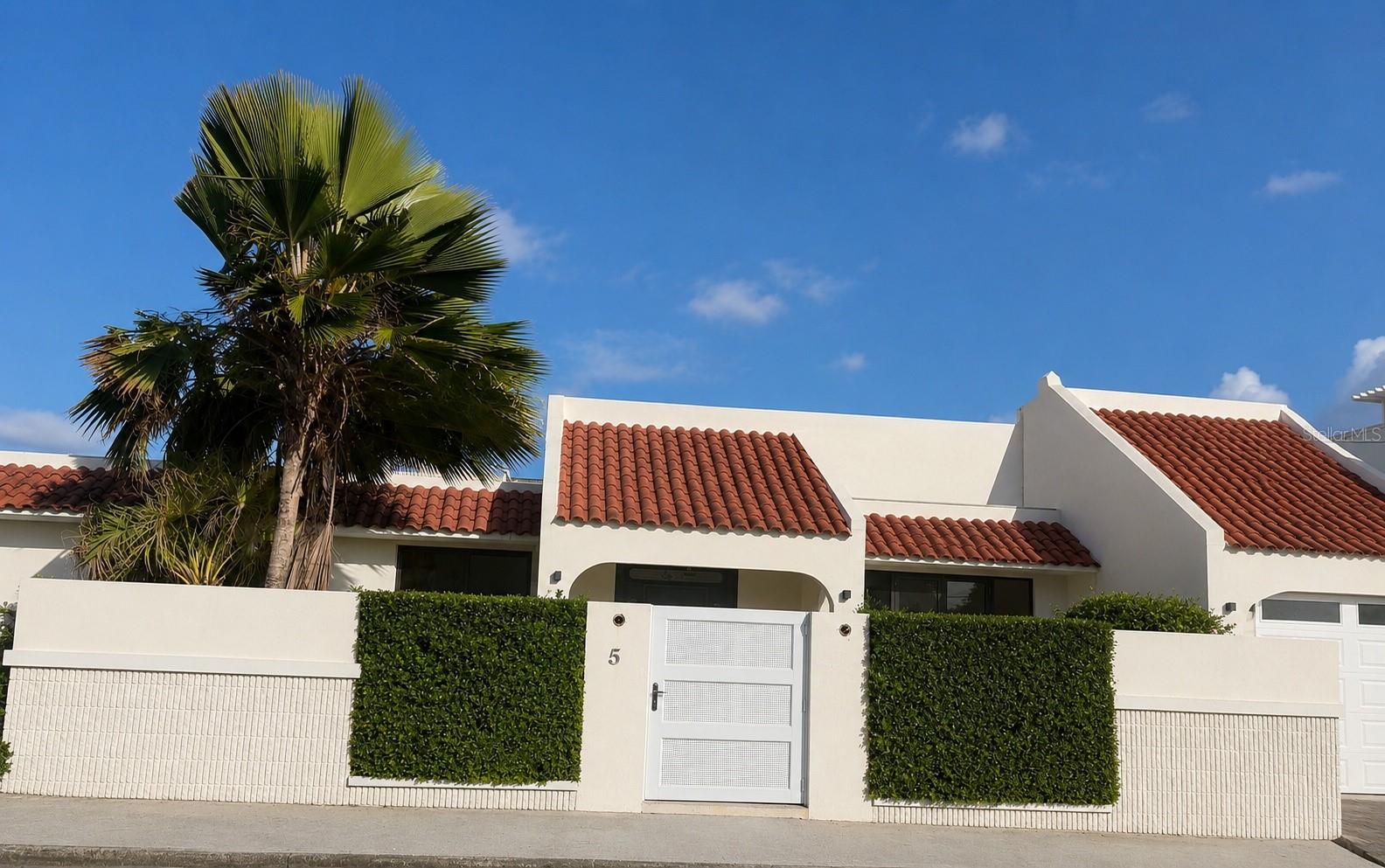
5 Histela, Punta Las Marias, San Juan, PR 00913
This Punta Las Marias residence places you in one of San Juan's most desirable coastal neighborhoods, within minutes of Condado's dining and cultural amenities. The property suits buyers who want urban access paired with beachside living — a combination that consistently drives strong resale demand in Puerto Rico luxury homes.
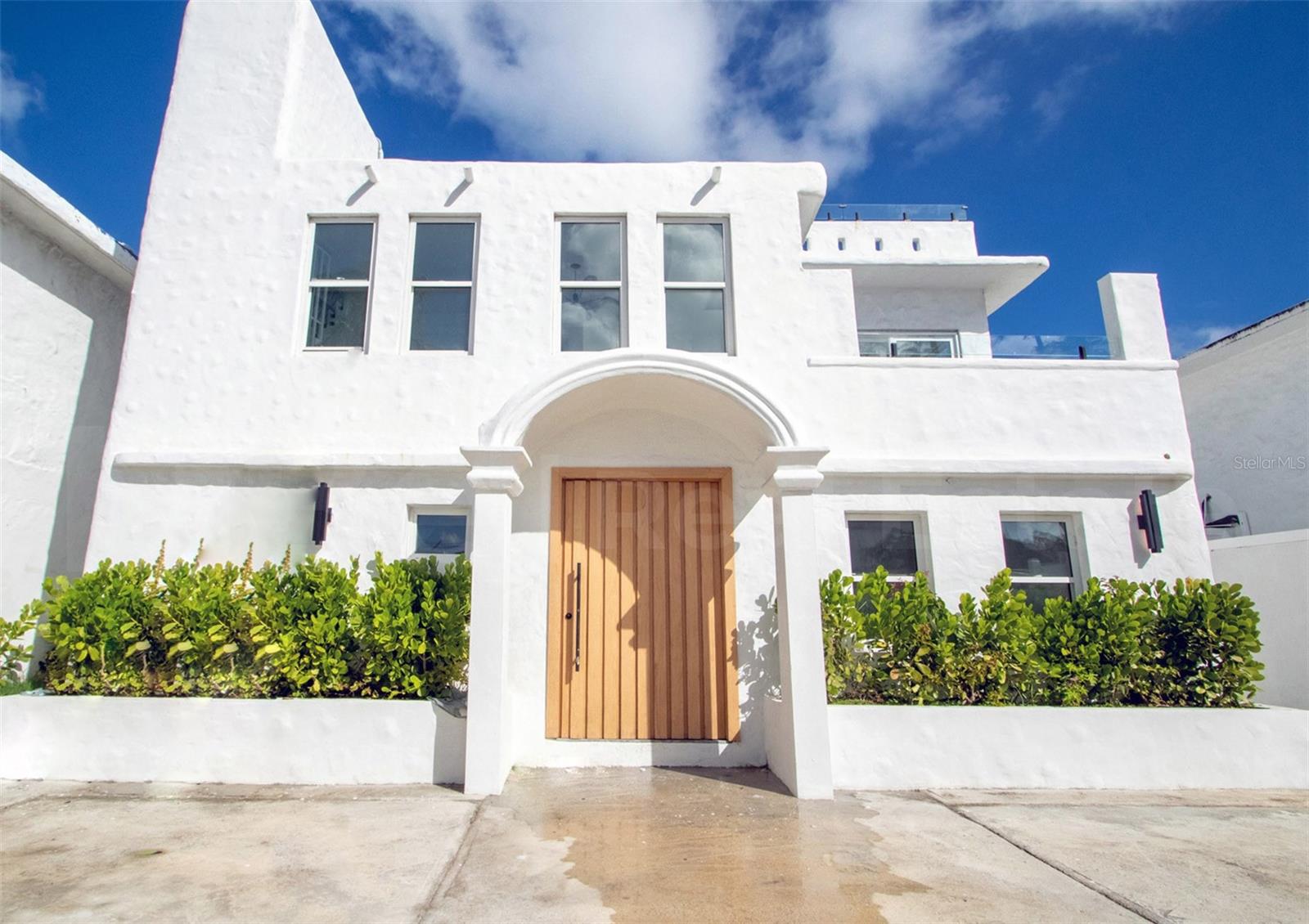
2071 Cacique St, San Juan, PR 00911
Set in the heart of San Juan, this property offers a refined urban lifestyle with proximity to Old San Juan's historic core and Condado's luxury corridor. It represents the kind of turnkey Puerto Rico luxury real estate opportunity that appeals to both Act 60 relocators and long-term international real estate investors.
Final Thoughts on Choosing the Right Market
Puerto Rico can deliver the strongest after-tax outcome for qualifying U.S. buyers, while Miami, Dubai, and Singapore each win on different parts of the investment equation. The right market depends on your residency, holding period, and exit plan. For buyers who want local expertise and premium listings, Christie's International Real Estate Puerto Rico is a strong partner in the market.
Ready to buy, sell, or rent luxury real estate in Puerto Rico? Christie's International Real Estate Puerto Rico offers sales, acquisitions, and rental support for high-end buyers and owners. Explore premium listings and connect with a trusted local team that specializes in luxury homes in Puerto Rico.
FAQs
How sensitive are the results to the model assumptions?
Very. Small changes to occupancy, nightly rates, HOA/service charges, insurance, and financing terms can swing net ROI more than the headline appreciation rate. Use the table as a baseline, then rerun the math with your actual leverage, rental plan, and expense profile.
What legal and compliance steps should foreign buyers plan for?
Expect market-specific KYC/AML checks, source-of-funds documentation, and different closing workflows (escrow/title in U.S. markets vs. developer/registry processes elsewhere). Always budget time for cross-border banking, entity setup (if used), and local counsel review of title, strata/HOA




.png)


.png)


