Buyers applying under Puerto Rico's Individual Resident Investor program on or after January 1, 2027 must generally show they were not Puerto Rico residents at any point during the six years immediately before relocating, a rolling look-back that replaces the fixed 2006-2012 window used under current decrees. This distinction matters right now for anyone shopping villas in Dorado or condos in Condado, since it changes who qualifies, when they need to file, and how quickly they need to close on a home.
This article covers who the six-year rule affects, the pre-2027 vs. post-2027 filing gap, and what it means if you're weighing a Puerto Rico purchase this year or next.
Key Takeaways
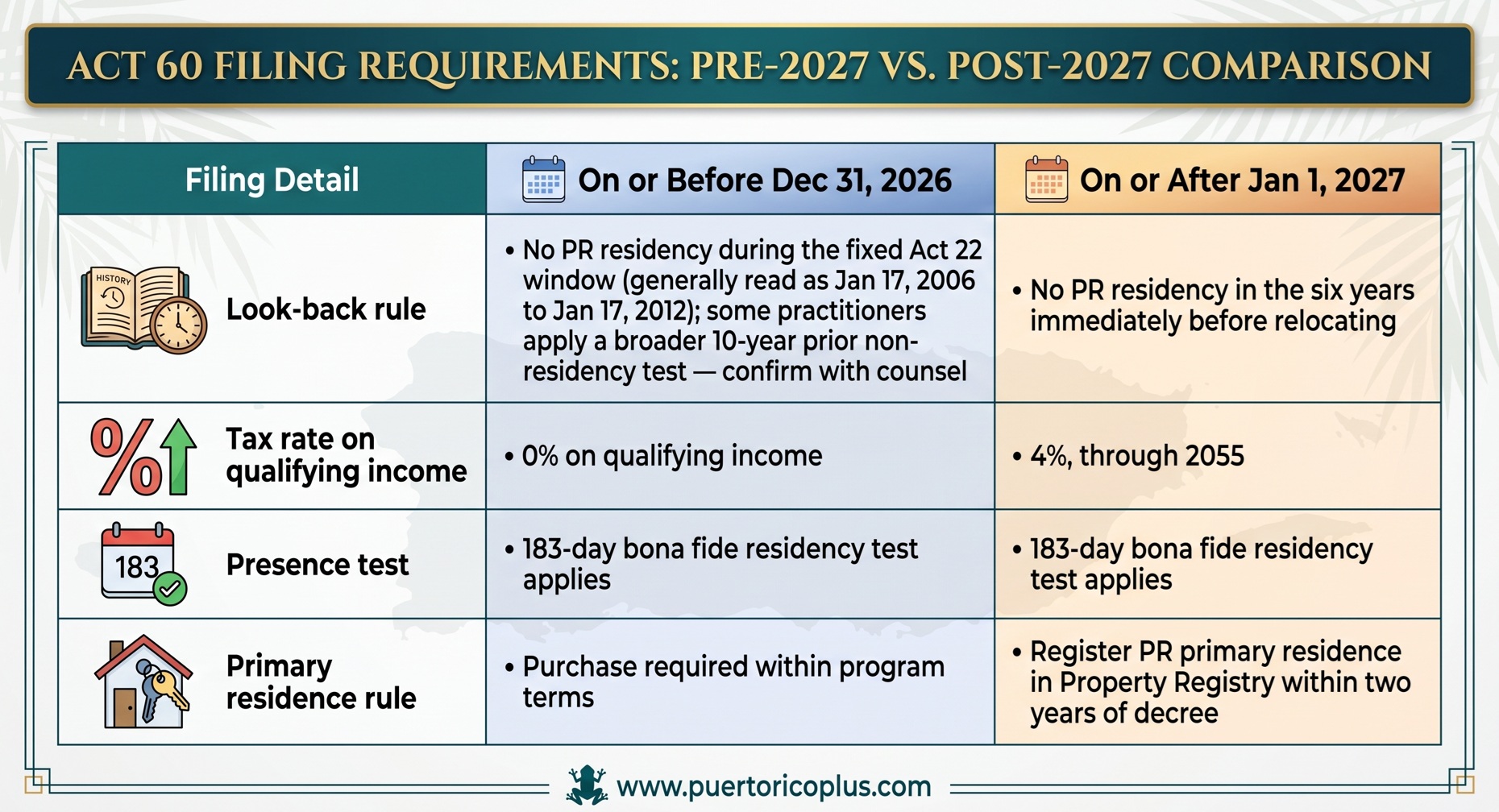
- Applications filed on or before December 31, 2026 keep the current 0% rate and the fixed Act 22 lookback window.
- Applications filed on or after January 1, 2027 face a rolling six-year prior non-residency test and a 4% rate through 2055.
- Post-2026 decree holders must register a Puerto Rico primary residence in the Property Registry within two years of the decree.
- Title must be held individually, jointly with a spouse, or through a §2022.07 grantor trust — general LLC ownership no longer qualifies.
- The IRC §937 bona fide residency test, including the 183-day presence rule, still applies regardless of filing track.
The Six-Year Rule Applies to New Act 60 Applicants From 2027
.png)
Any Individual Resident Investor application submitted on or after January 1, 2027 triggers a rolling six-year prior non-residency test, according to a March 2026 tax alert from Grant Thornton Puerto Rico, replacing the fixed lookback period that still governs applications filed by December 31, 2026. Procopio's analysis of the extension confirms the same mechanic: anyone filing after the 2026 deadline must show no bona fide Puerto Rico residency during the six years directly preceding relocation.
Consider the pattern this rule catches: a mainland investor who spent three or four years living in San Juan between 2015 and 2018, moved back to the US, and now wants to file in 2027. Under the new rule, that profile fails the test outright, because fewer than six years will have passed since Puerto Rico residency last applied. Buyers weighing a purchase in Palmas del Mar or Old San Juan on that kind of timeline need to run the numbers before signing a purchase contract, not after.
Who the Rolling Look-Back Actually Catches
A March 2026 r/PuertoRico thread on the 4% rate and six-year rule drew mixed local reactions — including one commenter noting the six-year rule now opens the door for members of the Puerto Rican diaspora who've been off-island that long to qualify on return.
Profiles Likely to Be Screened Out
- Returning Puerto Rico-born professionals who left for the mainland after 2021 and want to file in 2027 or 2028.
- Former Act 20 or Act 22 decree holders whose Puerto Rico residency lapsed less than six years before refiling.
- Snowbirds or long-stay visitors who crossed the 183-day presence threshold within the six-year window without formally claiming residency.
Profiles Generally Unaffected
- First-time applicants who have never held Puerto Rico residency.
- Applicants who left Puerto Rico residency more than six years before their planned move date.
- Anyone filing under the current rules by the December 31, 2026 deadline, regardless of residency history outside the 2006-2012 window.
Pre-2027 vs Post-2027 Filing: What Actually Changes
The table below compares the two filing tracks on look-back rules, tax rate, and timing.
The Two-Year Principal-Residence Purchase Obligation
New decree holders filing on or after January 1, 2027 must register a Puerto Rico primary residence in the Property Registry within two years of receiving their decree, according to Hiltzik CPA's review of the post-2026 regime. This requirement is not new for buyers already familiar with Act 60, but pairing it with the six-year look-back compresses the practical timeline, since applicants now need clean residency records before they can even file.
What the Registration Rule Requires
- Post-2026 applicants must register a Puerto Rico primary residence in the Property Registry within two years of receiving their decree.
- Title must be held individually, jointly with a spouse, or through a qualifying §2022.07 grantor trust — general LLC ownership no longer satisfies the rule for new applicants.
- Registration must be complete or pending at the time compliance is demonstrated.
How This Compresses the Practical Timeline
Closings in newer gated communities like Dorado Beach East and Dorado Beach Village typically move faster than title work on older Old San Juan properties, where layered historic ownership chains and inherited interests can extend the timeline. Buyers on a compressed decree timeline should factor that difference into their offer strategy from the start.
A poster in a December 2025 r/ExpatFIRE thread weighing a Puerto Rico move noted that the primary-residence purchase requirement, combined with the 183-day presence test, made them think harder about long-term commitment before buying anything.
Ownership and Title Considerations for New Decree Holders
.png)
For post-2026 applicants, Act 60 requires that title be held individually, jointly with a spouse, or through a qualifying grantor trust under Section 2022.07 — the option of holding property through a broader Puerto Rico legal entity is no longer available. Puerto Rico tax attorneys generally flag this constraint early in the transaction, since restructuring entity-held title mid-purchase can complicate the Property Registry registration timeline.
Common Title Complications on the Six-Year Timeline
- Inherited co-ownership interests on older San Juan and Rincón properties, which require sign-off from multiple heirs before clear title transfers.
- Usufruct rights that survive prior ownership changes and need to be released at closing.
- Entity-held title that no longer satisfies the post-2027 Property Registry rules and must be restructured before the deed is recorded.
- Gapped title chains on historic Old San Juan properties, which extend the title-search window well beyond a standard mainland closing.
Buyers working against a six-year filing timeline should engage a Puerto Rico real estate specialist and tax counsel before making an offer, not during due diligence — restructuring title or curing gaps mid-transaction can push a closing past the two-year decree deadline.
Questions to Raise With Your Tax Attorney Before You Buy
Every buyer's residency history is different, so these are the questions worth putting in writing before signing anything.
- Does residency held within the past six years disqualify eligibility under the rolling look-back, or does it only affect applications filed after January 1, 2027?
- If filing before December 31, 2026, does eligibility lock in under the fixed 2006-2012 window even if the decree is issued later?
- How does the residency start-date guidance discussed in a November 2023 r/act2022 planning thread, which advises becoming a resident by January 1 of the first benefit year, affect a purchase and closing timeline?
- What title structure satisfies the two-year primary-residence Property Registry requirement?
- Does time spent in Puerto Rico on vacations or extended stays during the past six years count against the applicant under IRC Section 937?
See our resources section for a fuller eligibility checklist to bring into that conversation.
Puerto Rico Luxury Properties for Sale
Buyers navigating the six-year rule and the two-year purchase obligation need real estate guidance that understands both the tax mechanics and the property market, and that is where Christie's International Real Estate Puerto Rico's specialists come in. Our advantage is built around matching Act 60 investors with luxury properties for sale that satisfy the primary-residence requirement without sacrificing lifestyle or resale value. The following listings reflect the caliber of luxury properties in Puerto Rico currently available to qualifying buyers across Rincón, Luquillo, Dorado, and San Juan.
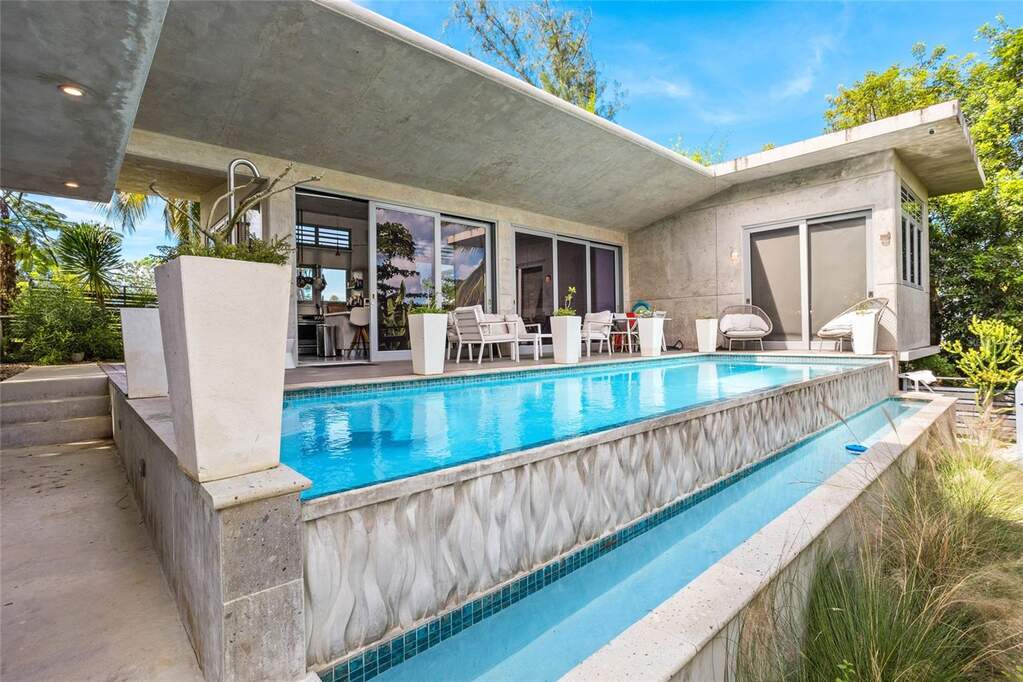
PR 413 Solar C Bo. Puntas, Rincon, PR 00677
This beachfront parcel sits in Rincón's Bo. Puntas surf corridor, steps from some of the island's most consistent west-coast breaks. It suits Act 60 buyers who want a low-density coastal lot for a custom-built primary residence rather than an existing structure.
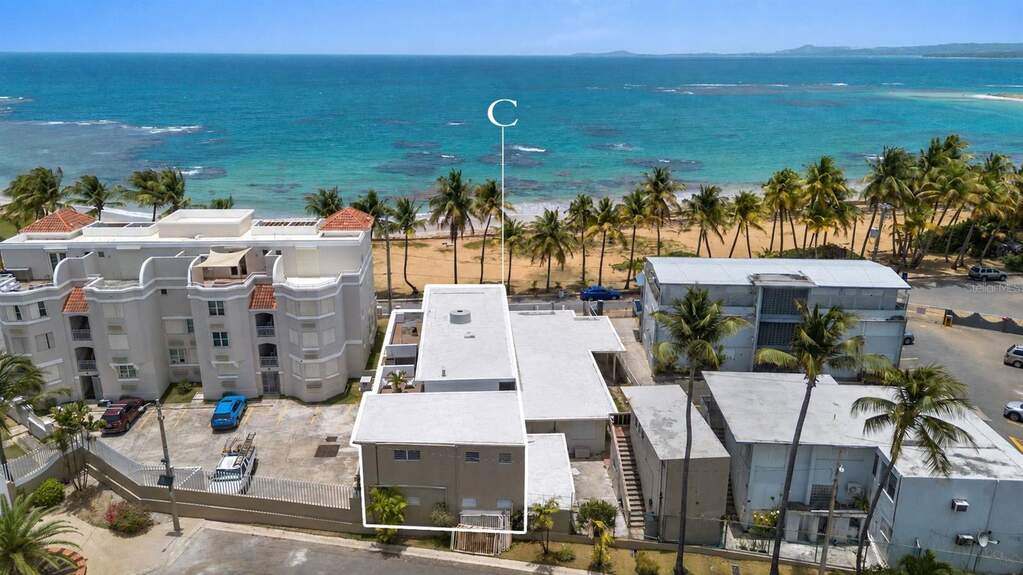
Luquillo Beach Unit A-25, Luquillo, PR 00773
This unit sits directly on Luquillo's famed beachfront, near the rainforest and the town's popular beachside kiosks. It fits buyers targeting the northeast coast for their qualifying primary residence, with rental upside during months spent off-island.

Calle 2 Dorado Del Mar G8, Dorado, PR 00646
Located inside the gated Dorado del Mar golf community, minutes from Dorado Beach's resort corridor. It suits Act 60 investors drawn to Dorado's established expat community and a more straightforward documentation trail for Property Registry purposes.

Carr 162 Bo Cuyon, Aibonito, PR 00705, Puerto Rico
Perched over 2,600 feet above sea level in Aibonito, this four-bedroom, three-and-a-half-bath home offers approximately 1,825 square feet of living space on nearly half an acre, with panoramic mountain and Caribbean Sea views, cool breezes, and easy access to town.
Contact your specialist to review these listings against your Act 60 filing timeline.
Conclusion
The six-year rule doesn't kill Act 60 as an option — it reshapes who qualifies, when they should file, and how quickly they need to close on a qualifying home. Buyers with any Puerto Rico residency history in the past six years should get a written eligibility opinion from a licensed Puerto Rico tax attorney before making an offer, not after. Align your closing timeline with your decree strategy now, while the pre-2027 filing window is still open.
Whether you're buying, selling, or renting luxury properties in Puerto Rico, Christie's International Real Estate Puerto Rico brings the local market knowledge and Act 60 transaction experience to protect your timeline and your investment. Our bilingual specialists work alongside your tax counsel to match you with Puerto Rico luxury properties that satisfy the primary-residence requirement without sacrificing lifestyle or resale value. Contact our team today to plan your next move around your filing deadline.
FAQs
Does buying a home in Puerto Rico make me an Act 60 resident investor automatically?
No. A purchase can support your relocation plan, but Act 60 benefits depend on a separate application and meeting residency requirements; a deed alone doesn’t confer tax status.
What documents should I gather early to prove I was not a Puerto Rico resident during the relevant look-back?
Common proof includes prior-year tax returns and W-2/1099s, voter/driver’s license history, lease or mortgage records, utility bills, and travel logs—organized by year so your attorney can assess gaps or risk areas.
Can I rent out my Puerto Rico property while using it as my primary residence for Act 60 purposes?
Generally no. The Act 60 primary-residence requirement contemplates the property being your actual principal home, not a rental. Multiple Puerto Rico tax practitioners read the rule as excluding rental use during the period the property is being counted toward the decree obligation, and even short-term or seasonal rentals can undermine both "primary residence" positioning and day-count planning.
Confirm any rental strategy with your Puerto Rico tax attorney before listing the property.


.png)



.png)