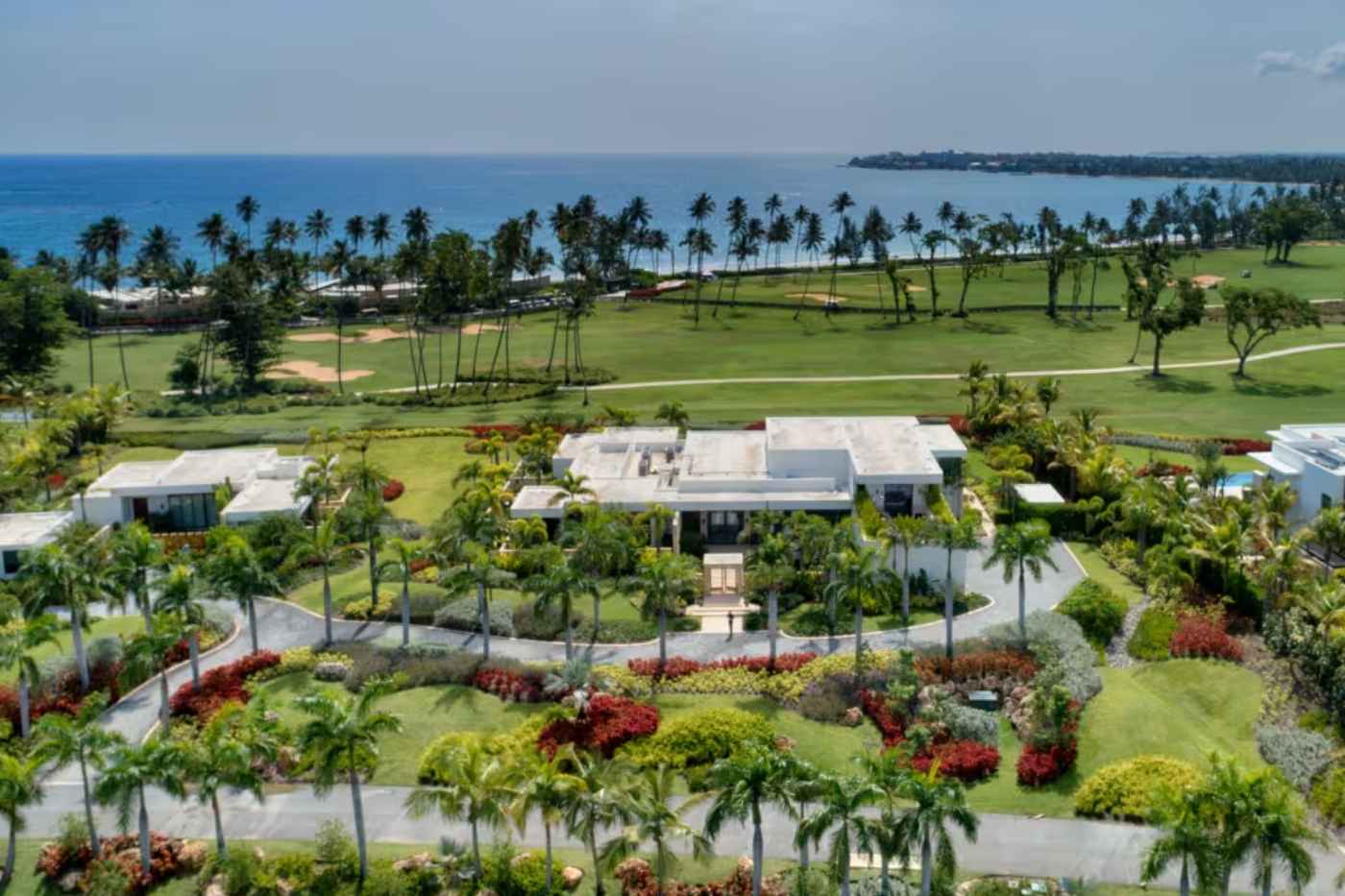
Puerto Rico has an established destination-wedding and events sector supported by resorts, historic venues, private estates, planners and other event-service providers. Estimates of the global destination-wedding market vary by research methodology. One 2026 industry report valued the market at approximately $41.63 billion in 2025 and projected growth to $47.85 billion in 2026.
Venues and villas sit at the center of this market—not just as backdrops, but as revenue-generating assets with real estate implications worth understanding. This article connects the hospitality side of Puerto Rico's event economy with the underlying property dynamics that matter most to buyers, owners, and investors.
Key Takeaways
- Passport-free travel supports Puerto Rico’s destination-wedding demand.
- Villas and estates can generate event and rental income.
- Location, capacity and permits influence venue performance.
- Exclusive settings attract higher-end wedding and event clients.
- Buyers should verify legal use, revenue and operating costs.
How Puerto Rico's Luxury Wedding and Events Market Drives Demand for Villas and Estates

Puerto Rico destination weddings attract a specific type of buyer: U.S.-based couples who want an international feel without international logistics. No passport, no currency exchange, no foreign vendor contracts—and yet the setting delivers the visual drama and exclusivity that couples at this spending level expect. That combination is rare, and it keeps Puerto Rico luxury wedding venues booked, although booking levels differ by venue, location, pricing and year.
The spending signals confirm the strength of this market. Puerto Rico wedding costs vary significantly by venue, guest count, season and package inclusions. Published estimates range from approximately $10,000–$15,000 for some destination weddings, while luxury resort packages and multi-day celebrations may cost considerably more
Demand Drivers That Sustain the Market
Several structural factors keep demand for Puerto Rico luxury event rentals strong year over year. These are not trend-driven spikes—they reflect durable market conditions that property investors should take seriously.
- Passport-free access: U.S. citizens can travel to Puerto Rico without a passport, removing one common logistical barrier associated with international destination weddings. Wedding documentation, venue contracts and event permits must still comply with applicable Puerto Rico laws and procedures.
- Legal familiarity: Puerto Rico is a U.S. territory, but marriage documentation, contracts, property transactions and event operations remain subject to Puerto Rico law, applicable federal law and municipal requirements.
- Seasonal pricing pressure: Puerto Rico’s high travel season generally runs from December through April, when conditions are usually drier and demand can be stronger. Atlantic hurricane season officially runs from June 1 through November 30, so couples and venue operators should consider weather contingencies, cancellation terms and event insurance.
- Mature planner ecosystem: Puerto Rico now supports a network of boutique luxury event companies that specialize in high-touch destination weddings. Their presence signals market depth—clients are not pioneering; they are choosing from an established supply chain.
- Visual variety: Couples can choose between a Puerto Rico beachfront wedding estate, a Puerto Rico hacienda wedding venue in the mountains, or a rainforest-adjacent property near El Yunque. That range of settings within one island is a genuine competitive advantage.
Who Is Spending and at What Level
Luxury venues often attract couples seeking higher service levels, exclusive settings or multi-day celebrations. However, budgets, guest counts and spending priorities vary considerably among couples.
- Large resort weddings, full-property buyouts and multi-day luxury celebrations can exceed national destination-wedding averages. Final costs depend on guest count, accommodation, venue exclusivity, catering, entertainment and production requirements.
- Many couples book private villas or estates for the full wedding weekend, not just the ceremony day, which increases per-booking revenue for property owners.
- Corporate event clients and social gatherings at the luxury tier follow similar spending patterns, extending the revenue calendar beyond wedding season alone.
Now that the demand picture is clear, the next question is which property types are actually capturing that spending—and what makes them perform.
Venue and Villa Types That Perform in This Market

Puerto Rico's event venue supply spans a wide range of property types, but not all of them perform equally at the luxury tier. The market has sorted itself around a handful of categories that consistently attract high-spending clients. Understanding these categories matters whether you are evaluating a property as a buyer, repositioning an asset as an owner, or advising on development as an investor.
Official tourism directories and major wedding platforms list dozens of Puerto Rico venues, including resorts, hotels, historic properties, haciendas, mansions and outdoor event spaces.
Beachfront Resorts and Hotel Estates
Large beachfront resorts dominate the high-volume end of the Puerto Rico destination weddings market. They offer on-site catering, accommodations, and event coordination, which simplifies logistics for planners and clients alike.
- Food and beverage minimums at this tier typically start at $15,000 and scale with guest count.
- Resorts can accommodate large guest lists that private villas cannot, making them the default choice for weddings above 150 guests.
- The tradeoff is exclusivity—shared facilities and brand identity limit the personalization that ultra-high-net-worth couples often want.
Historic Haciendas and Heritage Estates
The Puerto Rico hacienda wedding venue category occupies a distinct position in the market. These properties offer architectural character, historical narrative, and a sense of place that resort ballrooms cannot replicate.
- Site fees for historic or boutique venues typically range from $3,500 to $7,500 or more per event.
- Haciendas near San Juan and in the island's interior attract couples who want a specifically Puerto Rican aesthetic—Spanish colonial architecture, open-air courtyards, and tropical gardens.
- Historic character may strengthen a property’s marketability and differentiate it from conventional venues. Its long-term value will still depend on condition, permitted use, maintenance requirements, location and comparable sales.
Note: The following comparison is illustrative. Pricing, capacity, permitted use and operating requirements vary by property and should be verified directly.
Private Villas and Residential Estates
Puerto Rico event villas represent perhaps the most interesting category for real estate investors. These are privately owned residential properties that operate as event venues on a rental basis, generating income while retaining their value as luxury homes.
- Private villas offer full buyouts, which appeals to clients who want complete control over their guest experience.
- Private villas may support premium pricing when they offer exclusive use, suitable accommodation and well-designed event infrastructure. Buyers should verify pricing through actual contracts, booking history and comparable venues.
- Multi-day bookings are common at this tier, with couples renting the property for a full weekend or longer.
- Pool decks, ocean views and outdoor entertaining areas can strengthen a property’s appeal for weddings and private events. Their effect on bookings and rental income should be confirmed through property-specific operating records and comparable market data.
Regulatory Reality: Public Beaches and Private Decks
Puerto Rico’s maritime-terrestrial public domain is generally open and free for common public uses such as walking, remaining on the shore and swimming. Beachfront ownership therefore does not automatically include control over the adjacent public shoreline.
- Some properties use existing private terraces or elevated event areas to provide controlled gathering space away from the public shoreline. New construction or coastal alterations should be evaluated through Puerto Rico’s permitting process before acquisition or development.
- Well-designed outdoor infrastructure may improve the marketability of a beach-adjacent property, but its value should be assessed through current comparable sales, legal access, permitted use and property-specific revenue.
- Buyers evaluating event-ready properties should assess the quality and scale of existing outdoor structures, not just the proximity to water.
With venue types established, the table below summarizes how the major categories compare across the variables that matter most to investors and event operators.

The real estate implications of these venue categories go deeper than event revenue alone—and that is where the investment case becomes genuinely compelling.
The Real Estate Connection: Investment, ROI, and Dual-Use Properties

The Puerto Rico event property market is not a niche hospitality play—it connects directly to the broader Puerto Rico luxury real estate market in ways that affect asset values, buyer profiles, and investment strategy. Properties that can function as both private residences and event venues occupy a rare position: they generate income without sacrificing residential utility, and they appreciate based on both market factors.
Puerto Rico’s housing market has recorded substantial recent price growth, although luxury values vary sharply by municipality, property type and amenities. HUD reported an island-wide median home sales price of approximately $300,600 as of June 2025, but luxury properties should be evaluated using current submarket and comparable-sales data.
Dual-Use Properties as Investment Assets
A dual-use property may combine residential utility with potential rental or event income. Its suitability as an investment depends on acquisition cost, permitted use, financing, insurance, operating expenses, occupancy and capital-improvement requirements
- Event-booking revenue varies by location, capacity, accommodations, inclusions and season. Prospective buyers should base projections on the property’s signed contracts, historical booking records and documented operating expenses rather than assumed island-wide rates.
- Short-term rental use may provide an additional revenue stream where permitted. Rentals of fewer than 90 consecutive days are generally subject to Puerto Rico Tourism Company requirements and a 7% room-occupancy tax, while condominium, HOA and municipal restrictions must also be verified.
- Owners may pursue event income while retaining potential exposure to long-term property appreciation. Neither the income nor appreciation is guaranteed, and both depend on market conditions, operating costs and the property’s legal use.
Location Variables That Drive Event Property Performance
Not every luxury property in Puerto Rico is equally positioned for the event market. Location, infrastructure, and physical characteristics determine whether a property can realistically capture wedding and event revenue.
- Proximity to San Juan: Proximity to airports, hotels and major transportation routes can simplify guest and vendor logistics. Its effect on bookings should be assessed through the property’s inquiry, conversion and occupancy records.
- Outdoor entertaining space: Properties with large terraces, pool decks, and garden areas consistently outperform those with only interior event space.
- Parking and access: Events with 50 or more guests require adequate parking or shuttle infrastructure—a factor that eliminates many otherwise attractive properties.
- Views and setting: Ocean views, mountain settings and distinctive architecture may strengthen demand and support premium positioning. The resulting rate difference should be verified through comparable venues and actual booking data.
Licensing and Regulatory Considerations
Operating a residential property as an event venue may require municipal permits, compliance with noise rules and approval for commercial use. This is not a barrier—it is a variable that informed investors account for before acquisition.
- Municipal regulations vary by municipality, so due diligence on local ordinances is essential before purchasing with event operations in mind.
- An established permit and operating history may reduce some approval uncertainty. Buyers should confirm that all permits are current, transferable and consistent with the proposed use before attributing additional value to them.
- Investors who acquire unlicensed properties with event potential should budget for permitting timelines and possible infrastructure upgrades as part of their acquisition cost.
Illustrative Event-Property Scenario
Consider a hacienda-style estate situated on approximately two acres in the island's interior, within 40 minutes of San Juan. The property features a main residence, a separate guest cottage, an open-air pavilion, and a terraced garden with mountain views. It operates as a licensed event venue for 10 to 12 events per year while functioning as a private residence for the remainder.
- At 10 to 12 events and a hypothetical site fee of $6,000, gross annual event revenue would be $60,000 to $72,000. This amount excludes staffing, insurance, utilities, maintenance, marketing, taxes, commissions and capital expenditures.
- Documented net operating income may be relevant to an appraisal, but its effect on value depends on permit transferability, operating expenses, comparable sales and the valuation method used.
- Purchasing or using a property as a residence does not by itself qualify an owner for Act 60 benefits. Eligibility depends on obtaining the applicable decree, satisfying Puerto Rico and federal bona fide residency requirements, and complying with rules governing the source and type of income.
- Buyers evaluating this type of asset should analyze both the real estate fundamentals and the event business metrics—occupancy rate, average booking value, and seasonal demand patterns.
Strategic Considerations for Investors and Owners
If you are evaluating a Puerto Rico wedding real estate investment or repositioning an existing property for the event market, four variables determine your ceiling more than any others.
- Location: Dorado, Condado, Rincón and the El Yunque region offer distinct luxury and event-property settings. Performance should be evaluated using current comparable sales, permitted use, operating expenses and verified booking data rather than assumed market-wide outperformance.
- Capacity: Guest capacity affects the types of events a property can host. Capacity should be confirmed through approved occupancy limits, parking and transportation plans, restroom facilities, emergency access, utilities and weather-contingency space.
- Licensing: Acquiring an already-licensed venue eliminates timeline risk and adds immediate income documentation to the asset profile.
- Branding: A distinct brand and professional online presence may improve visibility and enquiry volume. Any claim that branding produces higher rates should be supported by the property’s traffic, lead, conversion and booking data.
The Puerto Rico wedding and events industry trends point toward continued growth in the private estate and villa segment, driven by couples who prioritize exclusivity over scale. That trend aligns directly with the investment thesis for Puerto Rico luxury properties positioned for dual-use operation.
Puerto Rico Luxury Properties for Sale
Christie's International Real Estate Puerto Rico connects buyers and investors with luxury properties for sale across the island's most sought-after markets—from beachfront estates to hacienda-style compounds ready for event operations. Whether you are acquiring a primary residence, a dual-use investment property, or a venue asset, Christie's PR brings deep local market knowledge and global reach to every transaction.
Explore these featured listings that represent the quality and range of Puerto Rico luxury real estate available right now.
.jpeg)
904 VILLA DORADO ESTATES DORADO PR, 00646
904 Villa Dorado Estates is a newly constructed, furnished residence offering six bedrooms, nine bathrooms and 9,069 square feet of living space on approximately 1.3 acres. Its expansive grounds, private pool and generous interiors create an impressive setting for luxury living and private entertaining, subject to applicable community rules and permits.

2 RAMPLA DEL ALMIRANTE #A, SAN JUAN PR, 00907
This approximately 4,863-square-foot beachfront residence in gated Ocean Park offers five bedrooms, five-and-a-half bathrooms, panoramic Atlantic views, a rooftop entertaining terrace, private pool, tropical garden, and four-car garage, with the option to purchase adjoining Unit B.

4531 ISLA VERDE AVE #PH3A, CAROLINA PR, 00979
This approximately 4,366-square-foot, four-bedroom, four-bathroom penthouse on Isla Verde Beach offers unobstructed Atlantic views, a renovated interior, and a rooftop entertainment level with a private plunge pool, complemented by direct beach access and three garage parking spaces.

3 La Quinta Melones Beach, Barrio Flamenco, Culebra, PR 00775
Set on Culebra's celebrated Melones Beach, this property places you steps from some of the Caribbean's most pristine waters in a location that rarely sees listings at this level. For investors and buyers seeking a truly rare beachfront asset, this is perhaps one of the more compelling opportunities currently available through Christie's PR.
Final Thoughts
Puerto Rico’s luxury wedding and events market creates opportunities for well-positioned villas, estates and dual-use properties. Performance depends on location, permits, operating costs and verified demand. Careful due diligence remains essential before purchasing or repositioning an event-ready property.
Ready to buy, sell or rent Puerto Rico luxury properties? Christie’s International Real Estate Puerto Rico provides trusted local expertise and global market reach. Contact the team to discuss your next luxury real estate move.
FAQs
Read more here: Puerto Rico Realtors.
What insurance coverage should owners carry for a villa or estate used for events?
Standard homeowners insurance may not cover commercial events or regular short-term rental activity. Owners should ask a Puerto Rico-licensed insurance professional whether additional property, general liability, umbrella, event-specific or specialty coverage is required for the way the property will operate.
How do planners and couples evaluate a property’s “event readiness” beyond the view?
They focus on logistics: reliable power and backup systems, restrooms, vendor prep areas, weather-plan options, lighting, load-in access, and whether the layout supports guest flow without disrupting residential spaces.
What should buyers verify during due diligence if they want to host weddings on the property?
Confirm zoning/HOA rules, permissible event frequency and hours, noise limits, parking/shuttle feasibility, septic capacity, and any required municipal permits—then document everything in writing before closing. Read more here: luxury villa venue.

.png)


.png)