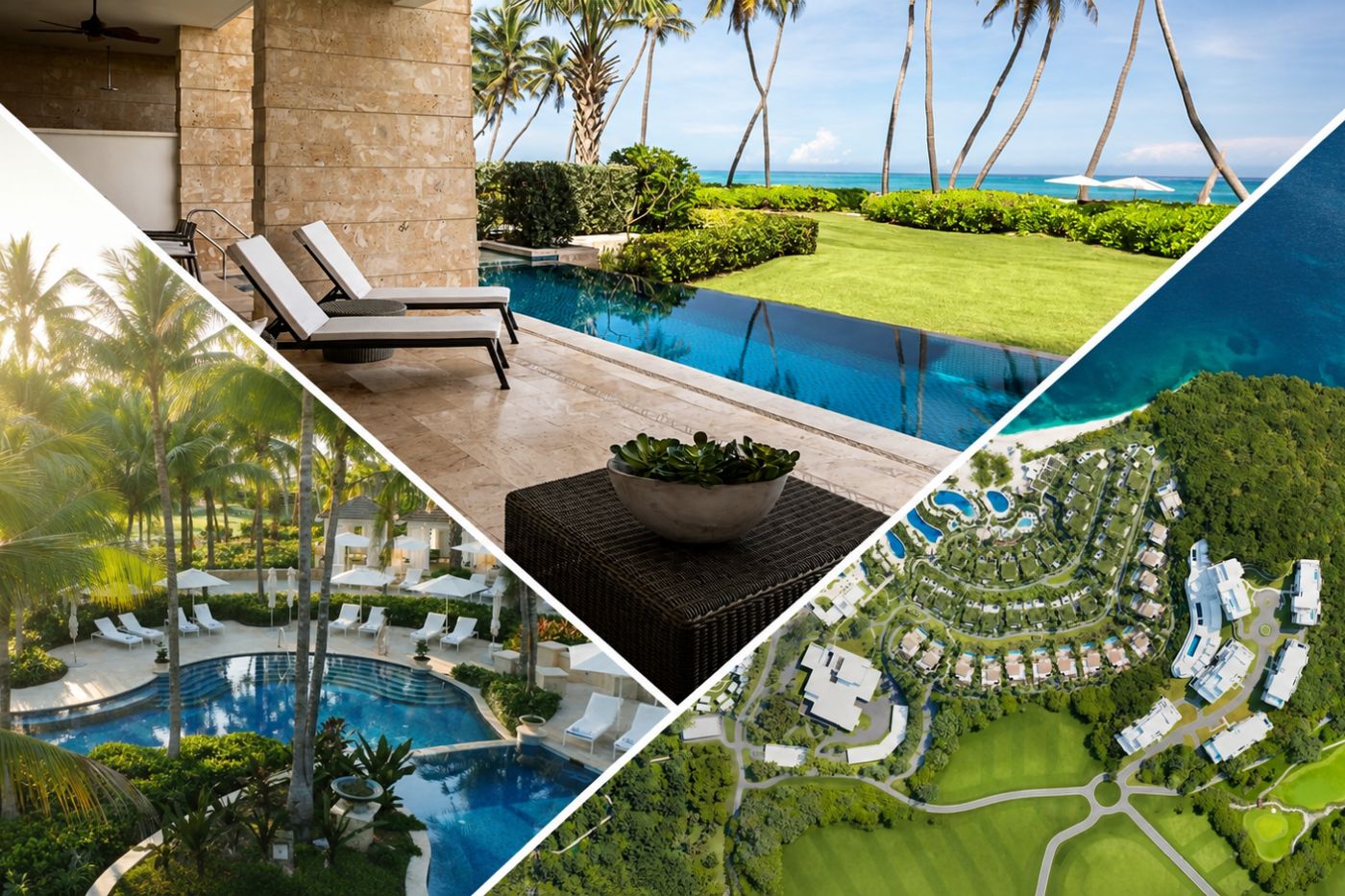
Luxury real estate can preserve purchasing power when scarce, desirable properties and construction replacement costs rise together — but it is not a guaranteed inflation hedge. The outcome depends heavily on location, holding period, liquidity needs, insurance exposure, tax structure, and rental strategy.
With that context in mind, this article examines how high-net-worth buyers are evaluating Puerto Rico luxury property in 2026 and what specific factors are shaping their decisions.
Key Takeaways
- Land scarcity and rising construction costs support long-term value retention in Puerto Rico's top luxury enclaves.
- Real returns hinge on net-of-cost performance, not just nominal price appreciation.
- Act 60 tax benefits remain a major draw, but decree applications must be submitted by December 31, 2026.
- Hurricane exposure and steep insurance costs are the single biggest risk factor buyers must budget for.
- A 5–7 year holding period plus specialist broker access is essential for a sound investment outcome.
Why Puerto Rico Luxury Real Estate Can Function as an Inflation Hedge

When inflation rises, the cost to build a comparable property also rises. This is perhaps the most direct link between inflation and luxury real estate values—if it costs significantly more to replace a beachfront villa today than it did three years ago, existing properties in that location tend to hold or gain value. In established Puerto Rico luxury markets like Dorado Beach and Condado, that replacement cost argument carries real weight because land scarcity limits new supply.
Tangible-asset ownership also plays a role here. Unlike equities or bonds, a physical property in a high-demand enclave gives UHNW buyers something with lifestyle utility—they can use it, rent it, or hold it as part of a diversified portfolio.
Scarcity in Established Luxury Enclaves
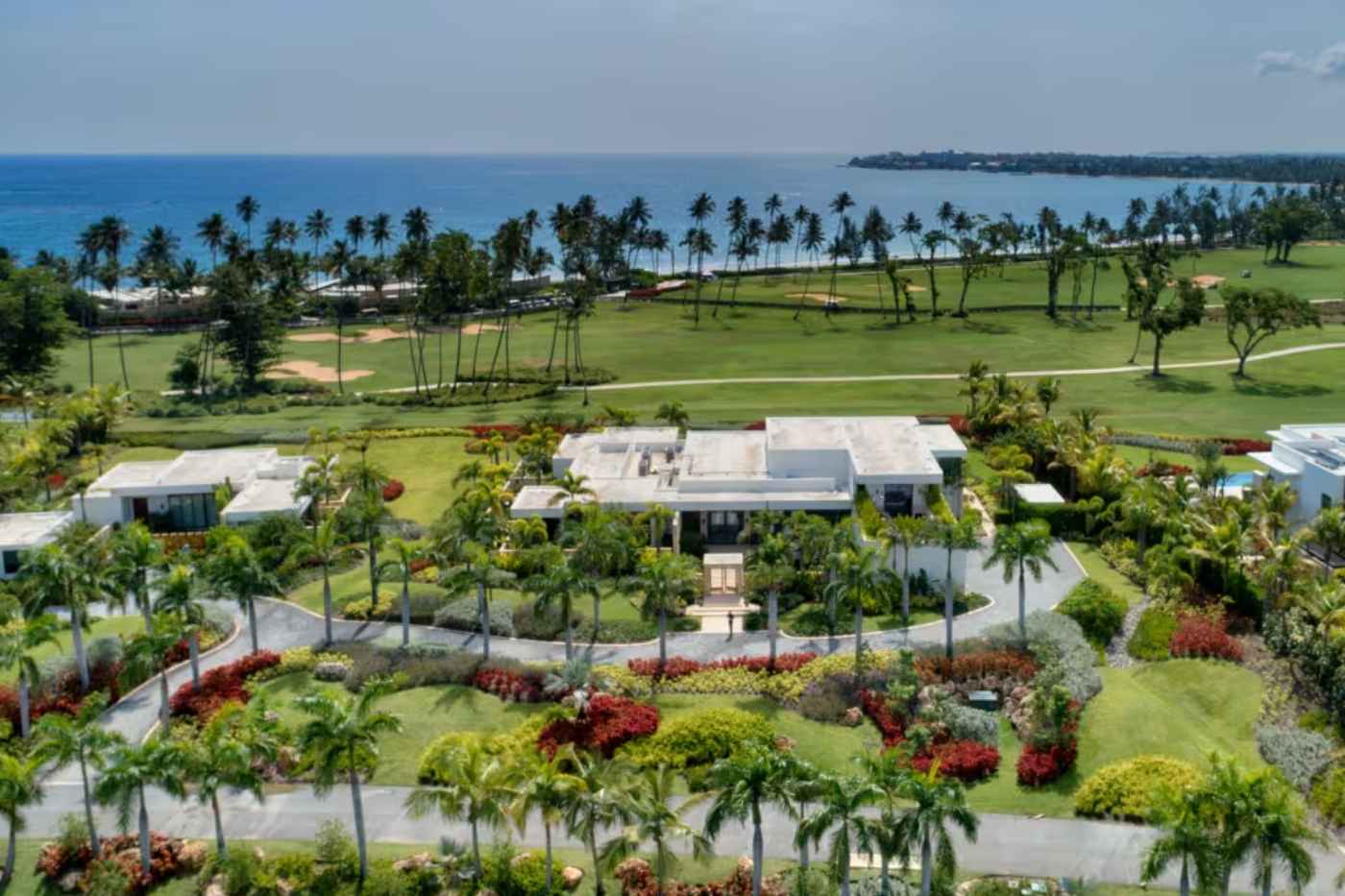
Scarcity is one of the strongest structural supports for luxury property values in Puerto Rico. Dorado Beach real estate, for example, sits within a gated resort community where buildable lots are finite. Typical pricing ranges from $4 million to $12 million, with some estates exceeding $20 million. That kind of supply constraint does not disappear during inflationary cycles — if anything, it becomes more relevant when construction costs climb.
- Dorado Beach operates as a closed, master-planned community with strict development controls.
- Condado luxury real estate averages $1.8 million to $4.2 million, drawing buyers who want urban proximity alongside resort-style amenities.
- Bahía Beach real estate offers another ultra-luxury option, combining a Ritz-Carlton Reserve with beachfront access and limited inventory.
- New construction in these markets commands a 20–25% premium over existing homes, which reflects rising material and labor costs directly.
Construction Replacement Costs and Nominal Price Growth
Rising construction costs do support existing high-end property valuations — Christie's International Real Estate Puerto Rico sees this reflected in buyer conversations regularly. When a buyer compares the cost of building a comparable waterfront home versus acquiring an existing one, the math often favors acquisition. That said, nominal price growth and real returns are not the same thing.
- A property that appreciates 8% nominally during a year of 6% inflation delivers a real return closer to 2%.
- Carrying costs — property taxes, HOA fees, insurance, and maintenance — reduce net real returns further.
- Rental income from Puerto Rico luxury homes can partially offset these costs, but occupancy rates and rental yields vary by location and property type.
- Buyers should model both gross appreciation and net-of-cost scenarios before treating any property as an inflation hedge.
Rental Income as an Inflation-Linked Return
Luxury vacation homes in Puerto Rico can generate rental income that adjusts with market conditions over time. In high-demand communities like Dorado and Condado, short-term rental rates have tracked upward alongside broader price increases. This dynamic gives some investors a partial inflation linkage—as costs rise, so can rental rates in undersupplied premium markets.
- Short-term luxury rentals in Dorado Beach communities can command $1,500–$5,000+ per night depending on property size and season.
- Condado's urban location appeals to business travelers and longer-stay visitors, offering more consistent year-round demand.
- Rental strategy requires active management, proper licensing, and HOA compliance — these are not passive income streams without effort.
- Buyers who plan to rent should factor in property management fees, which typically run 20–30% of gross rental revenue.
Moving from the mechanics of inflation hedging, it helps to look at why UHNW buyers specifically are drawn to Puerto Rico over other luxury markets in 2026.
What UHNW Buyers Prioritize in the Puerto Rico Luxury Market 2026
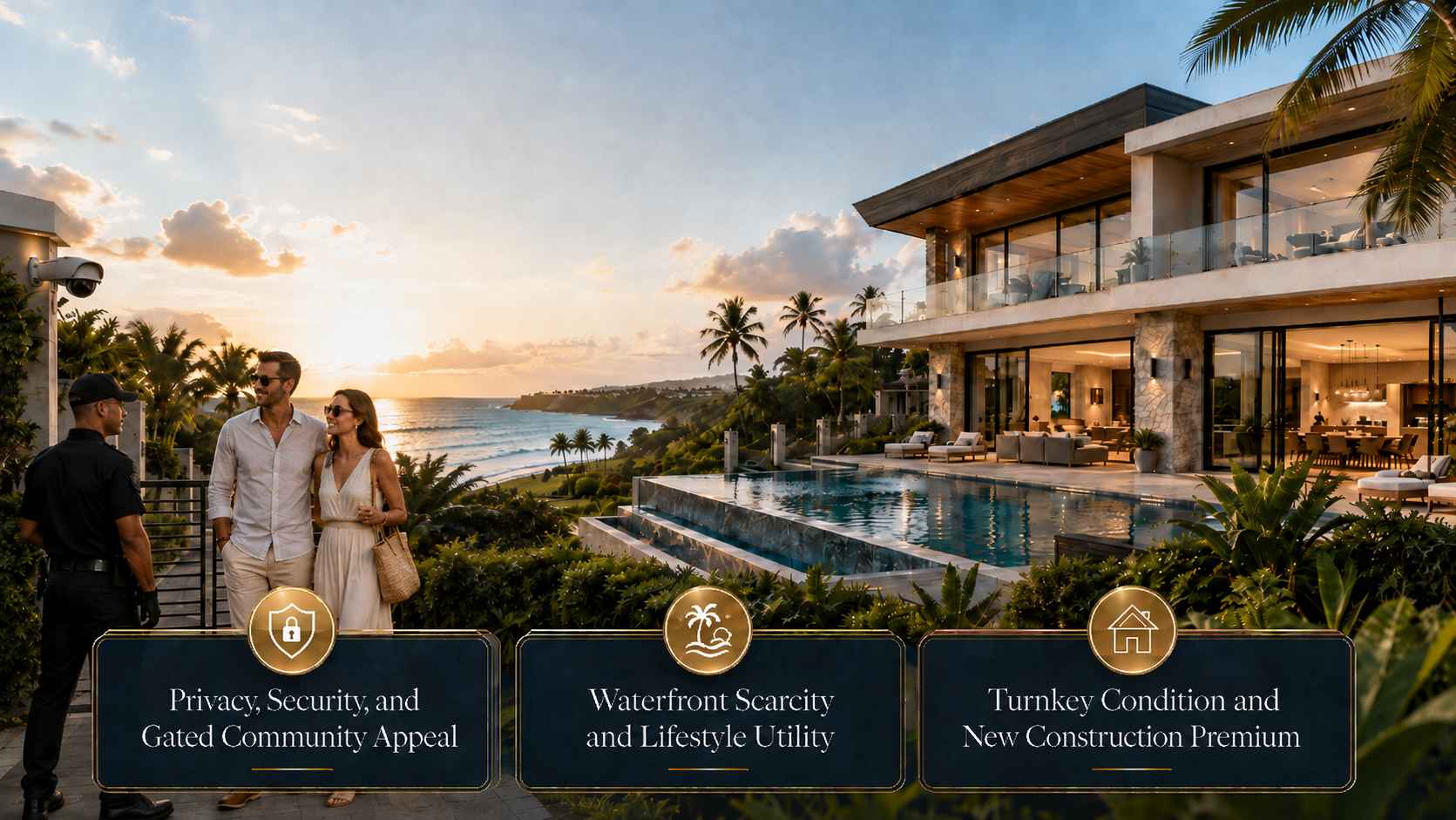
Ultra-high-net-worth real estate decisions rarely come down to a single factor. UHNW buyers evaluating Puerto Rico investment property in 2026 tends to weigh a combination of tax structure, lifestyle quality, asset scarcity, and geopolitical stability. Puerto Rico's status as a U.S. territory removes foreign ownership restrictions altogether—foreign buyers can purchase any residential property, new or resale, without citizenship or residency requirements—which broadens the buyer pool considerably.
Act 60 real estate investment incentives remain a significant demand driver. Under Act 60, qualifying residents can access a 4% flat corporate tax rate and 0% tax on capital gains, dividends, and interest income—but only for decree applications submitted on or before December 31, 2026. Under Act 38-2026, applicants who apply after that date face a new 4% tax rate on qualifying passive income.
Privacy, Security, and Gated Community Appeal
UHNW buyers consistently prioritize privacy and physical security when selecting luxury properties in Puerto Rico. Gated resort communities like Dorado Beach and Bahía Beach offer controlled access, 24-hour security, and a level of discretion that open-market neighborhoods cannot match. These features are not just lifestyle preferences—they also tend to support property values over time because they limit the buyer pool to those who can afford and qualify for entry.
- Dorado Beach Ritz-Carlton Reserve community includes private beach access, golf, spa, and concierge services within a secured perimeter.
- Bahía Beach Resort and Golf Club offers a similar model with a more intimate scale and direct Atlantic beachfront.
- Condado luxury real estate appeals to buyers who prefer urban walkability alongside high-rise security and doorman buildings.
- Off-market properties — those not publicly listed — are common in these enclaves and require broker relationships to access.
Waterfront Scarcity and Lifestyle Utility
Beachfront and waterfront properties in Puerto Rico represent a genuinely finite asset class. The island's coastline does not expand, and the most desirable stretches — those within gated communities or near established amenities — have very limited remaining development potential. This scarcity factor tends to make waterfront luxury property more resilient during broader market softness than inland or suburban equivalents.
- Buyers often cite dual-use value: the property functions as a personal retreat and a capital asset simultaneously.
- Puerto Rico second homes serve as a hedge against mainland market volatility for some UHNW portfolios.
- Year-round tropical climate extends the usability window compared to seasonal vacation markets in the Northeast or Midwest.
- Proximity to the U.S. mainland — a direct 3.5-hour flight from New York — reduces the friction of frequent visits.
Turnkey Condition and New Construction Premium
In a market where construction costs have climbed, turnkey properties command a premium that buyers increasingly accept. A fully finished, furnished luxury home in Dorado or Condado eliminates the timeline risk and cost overrun exposure that comes with renovation or new builds. For UHNW buyers who value certainty, that premium often makes financial sense.
- New construction in Puerto Rico's luxury segment carries a 20–25% premium over comparable existing inventory.
- Turnkey properties reduce the gap between purchase and occupancy or rental readiness.
- Custom builds in gated communities can take 18–36 months and carry significant cost escalation risk in the current environment.
- Buyers should request detailed construction specifications and warranties when evaluating new-construction luxury properties.
- Before committing capital to any luxury property in Puerto Rico, buyers need to look honestly at the risks — and there are several worth examining carefully.
Risks UHNW Buyers Must Evaluate
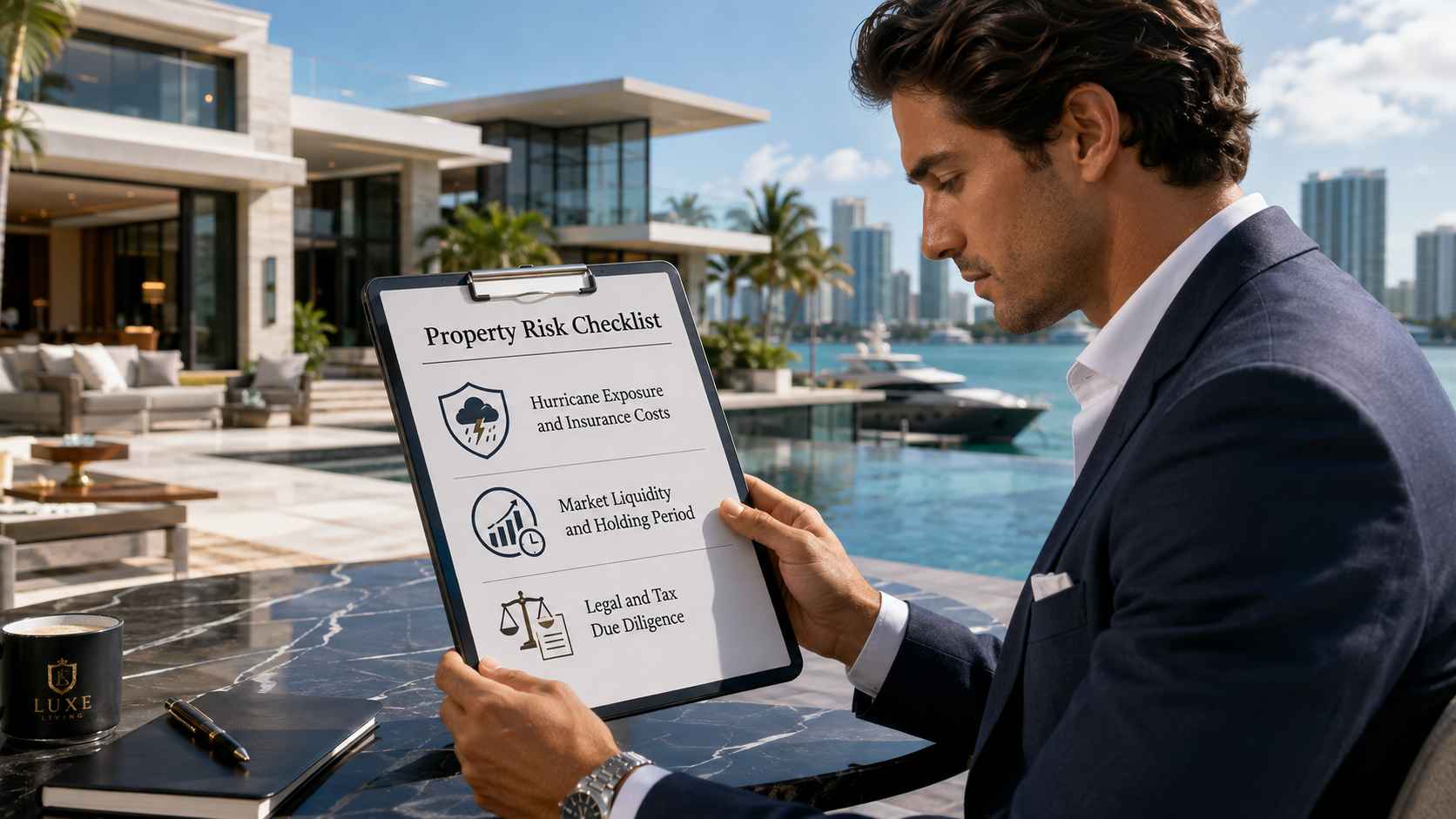
No inflation hedge real estate strategy is complete without a clear-eyed look at downside scenarios. Puerto Rico luxury properties carry specific risk factors that differ from mainland U.S. markets, and buyers who overlook them can face unexpected costs or liquidity challenges. The strategy can be more compelling when buyers enter with a medium-to-long holding period in mind and carry costs are fully modeled in advance.
The following risks appear most frequently in buyer due diligence conversations at Christie's International Real Estate Puerto Rico.
Hurricane Exposure and Insurance Costs
- Puerto Rico sits in an active hurricane zone, and post-Maria infrastructure improvements have been significant but ongoing.
- Luxury property insurance in coastal communities typically runs $24,000 to $125,000 annually for properties in the $2 million to $5 million range, rising to $180,000–$300,000 or more for ultra-prime estates above $10 million, depending on location, construction type, and coverage level.
- Some insurers require separate windstorm and flood policies, which adds complexity and cost to the annual carrying budget.
- Buyers should review FEMA flood zone designations and require full insurance cost disclosures before closing.
- Impact-resistant construction and elevated building standards in newer communities reduce but do not eliminate storm risk.
Market Liquidity and Holding Period
- Puerto Rico's luxury market is relatively small compared to Miami or New York, which means fewer buyers at any given price point above $5 million.
- Liquidity risk increases significantly for properties priced above $10 million, where the buyer pool narrows considerably.
- Investors often assess a minimum 5–7 year holding period to allow for appreciation to outpace transaction costs and carrying expenses.
- Transaction costs in Puerto Rico—including stamp taxes, legal fees, and broker commissions—typically run 5–8% of purchase price.
Legal and Tax Due Diligence
- Act 60 benefits require bona fide Puerto Rico residency, which is defined by three separate tests under IRC §937: physical presence for at least 183 days per year, a tax home located in Puerto Rico, and a closer connection to Puerto Rico than to the mainland or any other jurisdiction.
- The IRS monitors compliance with Act 60 residency requirements, and enforcement has increased in recent years.
- Title searches in Puerto Rico require local legal expertise, as property records and encumbrances can differ from mainland norms.
- Buyers should engage a Puerto Rico-licensed attorney with luxury transaction experience before signing any purchase agreement.
- HOA rules in gated communities can restrict rental activity, renovation timelines, and resale processes—review these carefully.
With risks and opportunities both mapped out, it helps to compare the primary luxury submarkets side by side to see where different buyer profiles tend to land.
Comparing Puerto Rico's Top Luxury Submarkets in 2026
Puerto Rico's luxury market is not uniform. Each major submarket carries its own price range, buyer profile, and investment characteristics. The table below summarizes the key differences across the island's top luxury enclaves to help buyers match their priorities to the right location.
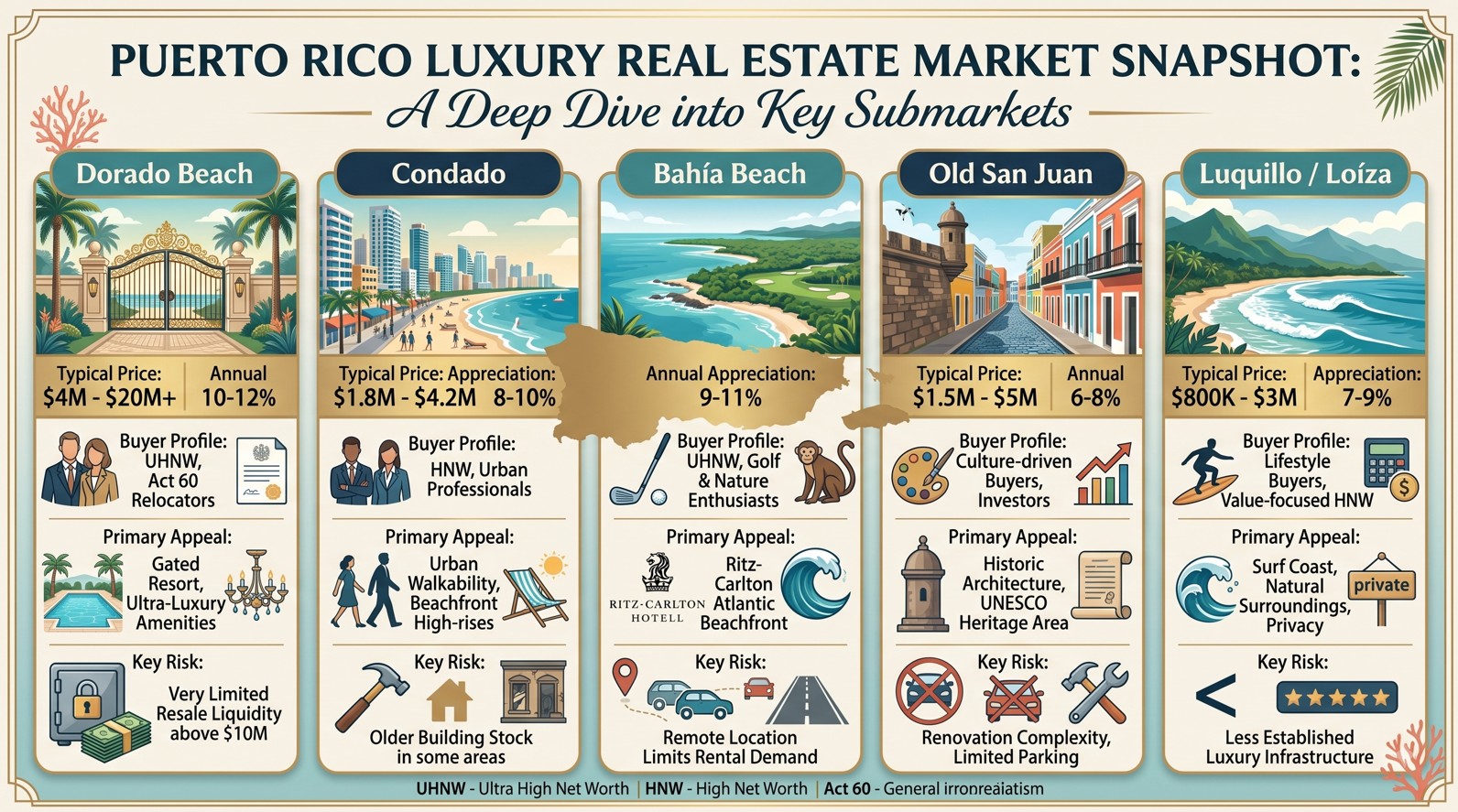
Each submarket serves a different purpose within a UHNW portfolio. Dorado Beach and Bahía Beach appeal to buyers who want maximum exclusivity and amenity depth. Condado suits those who want urban access alongside beachfront prestige. Luquillo and Loíza offer emerging value for buyers willing to accept less infrastructure in exchange for lower entry costs and natural surroundings.
Knowing how the markets compare is useful but the practical question for most buyers is how to actually move through a luxury transaction in Puerto Rico with confidence.
How UHNW Buyers Approach Puerto Rico Real Estate Investment in 2026

The buying process for ultra high net worth real estate in Puerto Rico differs from a standard residential transaction in several ways. Buyers in this segment typically engage a specialist broker early, access off-market inventory before it reaches public portals, and run parallel legal and tax advisory processes from the start. The luxury property investment Puerto Rico market rewards preparation and penalizes reactive decision-making.
Here is a practical sequence that serious buyers tend to follow.
- Define the investment thesis first. Decide whether the property serves primarily as a personal-use asset, a rental income vehicle, an Act 60 residency anchor, or a long-term capital preservation play. Each objective shapes which submarkets and property types make sense.
- Engage a specialist broker with off-market access. Public listing portals show roughly 3,500+ luxury homes for sale in Puerto Rico, but the most compelling opportunities in Dorado, Bahía Beach, and Condado often trade off-market. Broker relationships determine access.
- Run Act 60 eligibility analysis in parallel. If tax benefits factor into the decision, engage a Puerto Rico tax attorney before making an offer—not after. Residency requirements and compliance timelines affect the overall investment case.
- Commission a full property inspection and insurance cost assessment. In a hurricane-zone market, knowing the true annual cost of insuring a specific property is essential before modeling returns.
- Model net real returns, not just nominal appreciation. Factor in carrying costs, transaction costs, rental income projections, and insurance to arrive at a realistic net return scenario over your intended holding period.
- Conduct title and legal due diligence with a local attorney. Puerto Rico property law has specific nuances—a local specialist reduces the risk of title defects, encumbrances, or HOA compliance issues surfacing after closing.
- Structure the purchase entity appropriately. Many UHNW buyers hold Puerto Rico investment property through LLCs or trusts for estate planning and liability reasons. The structure should align with both U.S. and Puerto Rico tax treatment.
With the process mapped out, the final consideration is where to find the right properties and who to work with to access them.
Puerto Rico Luxury Properties for Sale
Christie's International Real Estate Puerto Rico offers buyers direct access to some of the most carefully curated luxury properties for sale across the island's most sought-after markets. Whether you are searching for a beachfront estate, a coastal retreat, or a lifestyle property with investment potential, the Christie's PR portfolio spans the full range of what Puerto Rico's luxury market has to offer. Explore the featured listings below as a starting point for your search.
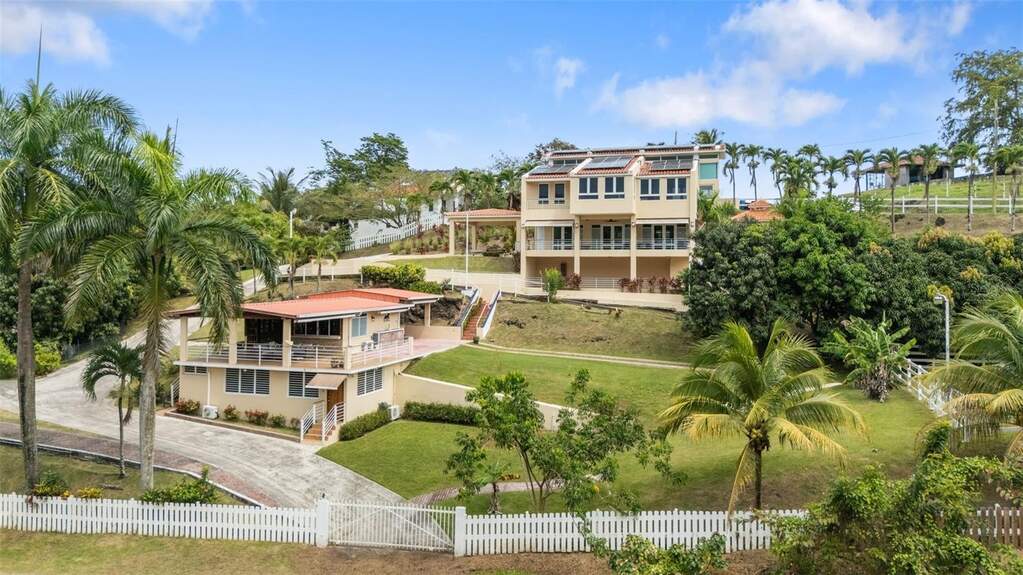
23 & 24 Hacienda Carabali, Luquillo, PR 00773
This Luquillo property sits within the Hacienda Carabali community, offering a rare combination of lush natural surroundings and direct access to the island's famed northeast coast. The listing presents a compelling entry point for buyers seeking privacy and acreage within a short drive of El Yunque National Forest.
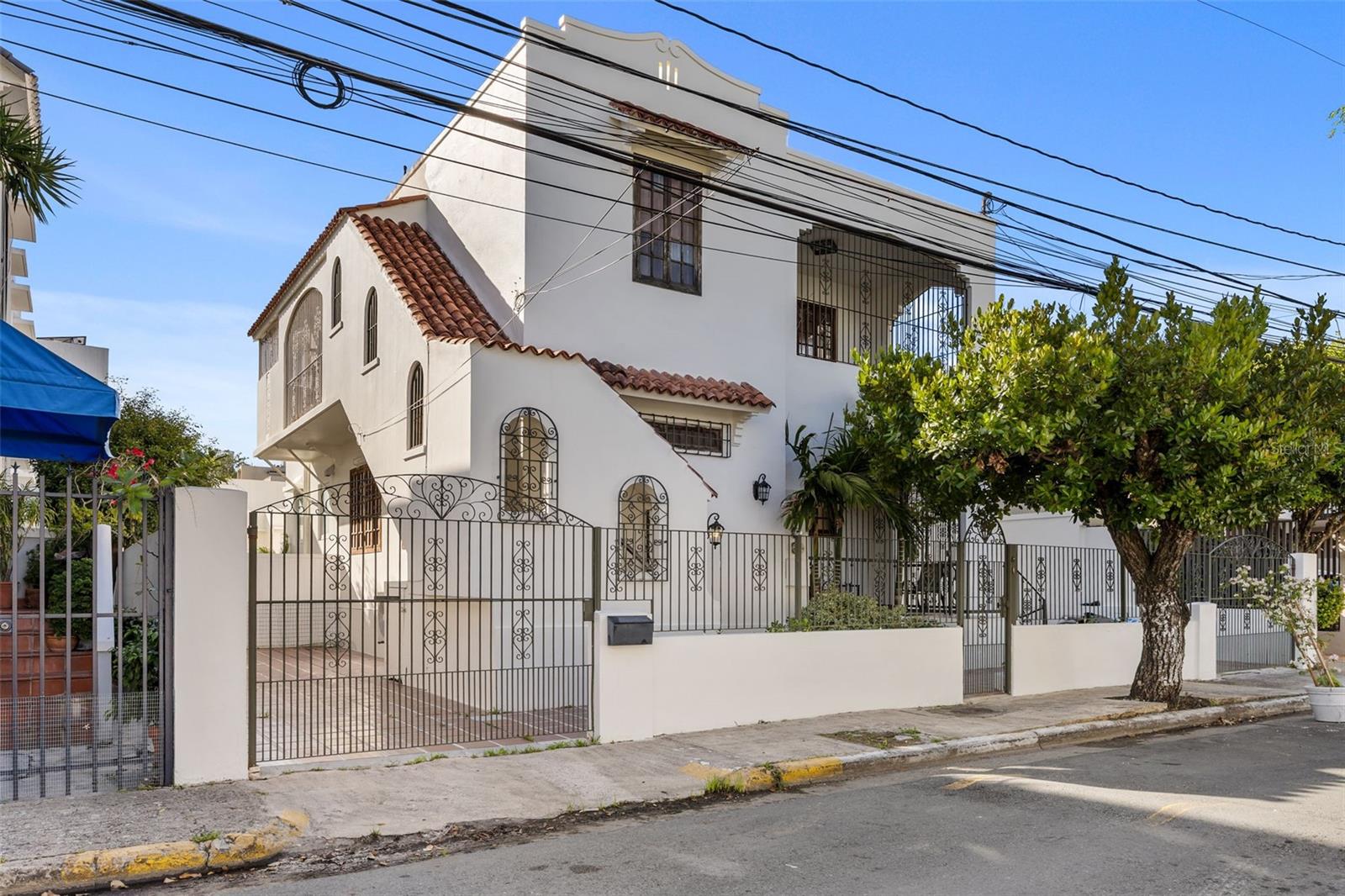
652 Calle Hernandez, Miramar, PR 00907
Located in the prestigious Miramar neighborhood of San Juan, this property delivers urban sophistication in one of the city's most established residential corridors. Buyers drawn to Condado luxury real estate and walkable urban living will find Miramar's blend of historic character and modern convenience particularly appealing.
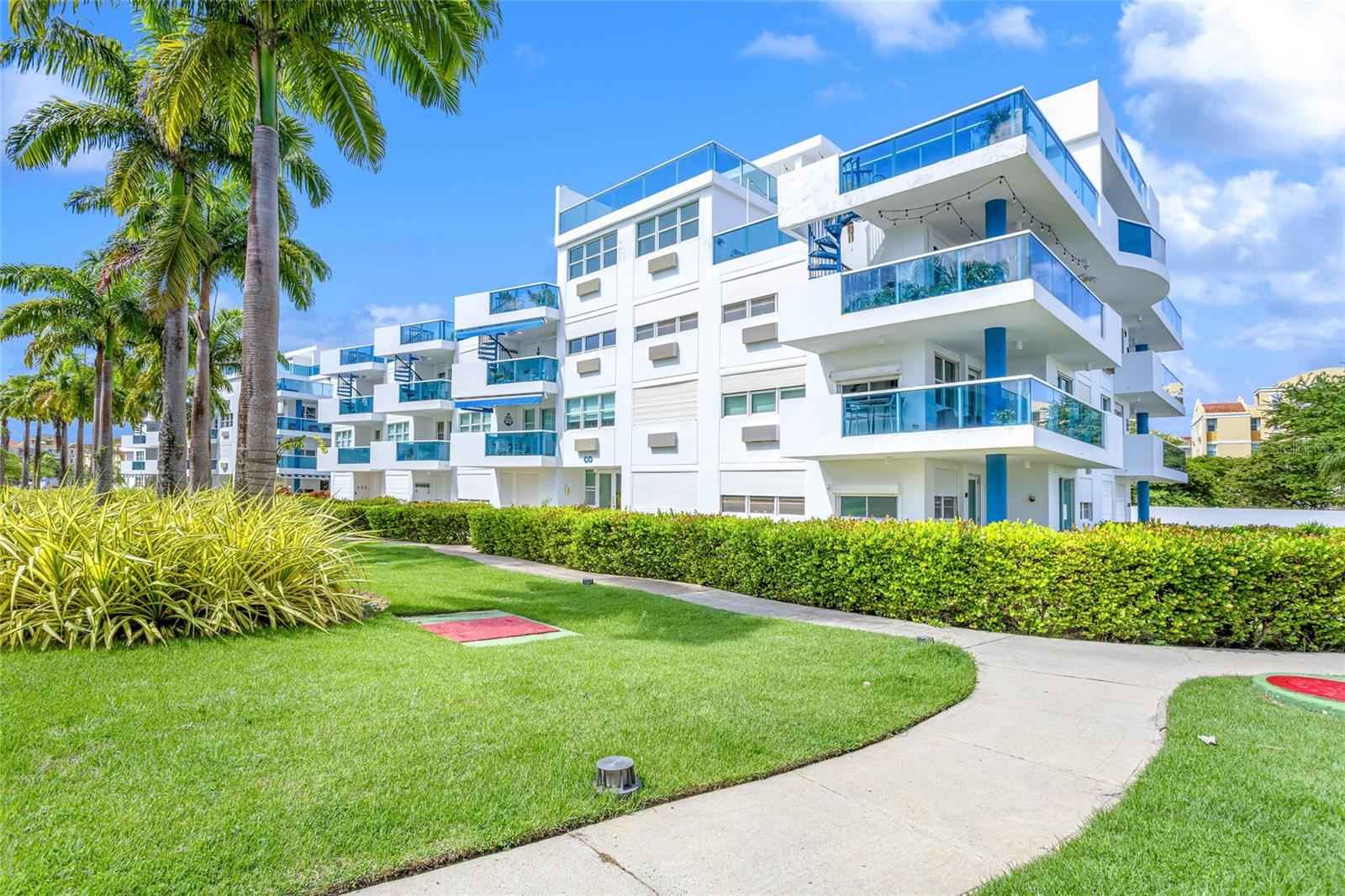
187 Km 7 Bo. Mediania Alta #401, Loíza, PR 00772
This Loíza coastal property offers direct Atlantic exposure and a sense of seclusion that buyers seeking privacy along Puerto Rico's surf coast actively pursue. The location places residents within reach of both San Juan and the island's most scenic northeastern shoreline.
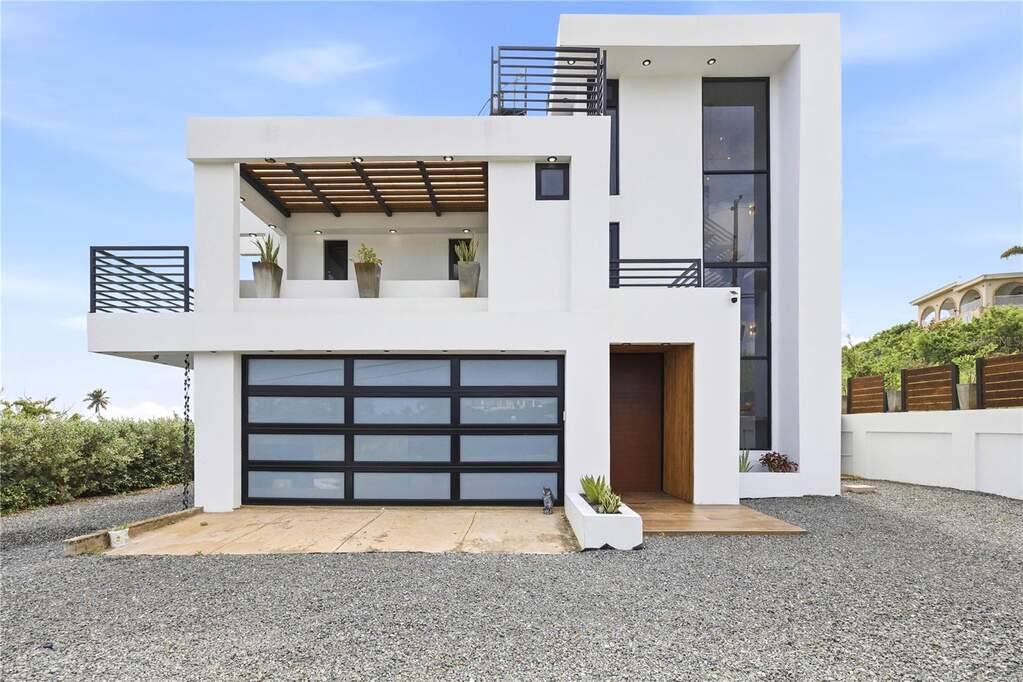
Bo. Membrillo Solar 1, Camuy, PR 00627
Set along Puerto Rico's northwest coast in Camuy, this property offers expansive land and ocean views in a region that remains relatively undiscovered compared to the island's more established luxury markets. For buyers looking at long-term Puerto Rico real estate investment with room for development, this listing merits serious consideration.
Final Thoughts
Puerto Rico's luxury real estate market offers UHNW buyers a compelling, though imperfect, hedge against inflation through land scarcity, replacement-cost dynamics, and Act 60 tax incentives. Success depends less on the asset class itself and more on disciplined due diligence around insurance costs, holding periods, and net real returns. Buyers who approach Dorado Beach, Condado, and Bahía Beach with a clear investment thesis and the right advisory team are best positioned to turn scarcity into lasting value.
Whether you're looking to buy, sell, or rent a luxury property in Puerto Rico, having a trusted local expert makes all the difference in navigating off-market inventory and complex tax structures. Christie's International Real Estate Puerto Rico offers unmatched access to curated listings, deep market intelligence, and a proven track record across Dorado Beach, Condado, and Bahía Beach. Reach out to their team today to begin your Puerto Rico luxury real estate journey with confidence.
FAQs
Does buying through an LLC or trust change financing, closing timelines, or reporting?
Yes. Entity purchases can add banking/underwriting steps, require additional corporate documents, and affect how signatures, beneficial ownership details, and post-closing reporting are handled—so align your legal, tax, and lender teams before making an offer.
What due diligence is unique to condos and resort communities in Puerto Rico?
Review the HOA/condo association’s financials, reserve studies, special-assessment history, rental caps, renovation rules, and any pending litigation—these factors can materially impact carrying costs, rental flexibility, and resale value.
How should buyers evaluate infrastructure resilience (power, water, internet) for luxury homes?
Confirm redundancy and service reliability property-by-property: generator capacity and fuel logistics, water cistern size/pumps, internet provider options, and any microgrid or community backup systems—especially for waterfront or remote locations.


.png)