


Puerto Rico's current Opportunity Zone coverage is broad, and many luxury developers have built project timelines around that assumption. The One Big Beautiful Bill Act (OBBBA) changes that. It resets how the federal government selects qualified opportunity zones, introduces stricter eligibility thresholds, and puts the island on a 10-year redesignation cycle starting January 1, 2027. That means a development site sitting inside today's opportunity zone map may not appear on the next one.
In this article, we examine the map changes, effective dates, investment implications, and the key decisions facing developers, landowners, and qualified opportunity fund managers operating in Puerto Rico today.
Key Takeaways
- Puerto Rico’s Opportunity Zone map will become more selective in 2027.
- Only a limited share of eligible tracts may receive new designations.
- OZ 2.0 introduces renewed and expanded investor incentives.
- Rural projects may qualify for enhanced QROF benefits.
- Developers should review tract eligibility and funding timelines now.
Puerto Rico's Opportunity Zone Map Will Become More Selective Under OBBBA
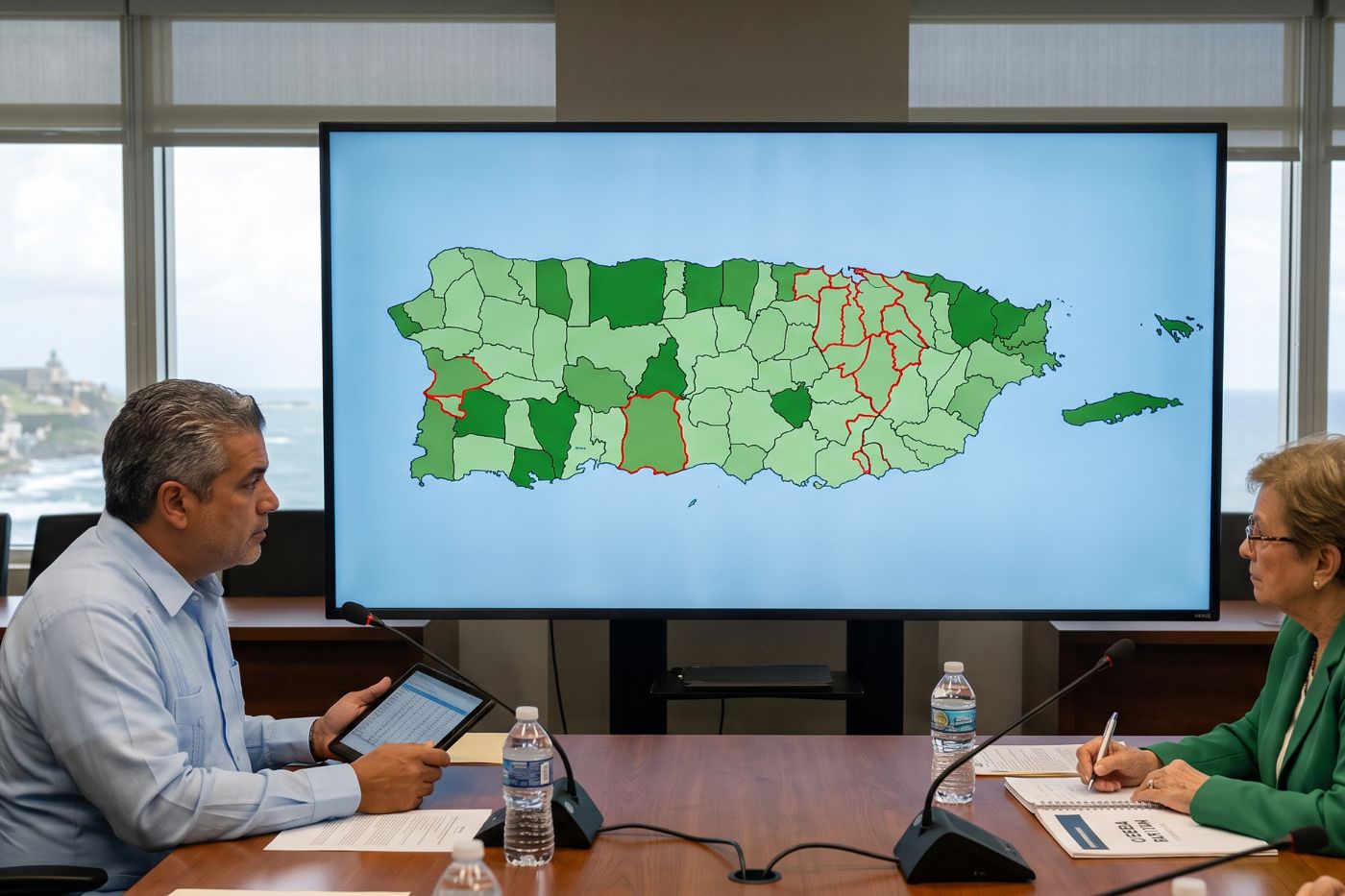
The OBBBA does not simply extend the existing opportunity zone program. It rebuilds the selection criteria from the ground up, and Puerto Rico's map will shrink as a result. Under OZ 1.0, the island designated 863 qualified opportunity zones, which represented a large share of eligible census tracts.
Puerto Rico may nominate no more than 25% of its qualifying low-income census tracts. The new map will therefore include far fewer tracts than the current Puerto Rico map. That selectivity changes the risk profile for any project that has not yet broken ground or secured a qualified opportunity fund commitment.
The Nomination Process and Timeline
The nomination process runs on a defined schedule, and the dates matter for anyone making investment decisions right now.
- Beginning July 1, 2026, Puerto Rico's governor nominates new census tracts for OZ 2.0 designation.
- Treasury certifies the nominated tracts and publishes the new national opportunity zone map.
- The new map takes effect January 1, 2027.
- Puerto Rico’s existing OZ 1.0 designations remain active through December 31, 2027, creating a one-year overlap with the OZ 2.0 designations that begin on January 1, 2027.
- After 2028, only the OZ 2.0 map governs new qualified opportunity fund investments.
- The program then redesignates every 10 years, making the 2027 map the first in a permanent cycle.
Which Census Tracts Qualify for the New Map
Not every current OZ tract will survive the transition. The revised eligibility criteria under OBBBA are stricter, and tracts that qualified under OZ 1.0 rules may not meet the new thresholds.
- Tracts must meet updated poverty rate or median-income requirements relative to the statewide or national median.
- Rural tracts face a separate and somewhat more favorable set of criteria under the Qualified Rural Opportunity Fund structure.
- Urban tracts in areas that have seen significant appreciation or income growth since 2017 may no longer qualify.
- Puerto Rico's nomination process will involve prioritization decisions at the governor's level, meaning political and economic development priorities will shape which tracts make the cut.
The Two-Year Overlap and What It Means Practically
The overlap period between January 1, 2027 and December 31, 2028 is not just a technical footnote. It creates a real planning window and a real risk for developers who are mid-project.
- Existing qualifying OZ 1.0 investments may retain their available long-term tax treatment, but new property acquired after December 31, 2026, generally must be located in a newly designated OZ 2.0 tract unless an IRS transition exception applies.
- Projects acquiring property after December 31, 2026, generally cannot rely solely on a tract’s original OZ 1.0 designation. Unless a transition exception applies, the property must be located in a tract designated under OZ 2.0.
- Developers in tracts likely to survive the redesignation may benefit from waiting to access OZ 2.0's improved incentive structure.
- The two-year window is narrow enough that site-by-site analysis should happen now, not in late 2026.
With the map timeline established, it helps to look at what the new incentive structure actually offers compared to the original program.
How OZ 2.0 Incentives Compare to the Original Framework
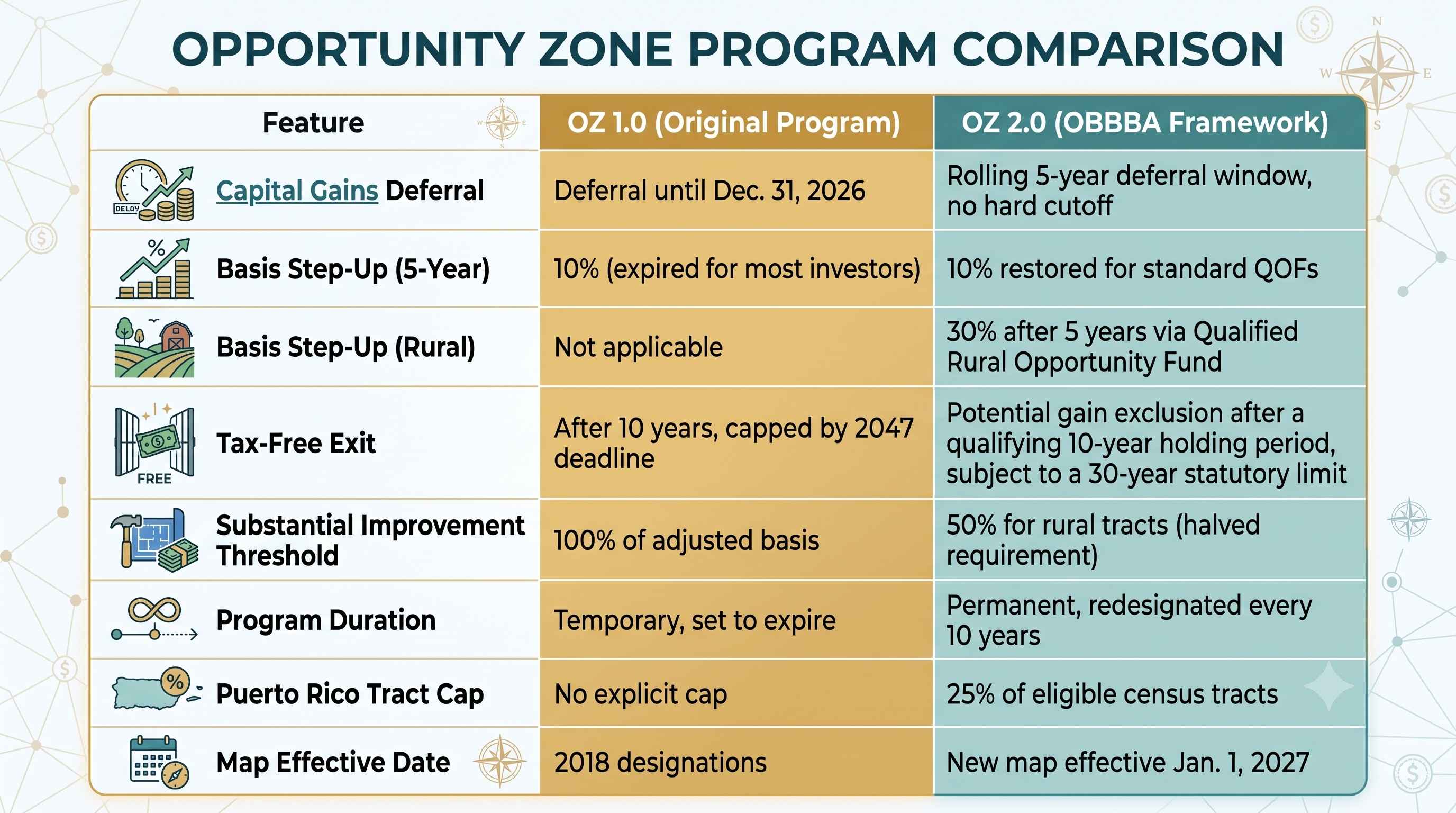
OZ 2.0 is not just a map reset. It also restores and improves some of the tax benefits that had eroded as the original program's deadlines passed. For luxury real estate investment and development in Puerto Rico, those changes are meaningful. The restored 5-year 10% basis step-up, the rolling 5-year deferral window, and the elimination of the old 2047 exit deadline all make the program more flexible and more valuable for long-horizon projects.
The rural track adds another layer of incentive that deserves attention on its own.
What the Qualified Rural Opportunity Fund Means for Puerto Rico
Puerto Rico has 263 rural OZ tracts under the current map, and many of them sit in areas where land costs remain low relative to coastal markets. The Qualified Rural Opportunity Fund (QROF) structure under OBBBA creates a separate and more generous incentive path for investments in those tracts. A 30% basis step-up after five years is a materially better outcome than the standard 10%, and the halved substantial improvement threshold reduces the capital commitment required to qualify.
For luxury developers eyeing inland or coastal rural sites, this is worth running the numbers on before assuming the urban OZ track is the better path.
Scenario Analysis: Four Investor Positions and What Each Should Consider
The map change does not affect every investor the same way. Where you sit in the development cycle determines which risks matter most and which decisions need to happen first. Below are four scenarios worth thinking through carefully.
Scenario 1: Landowner with a Site in a Current OZ Tract
- Your site may or may not appear on the 2027 map. You do not know yet, and neither does anyone else until nominations close in mid-2026.
- If your tract is unlikely to survive the redesignation, selling or partnering with a qualified opportunity fund before December 31, 2028 preserves access to OZ 1.0 benefits.
- If your tract is likely to qualify under OZ 2.0 criteria, waiting for the new map may unlock better incentives, particularly the restored basis step-up and the QROF path if the site is rural.
- The risk of waiting is that you lose the OZ 1.0 window without gaining OZ 2.0 designation. That is a real scenario, not a remote one.
Scenario 2: Luxury Developer with an Active Project in a Current OZ
- If your qualified opportunity fund has already deployed capital and the project is underway, your OZ 1.0 benefits are likely protected regardless of the 2027 map change.
- You should confirm with legal counsel that your fund structure and deployment timeline meet the Treasury's existing requirements, especially given that OZ 2.0 implementation details are still pending in some areas.
- For phases of development not yet funded, you face the same designation risk as a new entrant. Treat unfunded phases as a separate decision.
Scenario 3: Qualified Opportunity Fund Manager Evaluating New Puerto Rico Investments
- The maps overlap during 2027, but QOF managers must distinguish between existing OZ 1.0 assets and property acquired after December 31, 2026. New property acquired after that date generally must be in a newly designated OZ 2.0 tract unless an IRS transition exception applies.
- Tracts that survive the redesignation will likely see increased competition for land and deals, since the pool of OZ-eligible sites will shrink.
- Rural tracts that qualify for QROF treatment deserve a separate underwriting model given the improved incentive stack.
- Fund managers should build a watch list of tracts likely to survive the 25% cap and begin site control conversations now, before the 2026 nomination window creates a pricing event.
Scenario 4: Buyer Evaluating an Unfinished Development in an OZ Tract
- Buying into an unfinished development in a current OZ tract carries designation risk if the project has not yet deployed qualified capital.
- Ask the developer directly: Has a qualified opportunity fund been formed? Has capital been deployed? What is the fund's compliance status with Treasury?
- If the answers are unclear, the OZ tax benefit may not transfer to you as a buyer, and the project's economics may look different without it.
- Puerto Rico real estate investment in OZ-adjacent areas still carries strong fundamentals independent of the OZ designation, so the underlying asset quality matters regardless of the tax structure.
Beyond the individual scenarios, it also helps to understand how Puerto Rico's broader development incentives interact with the new OZ framework.
How Puerto Rico's Tax Incentives Layer With OZ 2.0

Puerto Rico already offers a distinct set of development incentives that exist independently of the federal Opportunity Zone program. Act 60 contains separate incentive programs for resident individual investors and qualifying exempt businesses.
- Eligible export-service businesses may receive a 4% tax rate and a 75% property-tax exemption.
- Qualifying resident individual investors may receive exemptions on certain interest, dividends, and post-residency appreciation, subject to decree, residency, sourcing, and timing requirements.
These Puerto Rico tax incentives do not replace OZ benefits, but they can stack with them in ways that create a compelling combined structure for luxury real estate investment.
The interaction between Act 60 and OZ 2.0 is an area where careful structuring matters, and where the difference between a good deal and a great one often lives.
Key Stacking Considerations
- An Opportunity Zone investment does not automatically qualify for a 0% Puerto Rico capital-gains rate. Act 60 treatment depends on the investor’s decree, bona fide residency, the source and timing of the gain, and whether the appreciation arose before or after Puerto Rico residency.
- Developers who qualify under Act 60's export services or manufacturing categories can combine those tax rates with OZ 2.0's capital gains deferral on reinvested gains.
- The substantial improvement requirement for OZ real estate development aligns naturally with new construction projects, which are common in Puerto Rico's luxury market.
- Puerto Rico development incentives at the municipal level, particularly in Dorado and San Juan, may further reduce carrying costs during the development period.
What Developers Should Confirm Before Structuring
- Whether the target tract appears on the current OZ map and whether it meets the likely criteria for the 2027 redesignation.
- Whether the project qualifies as a qualified opportunity zone business under Treasury's existing regulations.
- Whether the investor's residency status supports Act 60 benefits at the individual level.
- Whether the development timeline allows for capital deployment before the OZ 1.0 window closes in 2028.
With the incentive framework clear, the next question is where the most relevant development activity is happening on the ground in Puerto Rico right now.
Puerto Rico Luxury Real Estate and OZ 2.0: Where the Opportunity Sits
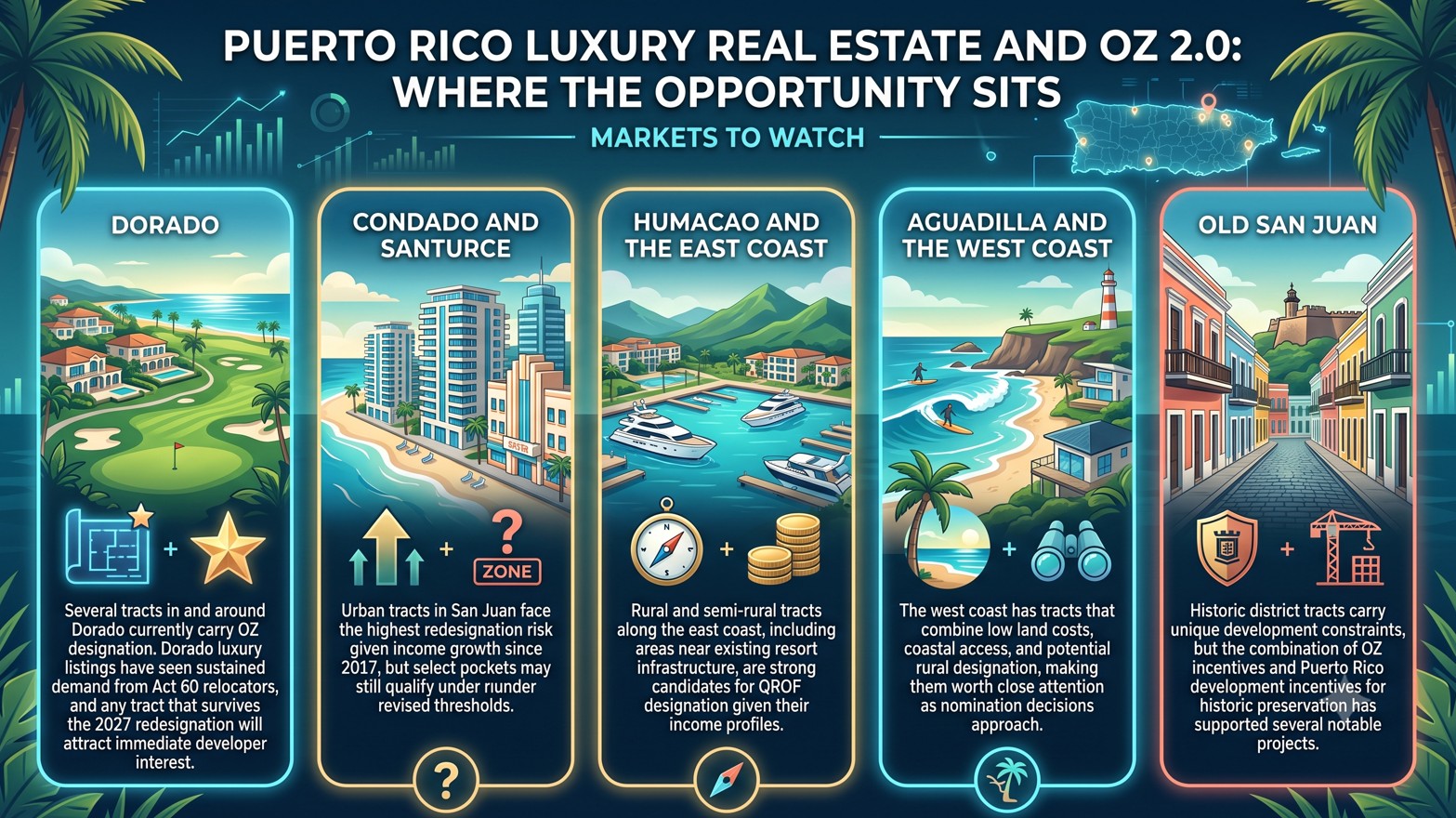
Puerto Rico luxury real estate has posted strong performance over the past several years, with average sales prices in the top tier reaching $6.8 million in 2021 and total market volume approaching $4 billion. That demand did not emerge from the OZ program alone. It reflects Puerto Rico's unique position as a U.S. jurisdiction with favorable tax treatment, year-round climate, and a growing base of high-net-worth residents who relocated under Act 60. The OZ 2.0 framework adds another layer of incentive on top of a market that already has real momentum.
The areas most likely to benefit from the new map are those where current OZ tracts overlap with active luxury development pipelines.
Markets to Watch
- Dorado: Several tracts in and around Dorado currently carry OZ designation. Dorado luxury listings have seen sustained demand from Act 60 relocators, and any tract that survives the 2027 redesignation will attract immediate developer interest.
- Condado and Santurce: Urban tracts in San Juan face the highest redesignation risk given income growth since 2017, but select pockets may still qualify under revised thresholds.
- Humacao and the East Coast: Rural and semi-rural tracts along the east coast, including areas near existing resort infrastructure, are strong candidates for QROF designation given their income profiles.
- Aguadilla and the West Coast: The west coast has tracts that combine low land costs, coastal access, and rural designation potential, making them worth close attention as nomination decisions approach.
- Old San Juan: Historic district tracts carry unique development constraints, but the combination of OZ incentives and Puerto Rico development incentives for historic preservation has supported several notable projects.
Puerto Rico Luxury Properties for Sale
For investors and developers looking to act before the 2027 map takes effect, Christie's International Real Estate Puerto Rico offers direct access to luxury properties in Puerto Rico positioned across the island’s most relevant Opportunity Zone markets. Whether you are evaluating a site for a qualified opportunity fund, seeking Puerto Rico investment property with existing Act 60 advantages, or simply looking for luxury properties for sale in markets with strong long-term fundamentals, Christie's PR brings the market knowledge and network to guide that decision.
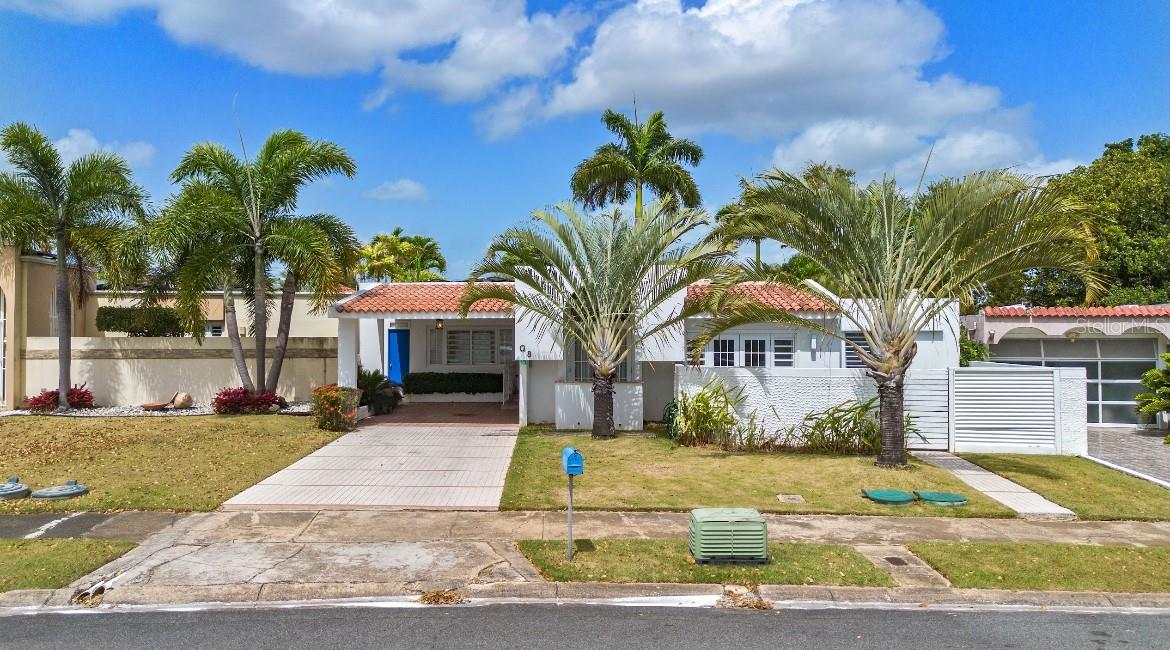
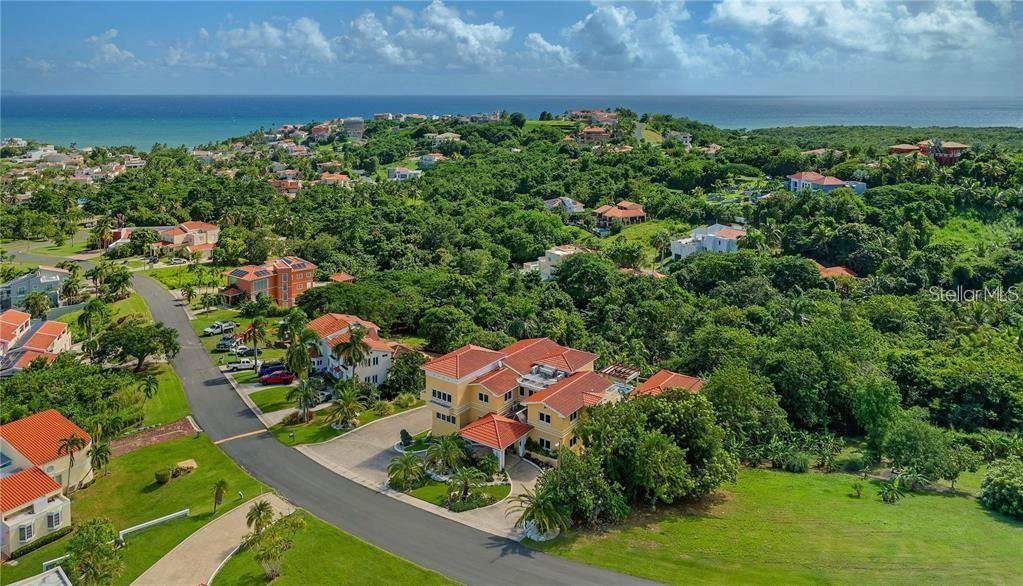
Calle 2 Dorado Del Mar G8, Dorado, PR
This Dorado property sits within one of Puerto Rico's most sought-after coastal communities, offering direct access to the amenities and lifestyle that have made Dorado a top destination for high-net-worth buyers and Act 60 relocators.
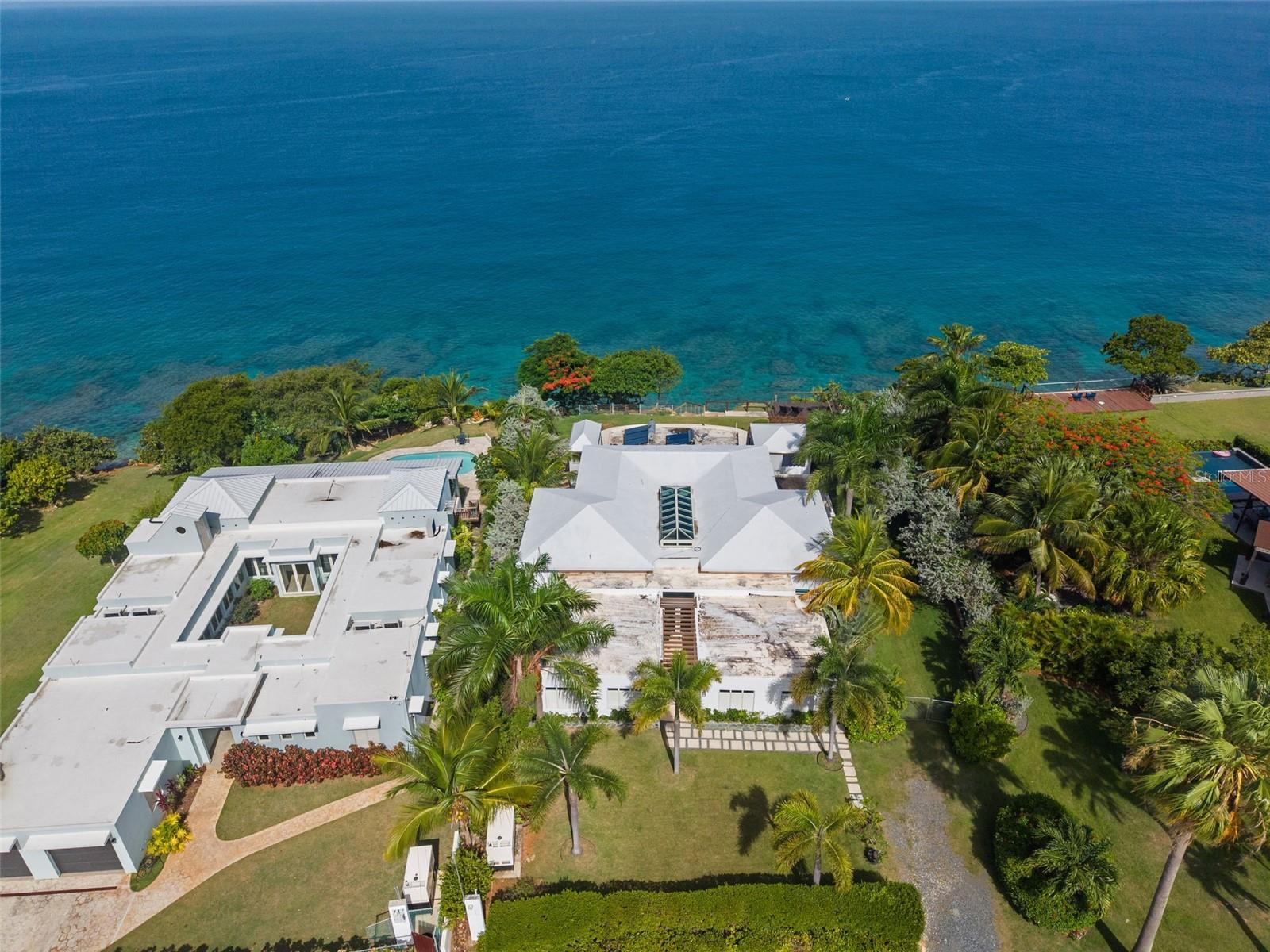
29 PORT ROAD RD, HUMACAO PR
This renovated Palmas del Mar luxury residence offers over 5,380 interior square feet with ocean and marina views, a private office, home theater, outdoor kitchen, pool and jacuzzi, expansive terraces, ample parking, 50 solar panels, and a diesel generator. View this listing for details on the property's features and surrounding market context.

205 Luna, Old San Juan, PR
This Old San Juan property offers a rare combination of historic character and urban location in one of Puerto Rico's most recognizable and internationally recognized neighborhoods, with access to preservation incentives that complement the OZ framework. View this listing to see how it fits within the broader Old San Juan development picture.
Lot 4 Ibiza St, RD 107 KM 2.7, Aguadilla, PR
This Aguadilla land parcel on the west coast represents the kind of coastal rural site that could qualify for Qualified Rural Opportunity Fund designation under the 2027 map, combining low entry cost with meaningful upside tied to the new incentive structure. View this listing to assess its development potential and tract eligibility profile.
Conclusion
OBBBA will make Puerto Rico’s Opportunity Zone map more selective while introducing new incentives for qualifying investments. Developers and investors should evaluate tract eligibility, funding timelines, and project fundamentals before the 2027 transition. Early planning will be essential as the new map and regulations take shape.
Whether you plan to buy, sell, or rent Puerto Rico luxury homes, Christie's International Real Estate Puerto Rico can guide you through the local market. Our team connects clients with exceptional opportunities across the island’s leading communities. Contact Christie's International Real Estate Puerto Rico to discuss your property goals.
FAQs
Will an existing OZ 1.0 project lose its tax benefits if its tract is not redesignated in 2027?
Generally, benefits are tied to a compliant qualified opportunity fund (QOF) investment made while the tract is designated. Investors should document the original tract designation, confirm the QOF’s compliance, and keep clear records of when eligible capital was deployed.
How can developers estimate whether a tract is likely to make the OZ 2.0 map before nominations are announced?
Start with tract-level poverty and median-income data, then stress-test for post-2017 changes (income growth, new development, rising values). Pair that with local policy signals—planning priorities, infrastructure commitments, and economic development goals—that may influence which tracts are nominated under the 25% cap.
What should a buyer request when acquiring a property marketed as an “Opportunity Zone deal” in Puerto Rico?
Ask for the census tract number, evidence of current OZ designation, the QOF/QOZB structure (if any), proof of timely capital deployment, and a summary of ongoing compliance policies (asset tests, working capital plan, and substantial improvement status). If these aren’t available, underwrite the deal as if OZ benefits won’t apply.







.png)


.png)


